Baig Amena, Zarina Shamshad
National Center for Proteomics, University of Karachi, Karachi, Pakistan.
Department of Ophthalmology, Liaquat National Hospital, Karachi, Pakistan.
Saudi J Ophthalmol. 2019 Apr-Jun;33(2):153-158. doi: 10.1016/j.sjopt.2019.05.001. Epub 2019 May 22.
Paraoxonases (PON) are calcium bound enzymes offering protection against oxidative stress by working as endogenous free-radical scavenging molecules. Oxidative stress has been implicated in pathophysiology of many diseases including cataract. Lens opacity is an age related disorder which is a principal cause of blindness in Pakistani population. Relationship of PON2 and PON3 polymorphism with genetic predisposition for incidence of cataract has not been investigated till date. Objective of the current study was to explore possible association between PON2 and PON3 polymorphism with incidence of cataract in local population.
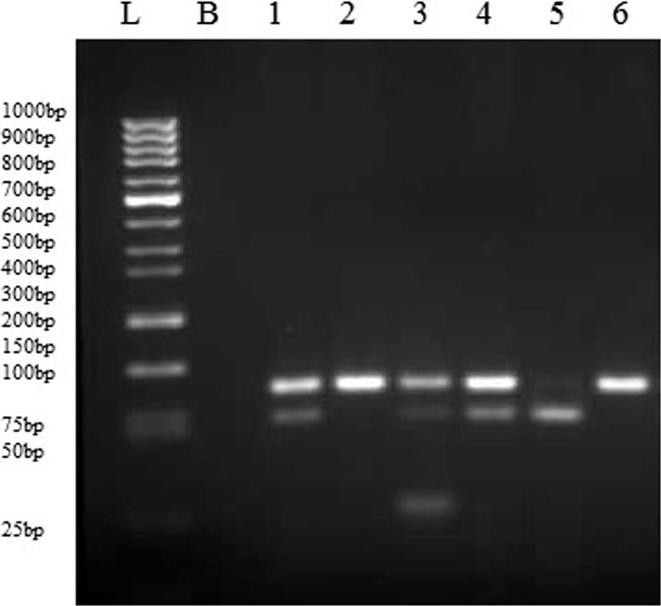
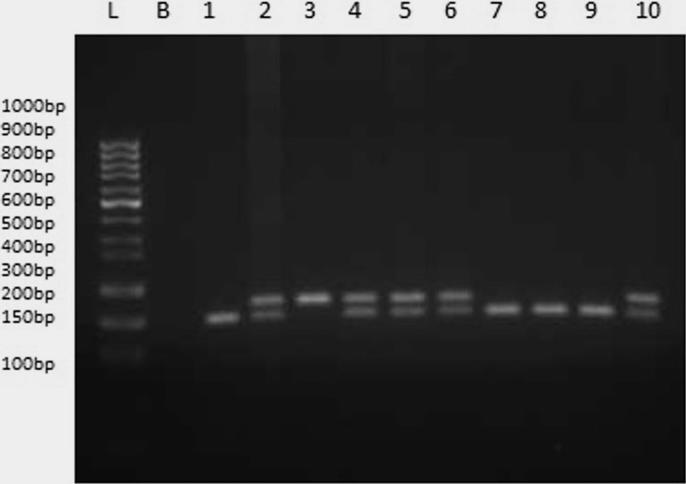
Our study design comprised of fifty-one cataractous and fifty-nine healthy individuals. Identification of single nucleotide polymorphism (SNP) at positions (C311S and G148A) for PON2 and C133A for PON3 was conducted using restriction fragment length polymorphism (RFLP).
Statistical analysis revealed significant association of PON2 G148 allele with incidence of cataract. GG allele was found to be higher in cataract patients as compared to control ( < 0.001) suggesting distribution of PON2 G148A genotype and allele frequency is linked with cataractogenesis. There was no noticeable association between PON2 C311S and PON3 C133A. Significant difference was observed in distribution of 311CS/148A combined genotype with highest frequency in control individuals (88.89%), while 311S/148G combined genotypes showed the highest frequencies among the cataract patients (71.42%).
Our data suggests mutation at G148A might be related with incidence of cataract in studied population.
对氧磷酶(PON)是一类与钙结合的酶,作为内源性自由基清除分子发挥作用,从而抵御氧化应激。氧化应激与包括白内障在内的多种疾病的病理生理学有关。晶状体混浊是一种与年龄相关的疾病,是巴基斯坦人群失明的主要原因。迄今为止,尚未研究过PON2和PON3基因多态性与白内障发病遗传易感性之间的关系。本研究的目的是探讨PON2和PON3基因多态性与当地人群白内障发病率之间可能存在的关联。
我们的研究设计包括51名白内障患者和59名健康个体。使用限制性片段长度多态性(RFLP)对PON2的(C311S和G148A)位点以及PON3的C133A位点进行单核苷酸多态性(SNP)鉴定。
统计分析显示,PON2的G148等位基因与白内障发病率存在显著关联。与对照组相比,白内障患者中GG等位基因的比例更高(<0.001),这表明PON2 G148A基因型和等位基因频率的分布与白内障的发生有关。PON2的C311S和PON3的C133A之间没有明显关联。在311CS/148A联合基因型的分布中观察到显著差异,该联合基因型在对照组个体中的频率最高(88.89%),而311S/148G联合基因型在白内障患者中的频率最高(71.42%)。
我们的数据表明,G148A位点的突变可能与所研究人群的白内障发病率有关。