Sreekumar Parameswaran Gangadharan, Su Feng, Spee Christine, Hong Elise, Komirisetty Ravikiran, Araujo Eduardo, Nusinowitz Steven, Reddy Srinivasa T, Kannan Ram
Doheny Eye Institute, Pasadena, CA 91103, USA.
Department of Neurology, David Geffen School of Medicine, University of California at Los Angeles, Los Angeles, CA 90095, USA.
Antioxidants (Basel). 2023 Sep 30;12(10):1820. doi: 10.3390/antiox12101820.
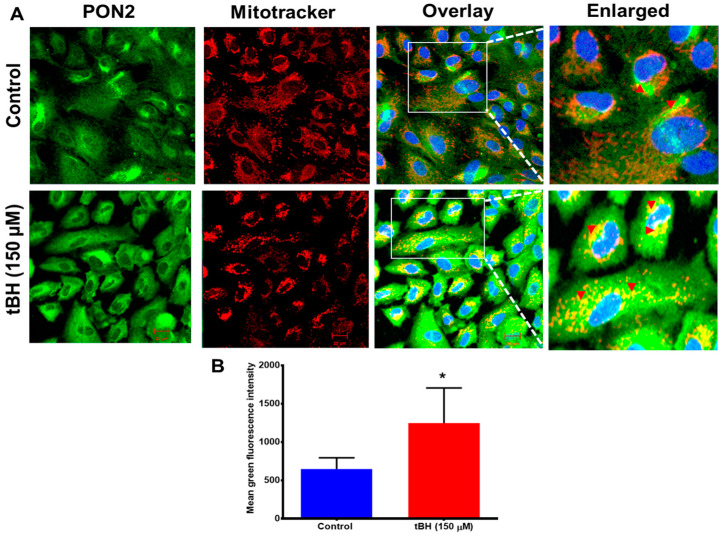
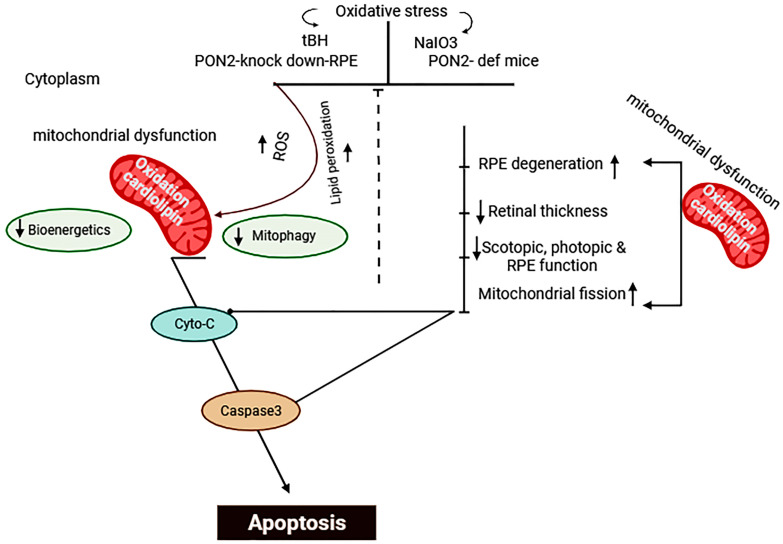
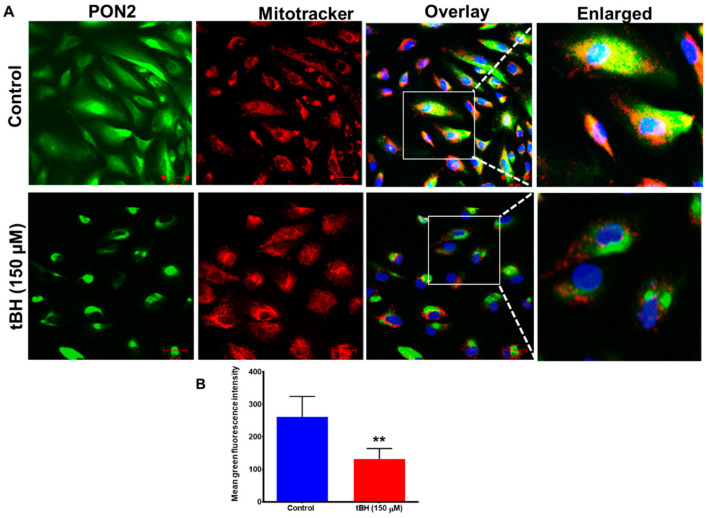
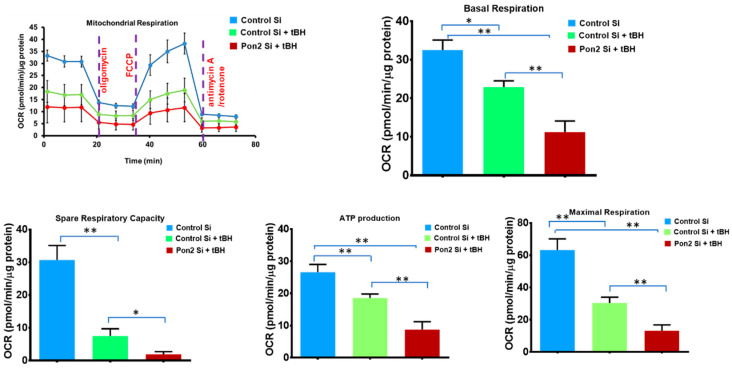
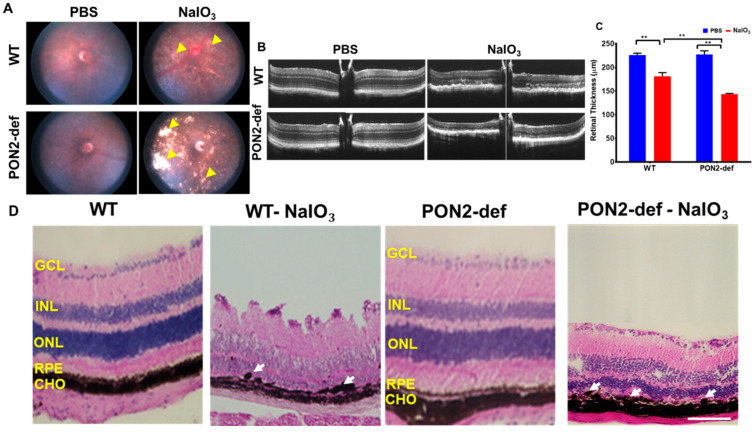
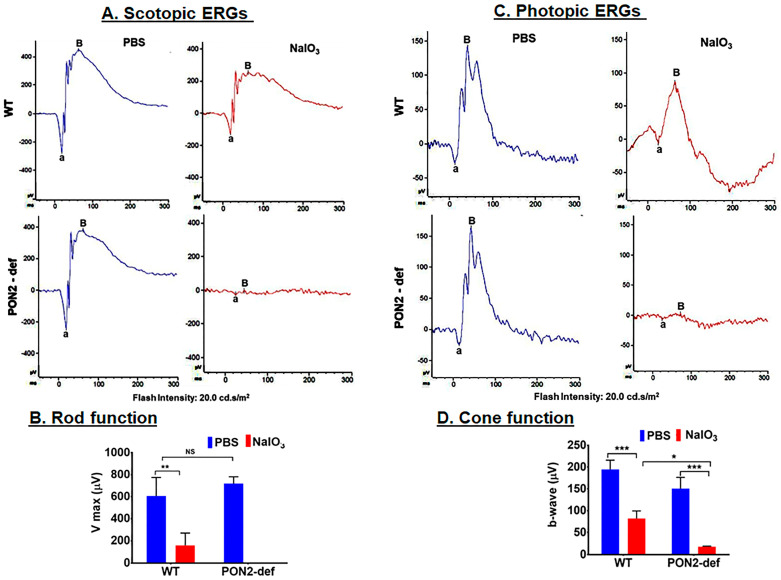
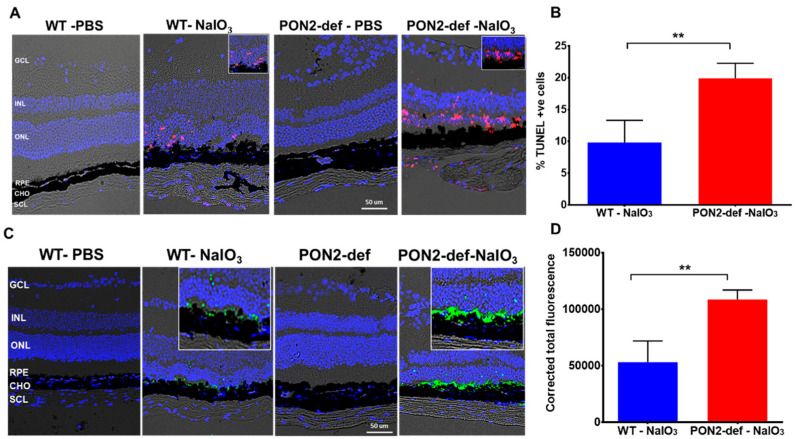
Although AMD is a complex disease, oxidative stress is a crucial contributor to its development, especially in view of the higher oxygen demand of the retina. Paraoxonase 2 (PON2) is a ubiquitously and constitutively expressed antioxidant protein that is found intracellularly associated with mitochondrial membranes and modulates mitochondrial ROS production and function. The contribution of PON2 to AMD has not been studied to date. In this study, we examined the role of PON2 in AMD utilizing both in vitro and in vivo models of AMD with emphasis on mitochondrial function. Mitochondrial localization and regulation of PON2 following oxidative stress were determined in human primary cultured retinal pigment epithelium (hRPE) cells. PON2 was knocked down in RPE cells using siRNA and mitochondrial bioenergetics were measured. To investigate the function of PON2 in the retina, WT and PON2-deficient mice were administered NaIO (20 mg/kg) intravenously; fundus imaging, optical coherence tomography (OCT), electroretinography (ERG) were conducted; and retinal thickness and cell death were measured and quantified. In hRPE, mitochondrial localization of PON2 increased markedly with stress. Moreover, a time-dependent regulation of PON2 was observed following oxidative stress, with an initial significant increase in expression followed by a significant decrease. Mitochondrial bioenergetic parameters (basal respiration, ATP production, spare respiratory capacity, and maximal respiration) showed a significant decrease with oxidative stress, which was further exacerbated in the absence of PON2. NaIO treatment caused significant retinal degeneration, retinal thinning, and reduced rod and cone function in PON2-deficient mice when compared to WT mice. The apoptotic cells and active caspase 3 significantly increased in PON2-deficient mice treated with NaIO when compared to WT mice. Our investigation demonstrates that deficiency of PON2 results in RPE mitochondrial dysfunction and a decline in retinal function. These findings imply that PON2 may have a beneficial role in retinal pathophysiology and is worthy of further investigation.
尽管年龄相关性黄斑变性(AMD)是一种复杂的疾病,但氧化应激是其发病的关键因素,尤其是考虑到视网膜对氧的需求较高。对氧磷酶2(PON2)是一种普遍且组成性表达的抗氧化蛋白,存在于细胞内,与线粒体膜相关,并调节线粒体活性氧(ROS)的产生和功能。迄今为止,尚未研究PON2对AMD的作用。在本研究中,我们利用AMD的体外和体内模型,重点关注线粒体功能,研究了PON2在AMD中的作用。在人原代培养的视网膜色素上皮(hRPE)细胞中确定了氧化应激后PON2的线粒体定位和调节。使用小干扰RNA(siRNA)敲低RPE细胞中的PON2,并测量线粒体生物能量学。为了研究PON2在视网膜中的功能,给野生型(WT)和PON2缺陷型小鼠静脉注射碘酸钠(NaIO,20mg/kg);进行眼底成像、光学相干断层扫描(OCT)、视网膜电图(ERG)检查;并测量和量化视网膜厚度和细胞死亡情况。在hRPE中,PON2的线粒体定位随应激显著增加。此外,氧化应激后观察到PON2的时间依赖性调节,表达最初显著增加,随后显著下降。线粒体生物能量学参数(基础呼吸、ATP产生、备用呼吸能力和最大呼吸)在氧化应激下显著降低,在缺乏PON2时进一步加剧。与WT小鼠相比,NaIO处理导致PON2缺陷型小鼠出现明显的视网膜变性、视网膜变薄以及视杆和视锥功能降低。与WT小鼠相比,用NaIO处理的PON2缺陷型小鼠中凋亡细胞和活化的半胱天冬酶3显著增加。我们的研究表明,PON2缺乏导致RPE线粒体功能障碍和视网膜功能下降。这些发现意味着PON2可能在视网膜病理生理学中具有有益作用,值得进一步研究。