Mistarz Anna, Komorowski Marcin P, Graczyk Matthew A, Gil Margaret, Jiang Aimin, Opyrchal Mateusz, Rokita Hanna, Odunsi Kunle O, Kozbor Danuta
Department of Immunology, Roswell Park Comprehensive Cancer Center, Buffalo, NY 14263, USA.
Department of Medicine, Roswell Park Comprehensive Cancer Center, Buffalo, NY 14263, USA.
Mol Ther Oncolytics. 2019 Jul 3;14:233-245. doi: 10.1016/j.omto.2019.06.003. eCollection 2019 Sep 27.
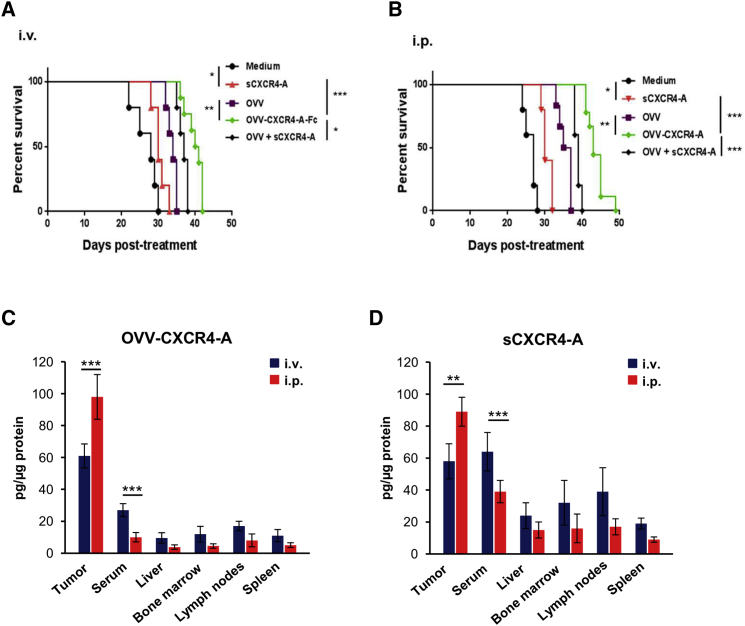
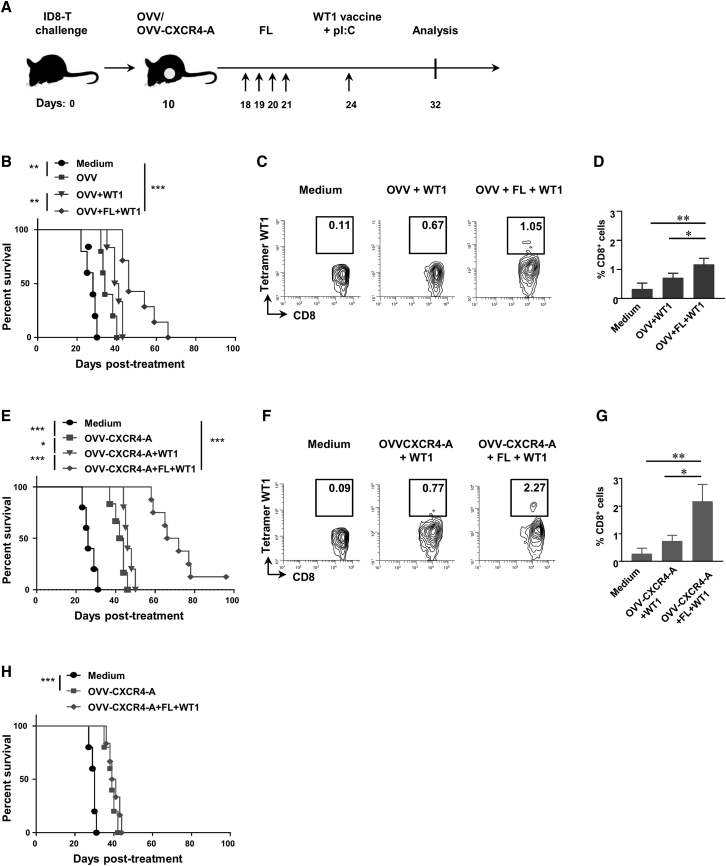
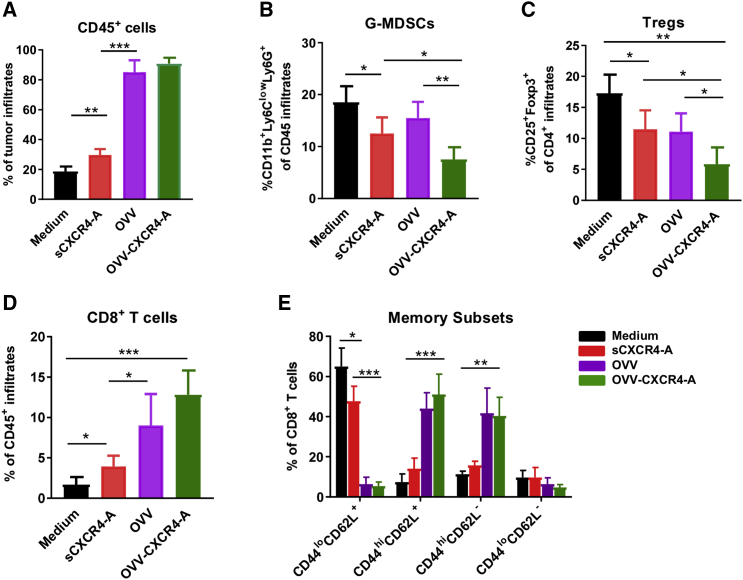
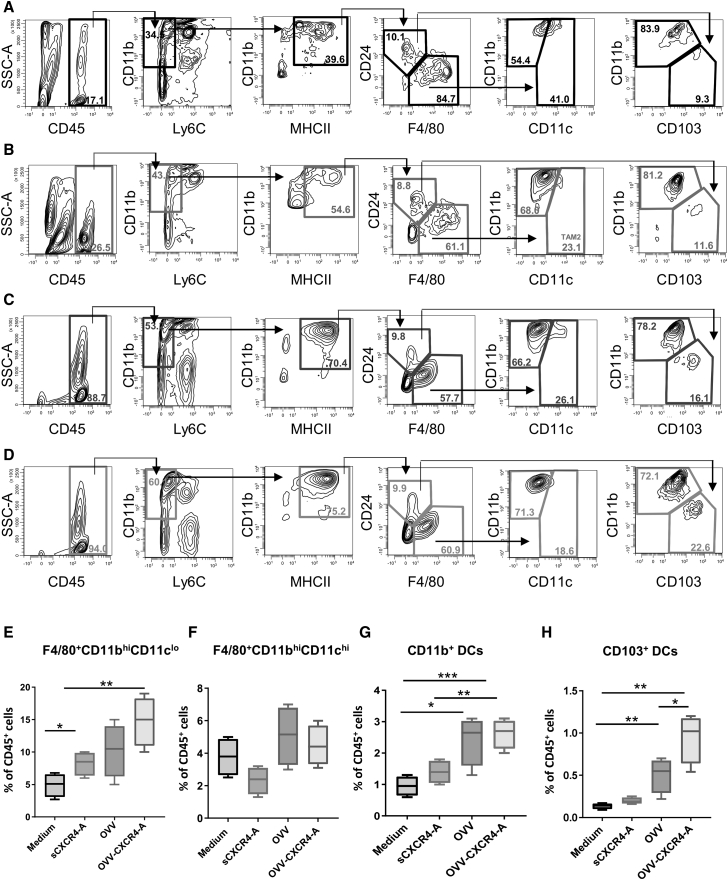
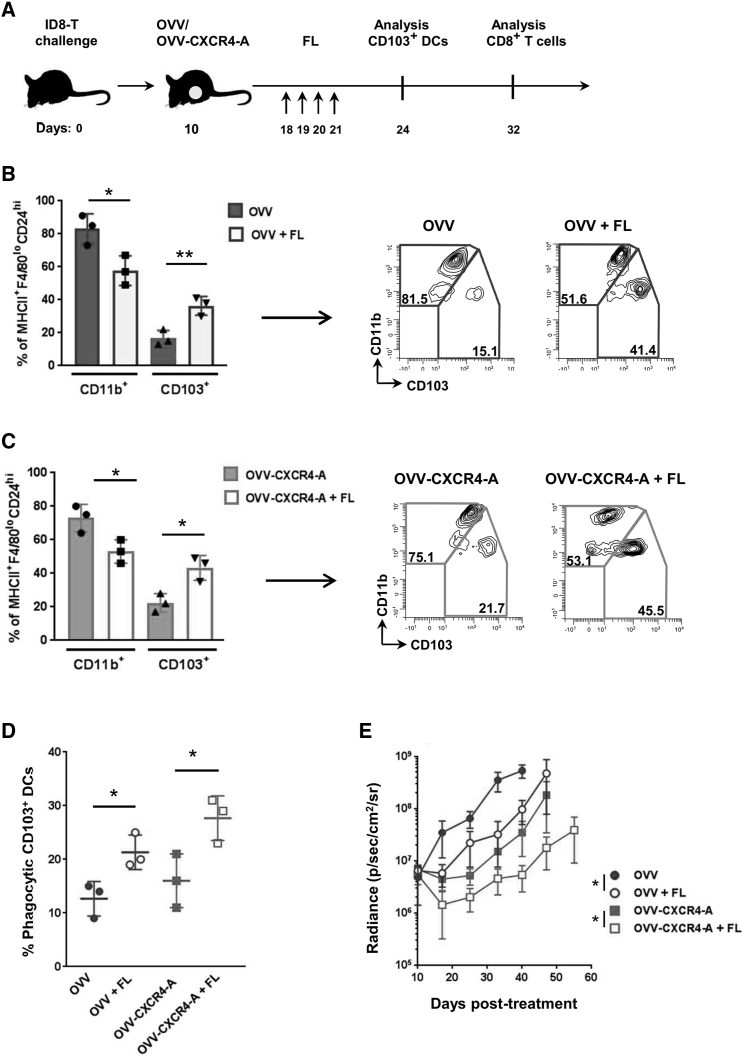
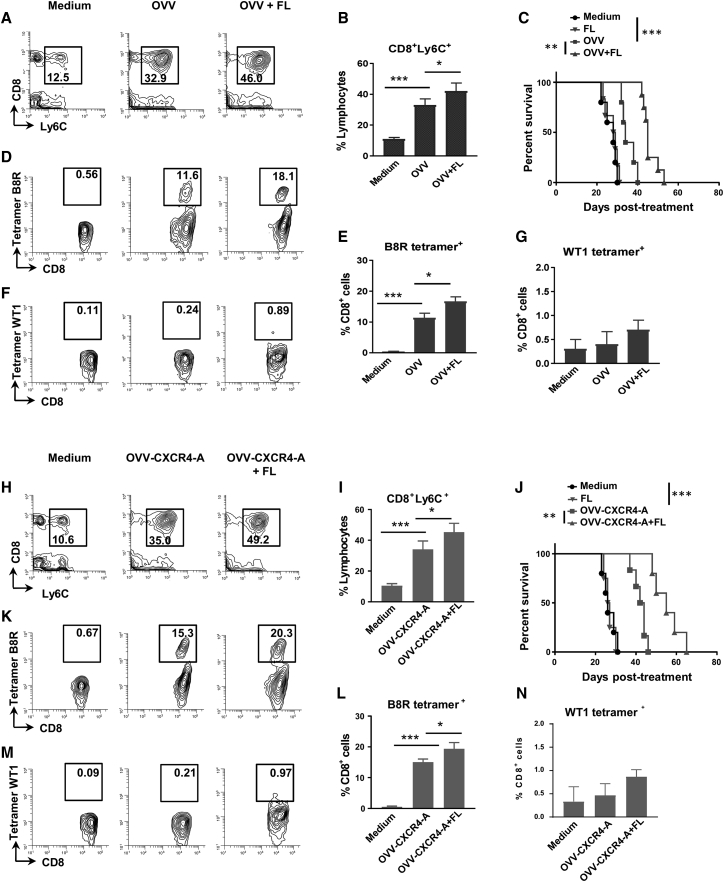
Intratumoral dendritic cells play an important role in stimulating cytotoxic T cells and driving antitumor immunity. Using a metastatic ovarian tumor model in syngeneic mice, we explored whether therapy with a CXCR4 antagonist-armed oncolytic vaccinia virus activates endogenous CD103 dendritic cell responses associated with the induction of adaptive immunity against viral and tumor antigens. The overall goal of this study was to determine whether expansion of CD103 dendritic cells by the virally delivered CXCR4 antagonist augments overall survival and boosting with a tumor antigen peptide-based vaccine. We found that locoregional delivery of the CXCR4-A-armed virus reduced the tumor load and the immunosuppressive network in the tumor microenvironment, leading to infiltration of CD103 dendritic cells that were capable of phagocytic clearance of cellular material from virally infected cancer cells. Further expansion of tumor-resident CD103 DCs by injecting the FMS-related tyrosine kinase 3 ligand, the formative cytokine for CD103 DCs, provided a platform for a booster immunization with the Wilms tumor antigen 1 peptide-based vaccine delivered intraperitoneally with polyriboinosinic:polyribocytidylic acid as an adjuvant. The vaccine-induced antitumor responses inhibited tumor growth and increased overall survival, indicating that expansion of intratumoral CD103 dendritic cells by CXCR4-A-armed oncovirotherapy treatment can potentiate cancer vaccine boosting.
肿瘤内的树突状细胞在刺激细胞毒性T细胞和驱动抗肿瘤免疫方面发挥着重要作用。利用同基因小鼠的转移性卵巢肿瘤模型,我们探究了用携带CXCR4拮抗剂的溶瘤痘苗病毒进行治疗是否会激活内源性CD103树突状细胞反应,这种反应与针对病毒和肿瘤抗原的适应性免疫诱导相关。本研究的总体目标是确定通过病毒递送的CXCR4拮抗剂扩增CD103树突状细胞是否会提高总体生存率,以及是否能增强基于肿瘤抗原肽的疫苗的效果。我们发现,局部递送携带CXCR4-A的病毒可降低肿瘤负荷和肿瘤微环境中的免疫抑制网络,导致CD103树突状细胞浸润,这些细胞能够吞噬清除来自病毒感染癌细胞的细胞物质。通过注射FMS相关酪氨酸激酶3配体(CD103树突状细胞的形成性细胞因子)进一步扩增肿瘤驻留的CD103树突状细胞,为用肾母细胞瘤抗原1肽基疫苗进行加强免疫提供了一个平台,该疫苗通过腹腔注射并以聚肌苷酸:聚胞苷酸作为佐剂。疫苗诱导的抗肿瘤反应抑制了肿瘤生长并提高了总体生存率,表明通过携带CXCR4-A的溶瘤病毒疗法治疗扩增肿瘤内CD103树突状细胞可增强癌症疫苗的加强效果。