Guadamuro Lucía, Azcárate-Peril M Andrea, Tojo Rafael, Mayo Baltasar, Delgado Susana
Department of Microbiology and Biochemistry of Dairy Products, Instituto de Productos Lácteos de Asturias (IPLA-CSIC), Paseo Río Linares s/n, 33300-Villaviciosa, Asturias, Spain.
Department of Medicine, Division of Gastroenterology and Hepatology, and Microbiome Core Facility, School of Medicine, University of North Carolina (UNC), Chapel Hill, NC 27599-7555, USA.
AIMS Microbiol. 2019 Mar 22;5(1):102-116. doi: 10.3934/microbiol.2019.1.102. eCollection 2019.
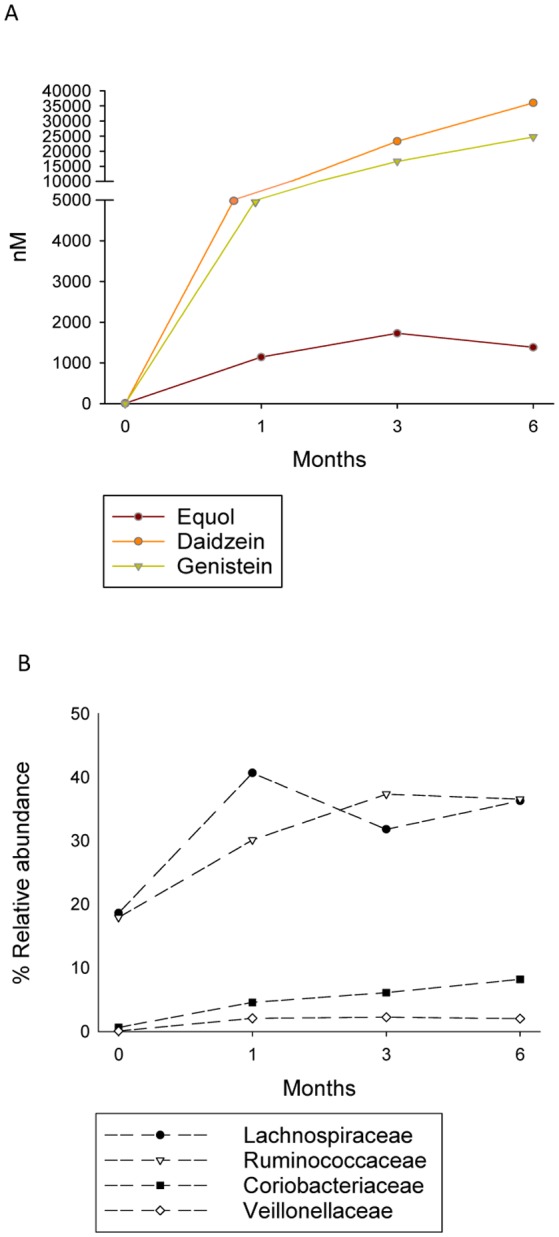
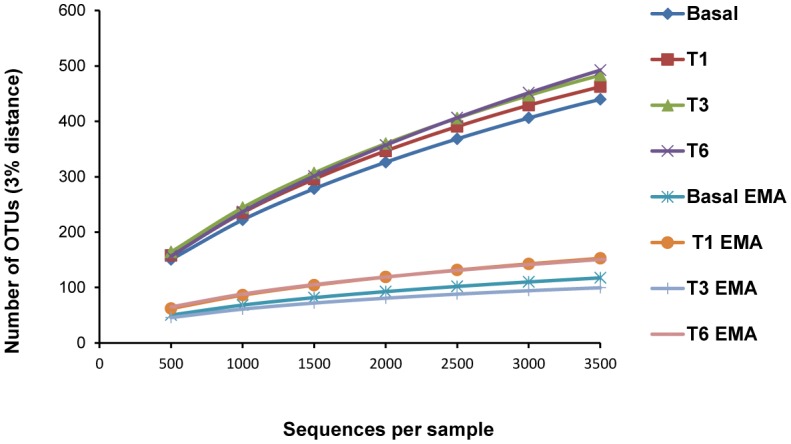
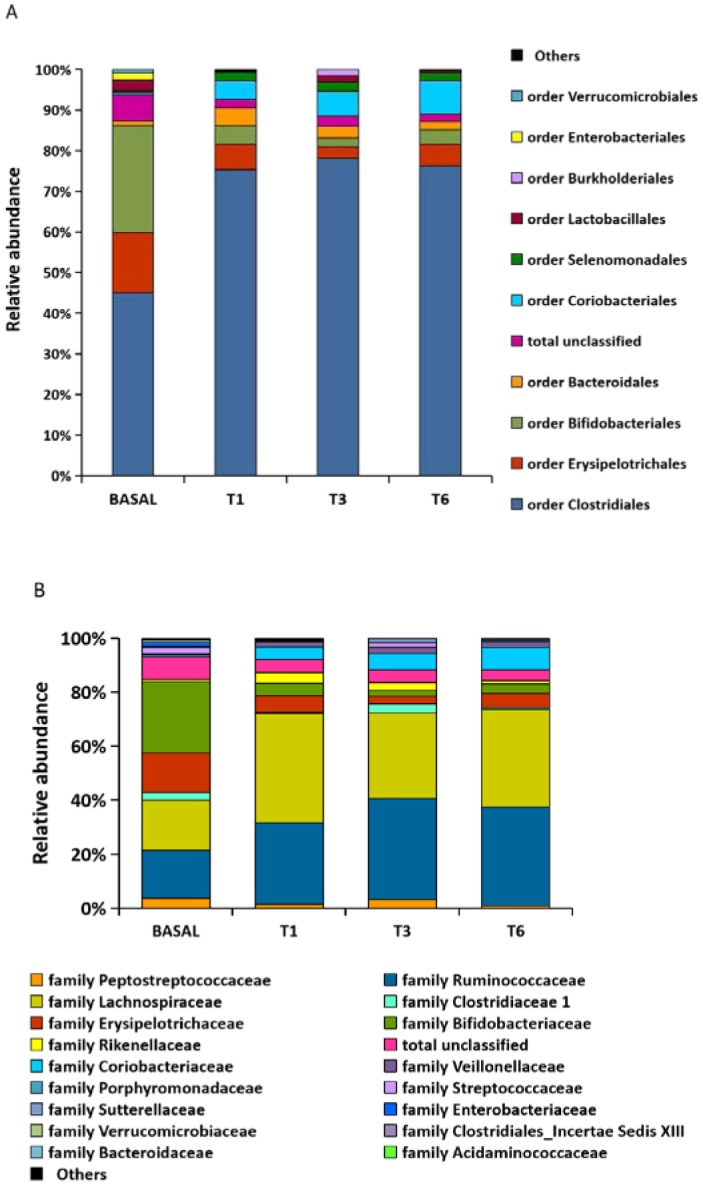
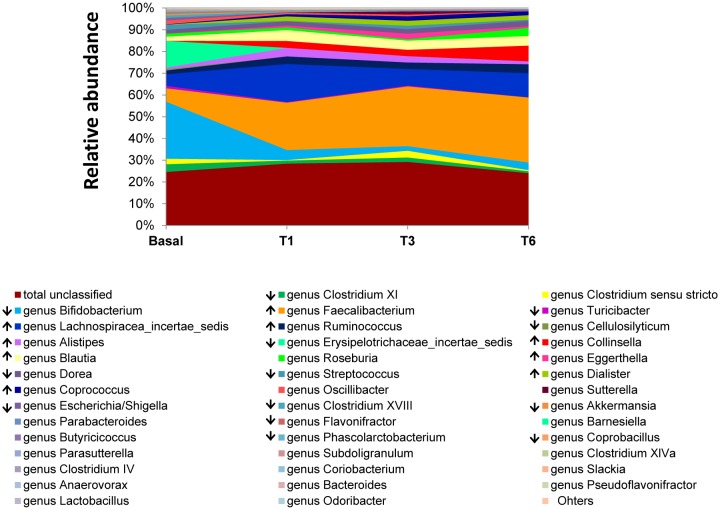
This work describes the impact of long term consumption of an isoflavone-rich dietary daily supplement on the composition and diversity of the faecal microbiota of a menopausal, equol-producing woman. Sequencing of 16S rDNA amplicons was performed on faecal samples taken at 0, 1, 3 and 6 months of treatment. Additionally, and for comparative purposes, ethidium monoazide (EMA) was used to avoid detection of DNA from dead bacteria. Members of two genera of the family Coriobacteriaceae ( and ) were found in greater proportions at all sampling points during isoflavone supplementation. Different genera of the family Ruminococcaceae (e.g., and ), as well as members of the family Lachnospiraceae () also underwent significant increases. For this last genus a positive correlation with the levels of equol excretion in urine was found. Currently bacterial strains known to be involved in isoflavone metabolism and equol production have been assigned to these taxa. The use of EMA dye allowed us to unravel those bacterial gut linages (e.g., Lachnospiraceae) that were more susceptible to damage. Our study contributes to the identification of microorganisms possibly involved in the production of isoflavone-desirable metabolites (such as equol), which could ultimately be isolated and further used as probiotics by people who cannot naturally benefit from isoflavones.
这项研究描述了长期食用富含异黄酮的膳食补充剂对一名绝经后能产生雌马酚的女性粪便微生物群的组成和多样性的影响。在治疗的0、1、3和6个月采集粪便样本,对16S rDNA扩增子进行测序。此外,为了进行比较,使用了单叠氮溴化乙锭(EMA)来避免检测到死菌的DNA。在补充异黄酮期间的所有采样点,发现科里杆菌科的两个属(和)的成员比例更高。瘤胃球菌科的不同属(如和)以及毛螺菌科()的成员也显著增加。对于最后一个属,发现其与尿中雌马酚排泄水平呈正相关。目前已知参与异黄酮代谢和雌马酚产生的细菌菌株已被归入这些分类群。使用EMA染料使我们能够揭示那些更易受损的肠道细菌谱系(如毛螺菌科)。我们的研究有助于鉴定可能参与产生异黄酮所需代谢物(如雌马酚)的微生物,最终这些微生物可以被分离出来,并被那些无法从异黄酮中自然获益的人用作益生菌。