Vaccine and Infectious Disease Division, Fred Hutchinson Cancer Research Center, Seattle, United States.
Molecular and Cell Biology Program, University of Washington, Seattle, United States.
Elife. 2019 Aug 6;8:e42496. doi: 10.7554/eLife.42496.
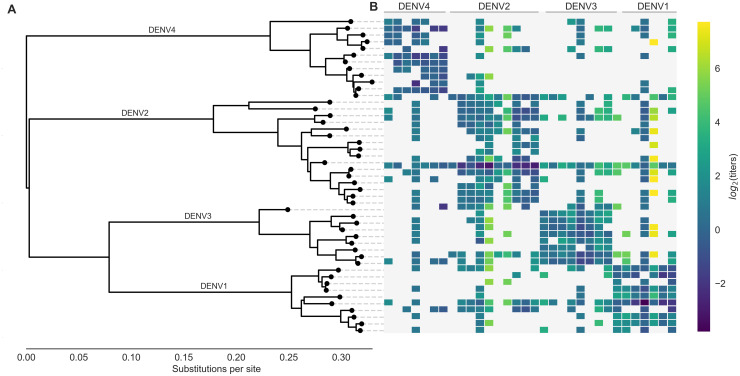
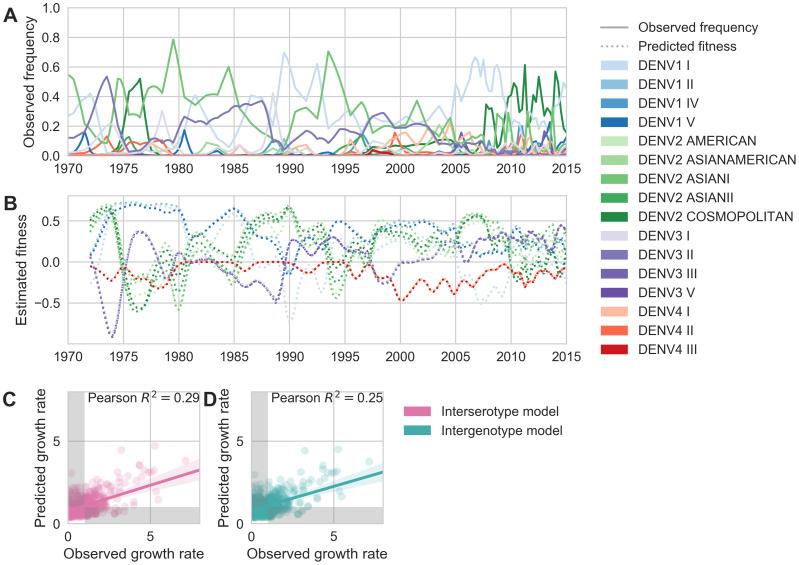
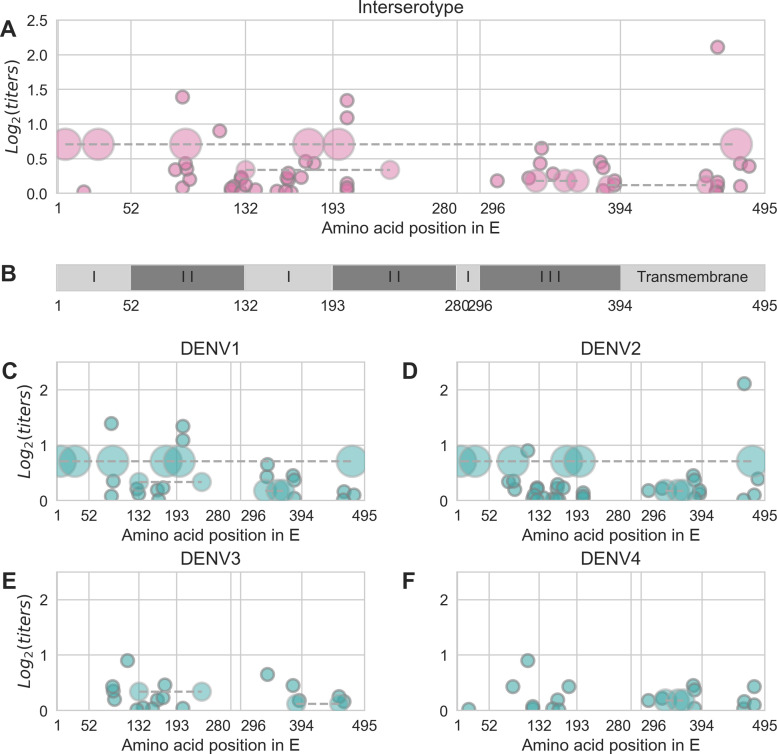
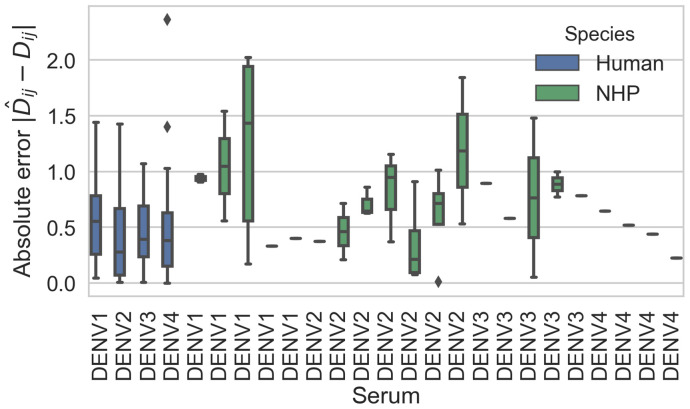
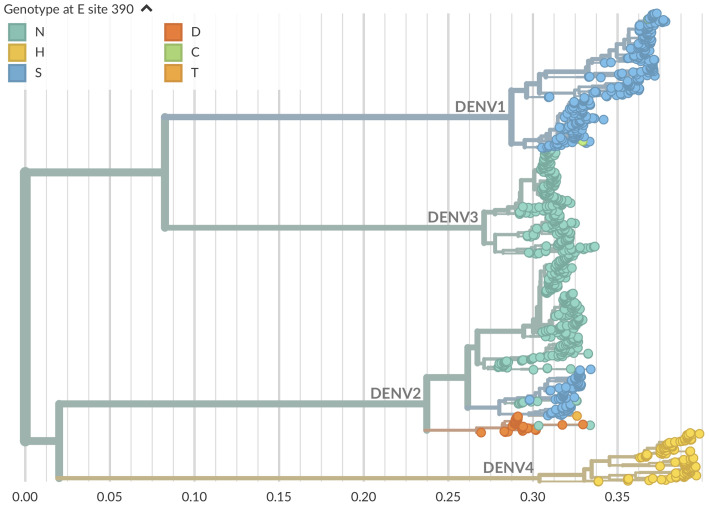
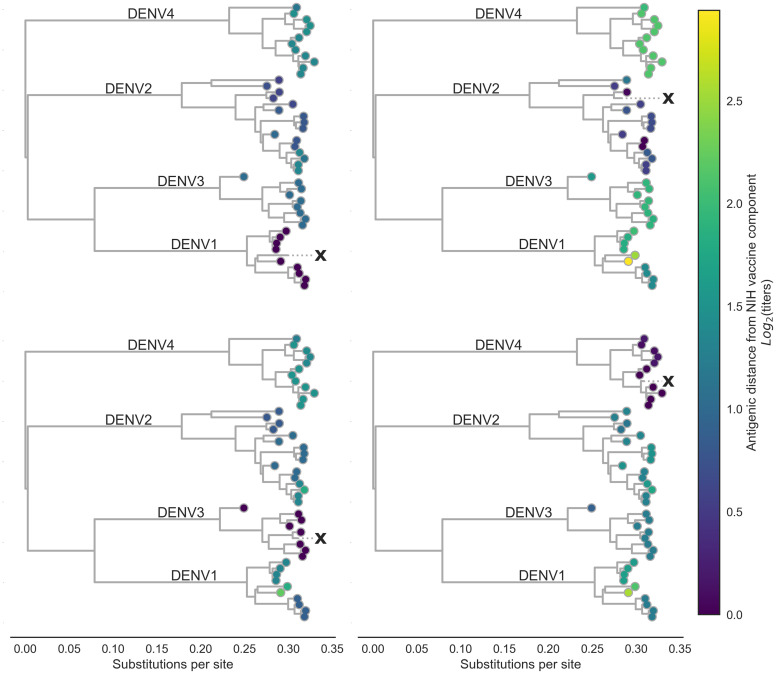
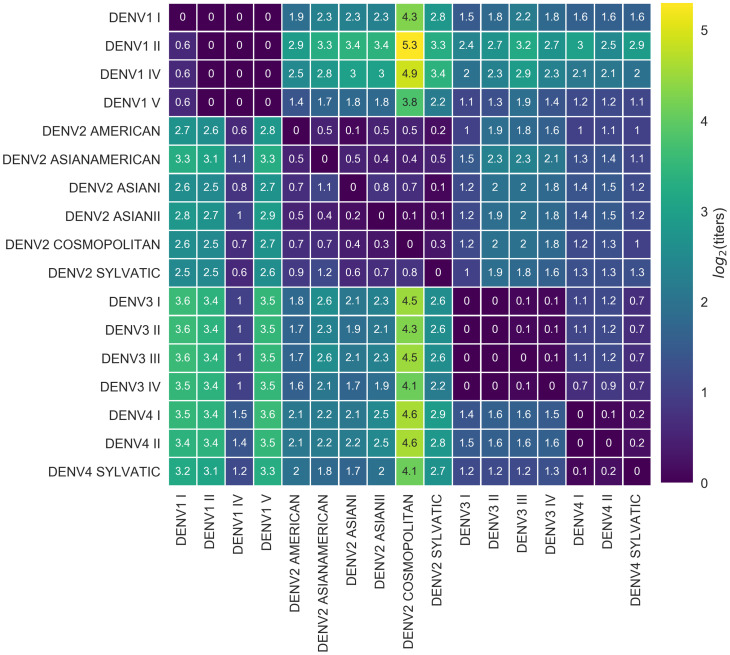
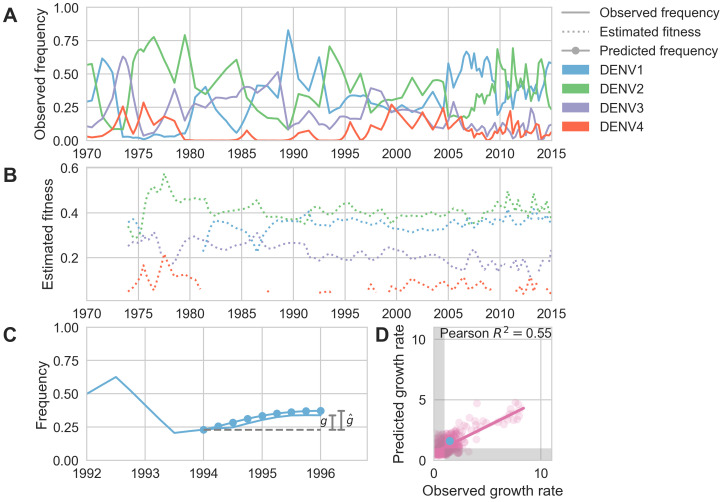
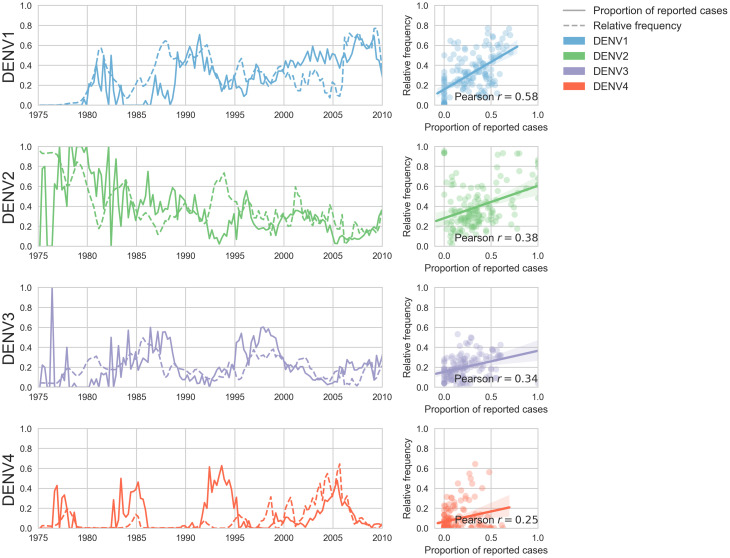
Dengue virus (DENV) exists as four genetically distinct serotypes, each of which is historically assumed to be antigenically uniform. Recent analyses suggest that antigenic heterogeneity may exist within each serotype, but its source, extent and impact remain unclear. Here, we construct a sequence-based model to directly map antigenic change to underlying genetic divergence. We identify 49 specific substitutions and four colinear substitution clusters that robustly predict dengue antigenic relationships. We report moderate antigenic diversity within each serotype, resulting in genotype-specific patterns of heterotypic cross-neutralization. We also quantify the impact of antigenic variation on real-world DENV population dynamics, and find that serotype-level antigenic fitness is a dominant driver of dengue clade turnover. These results provide a more nuanced understanding of the relationship between dengue genetic and antigenic evolution, and quantify the effect of antigenic fitness on dengue evolutionary dynamics.
登革热病毒(DENV)存在四种遗传上不同的血清型,每种血清型在历史上都假定为抗原均一。最近的分析表明,每个血清型内可能存在抗原异质性,但它的来源、程度和影响仍不清楚。在这里,我们构建了一个基于序列的模型,将抗原变化直接映射到潜在的遗传分歧上。我们确定了 49 个特定的替换和四个共线性替换簇,这些替换和簇能够可靠地预测登革热的抗原关系。我们报告了每个血清型内的中等抗原多样性,导致了基因型特异性的异型交叉中和模式。我们还量化了抗原变异对真实世界 DENV 种群动态的影响,发现血清型水平的抗原适应性是登革热分支更替的主要驱动因素。这些结果提供了对登革热遗传和抗原进化之间关系的更细致的理解,并量化了抗原适应性对登革热进化动态的影响。