Food and Nutritional Sciences Programme, School of Life Sciences, The Chinese University of Hong Kong, Shatin, New Territories, Hong Kong SAR, China.
Molecules. 2019 Aug 5;24(15):2846. doi: 10.3390/molecules24152846.
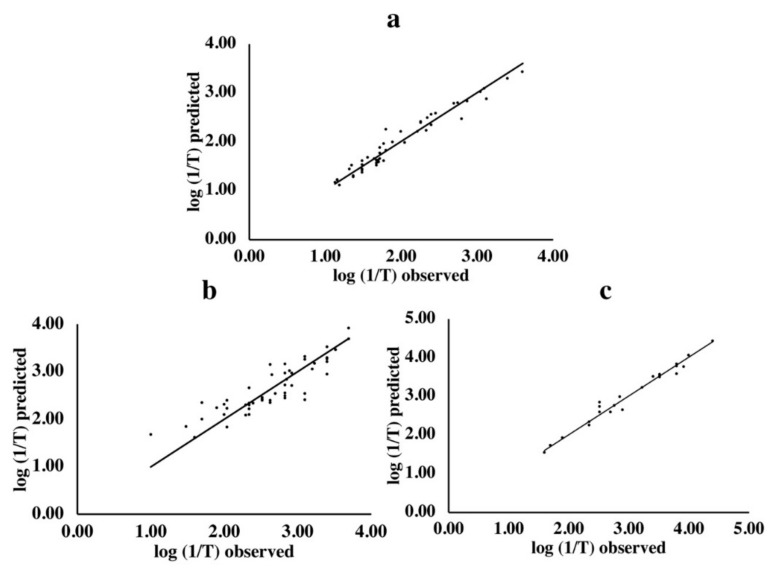
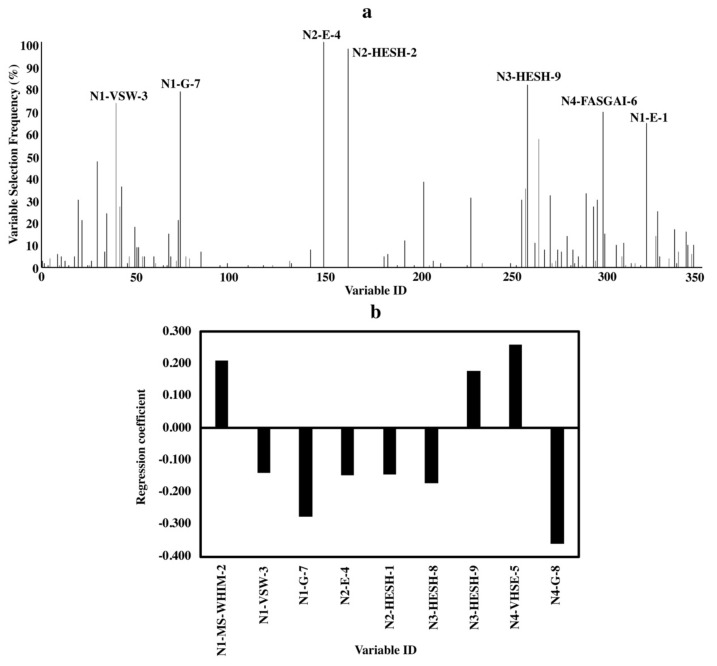
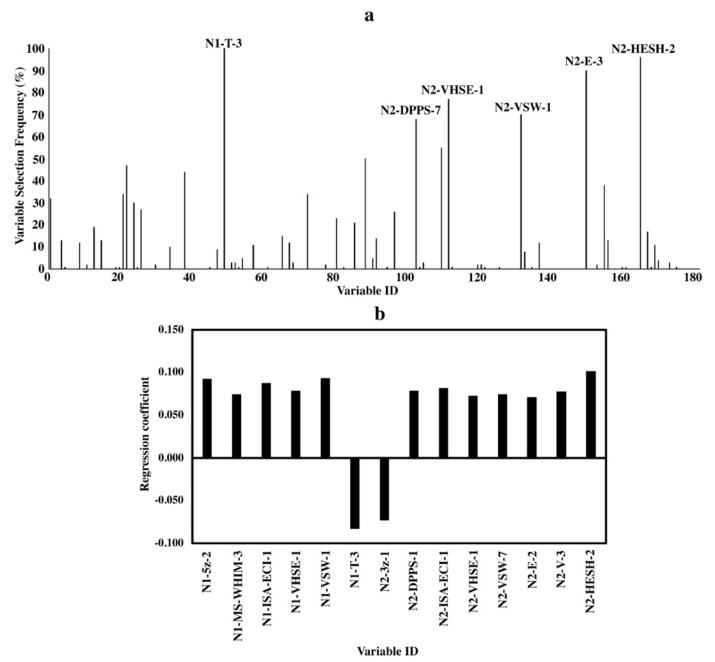
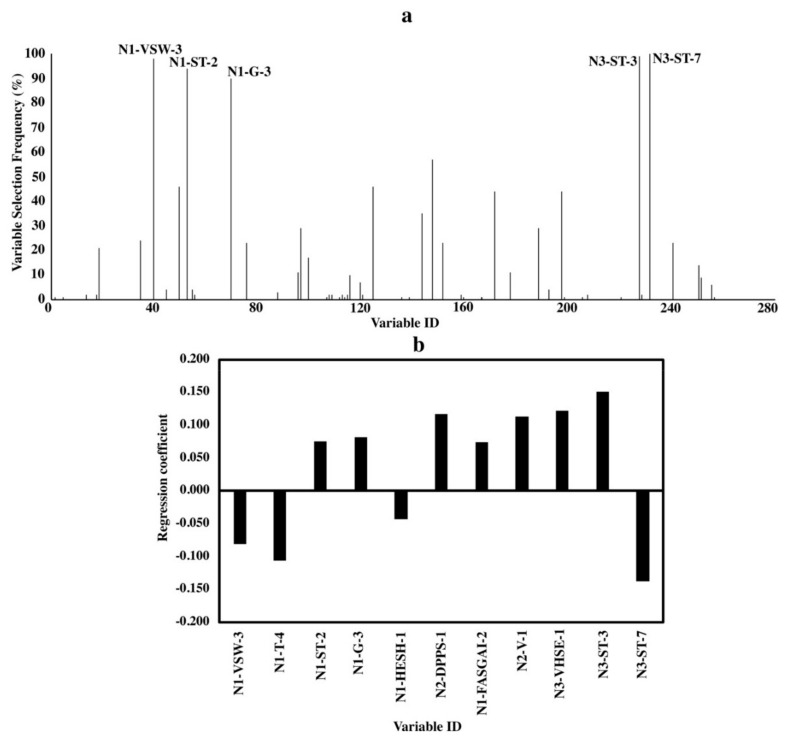
New quantitative structure-activity relationship (QSAR) models for bitter peptides were built with integrated amino acid descriptors. Datasets contained 48 dipeptides, 52 tripeptides and 23 tetrapeptides with their reported bitter taste thresholds. Independent variables consisted of 14 amino acid descriptor sets. A bootstrapping soft shrinkage approach was utilized for variable selection. The importance of a variable was evaluated by both variable selecting frequency and standardized regression coefficient. Results indicated model qualities for di-, tri- and tetrapeptides with R and Q at 0.950 ± 0.002, 0.941 ± 0.001; 0.770 ± 0.006, 0.742 ± 0.004; and 0.972 ± 0.002, 0.956 ± 0.002, respectively. The hydrophobic C-terminal amino acid was the key determinant for bitterness in dipeptides, followed by the contribution of bulky hydrophobic N-terminal amino acids. For tripeptides, hydrophobicity of C-terminal amino acids and the electronic properties of the amino acids at the second position were important. For tetrapeptides, bulky hydrophobic amino acids at N-terminus, hydrophobicity and partial specific volume of amino acids at the second position, and the electronic properties of amino acids of the remaining two positions were critical. In summary, this study not only constructs reliable models for predicting the bitterness in different groups of peptides, but also facilitates better understanding of their structure-bitterness relationships and provides insights for their future studies.
建立了新的苦味肽定量构效关系(QSAR)模型,整合了氨基酸描述符。数据集包含 48 个二肽、52 个三肽和 23 个四肽,以及它们报告的苦味阈值。自变量由 14 个氨基酸描述符集组成。采用自举软收缩方法进行变量选择。通过变量选择频率和标准化回归系数来评估变量的重要性。结果表明,二肽、三肽和四肽模型的 R 和 Q 值分别为 0.950±0.002、0.941±0.001;0.770±0.006、0.742±0.004;0.972±0.002、0.956±0.002。二肽中苦味的关键决定因素是 C 末端氨基酸的疏水性,其次是大疏水性 N 末端氨基酸的贡献。对于三肽,C 末端氨基酸的疏水性和第二位氨基酸的电子性质很重要。对于四肽,N 末端的大疏水性氨基酸、第二位氨基酸的疏水性和偏摩尔体积以及其余两个位置的氨基酸的电子性质是关键。总之,本研究不仅构建了用于预测不同组肽苦味的可靠模型,而且有助于更好地理解它们的结构-苦味关系,并为它们的未来研究提供了见解。