Soltani Somaieh, Haghaei Hossein, Shayanfar Ali, Vallipour Javad, Asadpour Zeynali Karim, Jouyban Abolghasem
Biotechnology Research Center and Faculty of Pharmacy, Tabriz University of Medical Sciences, Tabriz 51664, Iran.
Hematology and Oncology Research Center, Tabriz University of Medical Sciences, Tabriz 51664, Iran.
Biomed Res Int. 2013;2013:501310. doi: 10.1155/2013/501310. Epub 2013 Nov 25.
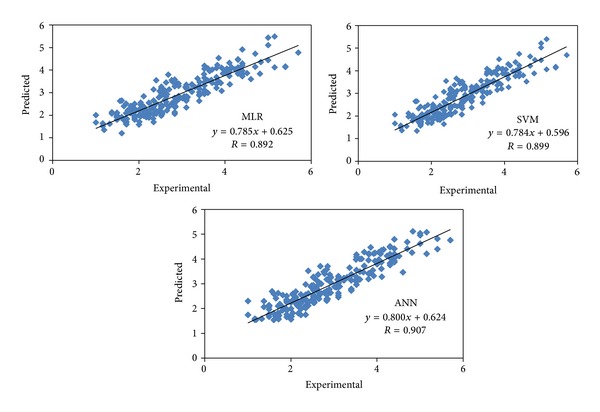
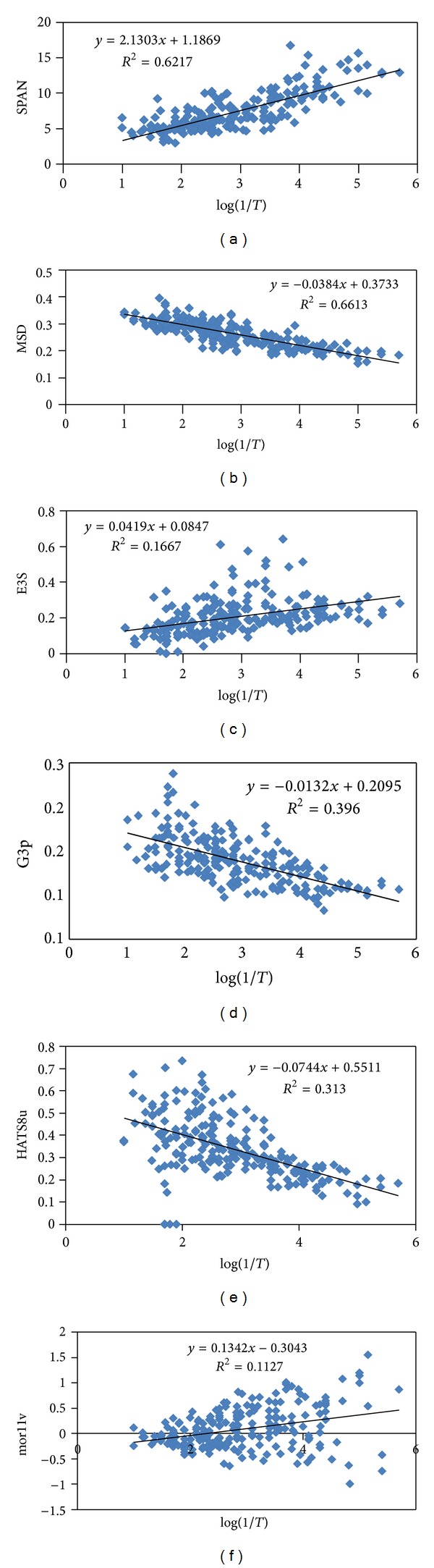
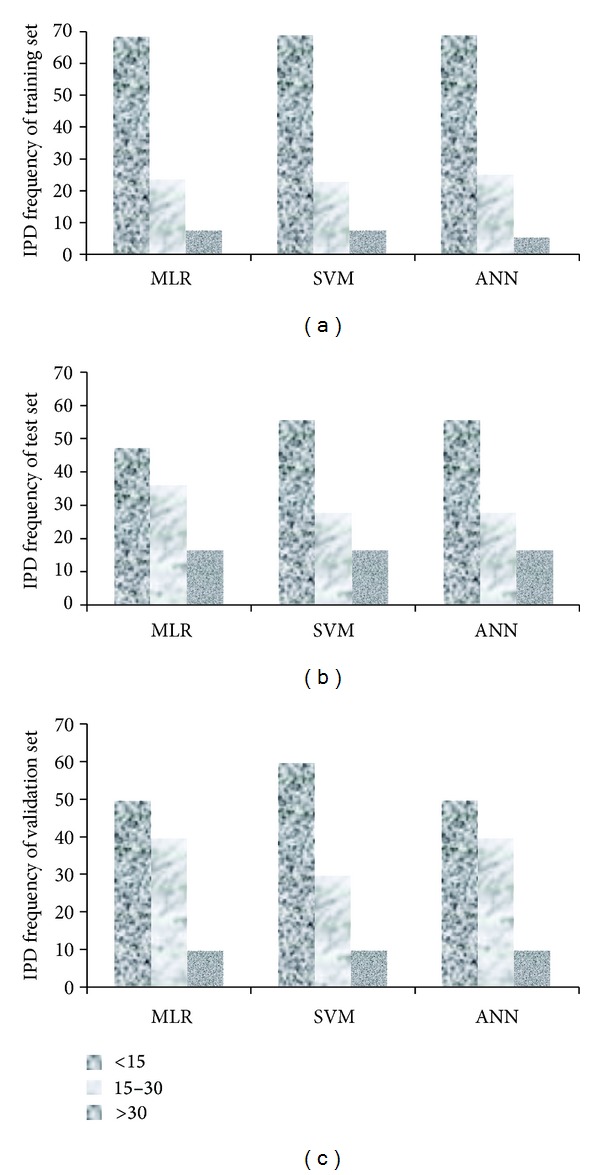
Detailed information about the relationships between structures and properties/activities of peptides as drugs and nutrients is useful in the development of drugs and functional foods containing peptides as active compounds. The bitterness of the peptides is an undesirable property which should be reduced during drug/nutrient production, and quantitative structure bitter taste relationship (QSBR) studies can help researchers to design less bitter peptides with higher target efficiency. Calculated structural parameters were used to develop three different QSBR models (i.e., multiple linear regression, support vector machine, and artificial neural network) to predict the bitterness of 229 peptides (containing 2-12 amino acids, obtained from the literature). The developed models were validated using internal and external validation methods, and the prediction errors were checked using mean percentage deviation and absolute average error values. All developed models predicted the activities successfully (with prediction errors less than experimental error values), whereas the prediction errors for nonlinear methods were less than those for linear methods. The selected structural descriptors successfully differentiated between bitter and nonbitter peptides.
肽作为药物和营养物质时,其结构与性质/活性之间关系的详细信息,对于开发含有肽作为活性成分的药物和功能性食品很有用。肽的苦味是一种不良性质,在药物/营养物质生产过程中应予以降低,而定量结构-苦味关系(QSBR)研究可以帮助研究人员设计出苦味较低且靶向效率更高的肽。利用计算得到的结构参数建立了三种不同的QSBR模型(即多元线性回归、支持向量机和人工神经网络),以预测229种肽(含2 - 12个氨基酸,取自文献)的苦味。所建立的模型采用内部和外部验证方法进行验证,并使用平均百分比偏差和绝对平均误差值检查预测误差。所有建立的模型均成功预测了活性(预测误差小于实验误差值),而非线性方法的预测误差小于线性方法。所选的结构描述符成功地区分了苦味肽和非苦味肽。