• 文献检索
  • 文档翻译
  • 深度研究
  • 学术资讯
  • Suppr Zotero 插件Zotero 插件
  • 邀请有礼
  • 套餐&价格
  • 历史记录
应用&插件
Suppr Zotero 插件Zotero 插件浏览器插件Mac 客户端Windows 客户端微信小程序
定价
高级版会员购买积分包购买API积分包
服务
文献检索文档翻译深度研究API 文档MCP 服务
关于我们
关于 Suppr公司介绍联系我们用户协议隐私条款
关注我们

Suppr 超能文献

核心技术专利:CN118964589B侵权必究
粤ICP备2023148730 号-1Suppr @ 2026

文献检索

告别复杂PubMed语法,用中文像聊天一样搜索,搜遍4000万医学文献。AI智能推荐,让科研检索更轻松。

立即免费搜索

文件翻译

保留排版,准确专业,支持PDF/Word/PPT等文件格式,支持 12+语言互译。

免费翻译文档

深度研究

AI帮你快速写综述,25分钟生成高质量综述,智能提取关键信息,辅助科研写作。

立即免费体验

柯萨奇病毒 A10 感染性 cDNA 克隆的构建与鉴定。

Construction and characterization of an infectious cDNA clone of coxsackievirus A 10.

机构信息

Department of Laboratory Medicine, The Second Affiliated Hospital of Guilin Medical University, Guilin, Guangxi, China.

College of Bio-technology, Guilin Medical University, Guilin, Guangxi, China.

出版信息

Virol J. 2019 Aug 6;16(1):98. doi: 10.1186/s12985-019-1201-1.

DOI:10.1186/s12985-019-1201-1
PMID:31387601
原文链接:https://pmc.ncbi.nlm.nih.gov/articles/PMC6685229/
Abstract

BACKGROUND

Coxsackievirus A10 (CA10) constitutes one of the four major pathogens causing hand, foot and mouth disease in infants. Infectious clones are of great importance for studying viral gene functions and pathogenic mechanism. However, there is no report on the construction of CA10 infectious clones.

METHODS

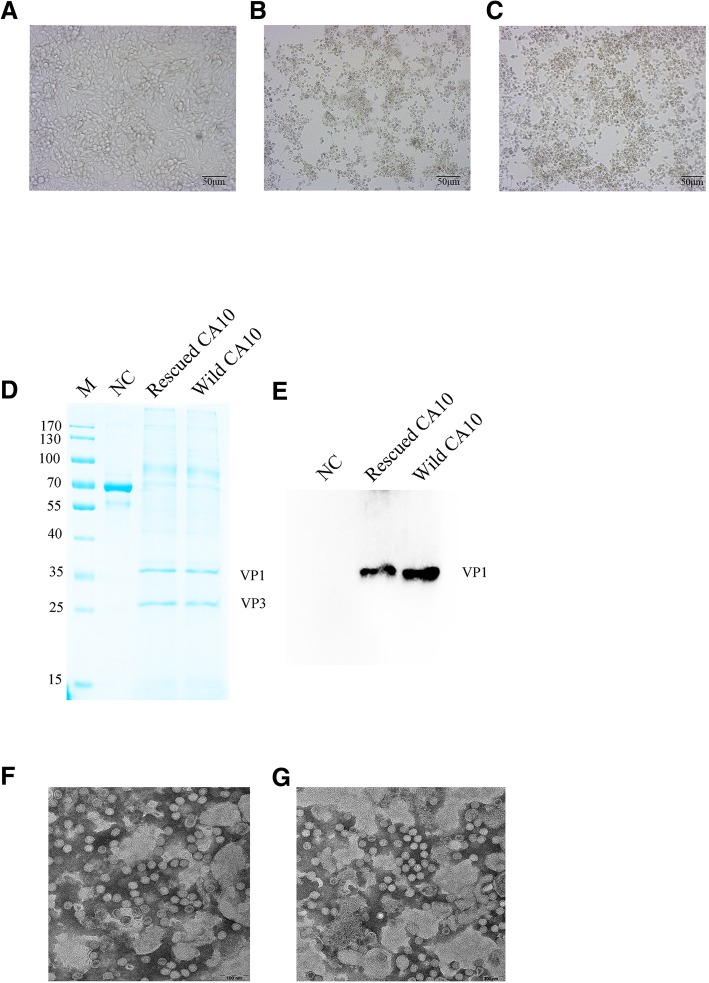
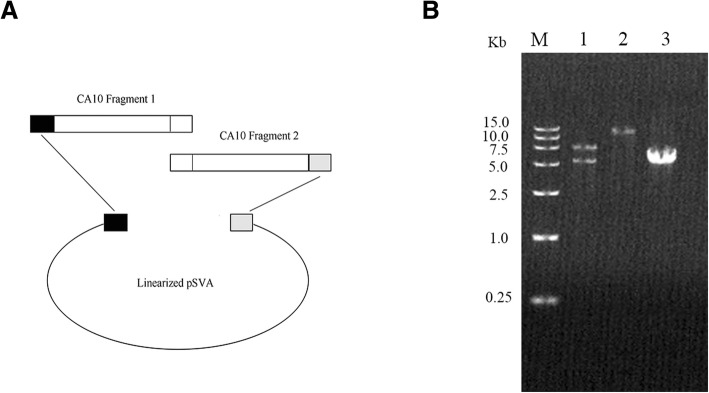
The whole genome of CA10 derived from a clinical isolate was amplified into two fragments and ligated into a linearized plasmid vector in one step by In-Fusion Cloning. The obtained CA10 cDNA clones and plasmids encoding T7 RNA polymerase were co-transfected into 293 T cells to rescue CA10 virus. The rescued virus was identified by SDS-PAGE, Western blotting and transmission electron microscopic. One-day-old ICR mice were intracerebrally inoculated with the CA10 virus and clinical symptoms were observed. Multiple tissues of moribund mice were harvested for analysis of pathogenic changes and viral distribution by using H&E staining, real-time PCR and immunohistochemical staining.

RESULTS

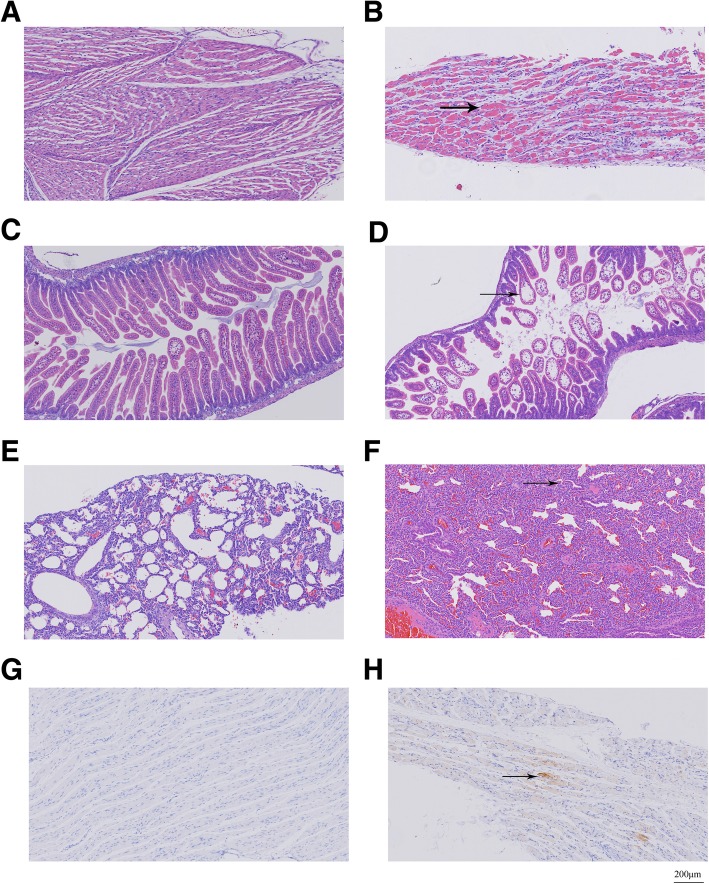
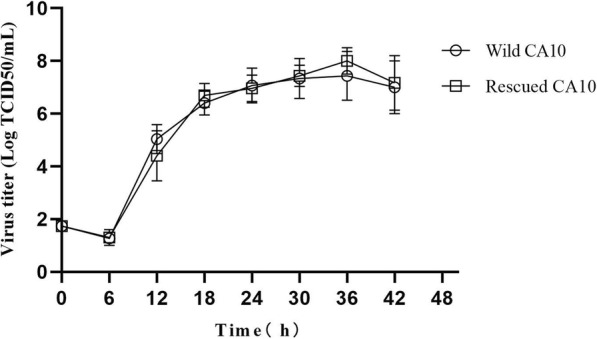
CA10 viruses were rescued from the constructed cDNA clone and reached a maximum titer of 10TCID/mL after one generation in RD cells. The virus exhibited similar physical and chemical properties to those of the parental virus. It also showed high virulence and the ability to induce death of neonatal ICR mice. Severe necrotizing myositis, intestinal villus interstitial edema and severe alveolar shrinkage were observed in infected mice. The viral antigen and the maximum amount of viral RNA were detected in limb skeletal muscles, which suggested that the limb skeletal muscles were the most likely site of viral replication.

CONCLUSION

Infectious clones of CA10 were successfully constructed for the first time, which will facilitate the establishment of standardized neonatal mouse models infected with CA10 for the evaluation of vaccines and antiviral drugs, as well as preservation and sharing of model strains.

摘要

背景

柯萨奇病毒 A10(CA10)是导致婴幼儿手足口病的四大病原体之一。感染性克隆对于研究病毒基因功能和致病机制非常重要。然而,目前尚无关于 CA10 感染性克隆构建的报道。

方法

通过 In-Fusion 克隆技术,将来源于临床分离株的 CA10 全基因组一步扩增为两个片段并连接到线性化的质粒载体上。将获得的 CA10 cDNA 克隆和编码 T7 RNA 聚合酶的质粒共转染 293T 细胞以拯救 CA10 病毒。通过 SDS-PAGE、Western blot 和透射电镜观察鉴定拯救的病毒。将 CA10 病毒通过脑内途径接种于 1 日龄 ICR 小鼠,观察临床症状。对濒死小鼠的多个组织进行 H&E 染色、实时 PCR 和免疫组化染色,分析致病变化和病毒分布。

结果

从构建的 cDNA 克隆中拯救出了 CA10 病毒,在 RD 细胞中传代一代后达到了 10TCID/mL 的最大滴度。该病毒具有与亲本病毒相似的理化性质,也具有高毒力和诱导新生 ICR 小鼠死亡的能力。感染小鼠出现严重的坏死性肌炎、肠绒毛间质水肿和严重的肺泡收缩。在感染小鼠中检测到病毒抗原和最大量的病毒 RNA,提示肢体骨骼肌可能是病毒复制的最可能部位。

结论

首次成功构建了 CA10 的感染性克隆,这将有助于建立标准化的感染 CA10 的新生小鼠模型,用于疫苗和抗病毒药物的评估,以及模型株的保存和共享。
https://cdn.ncbi.nlm.nih.gov/pmc/blobs/f71d/6685229/906eeb0a12a7/12985_2019_1201_Fig5_HTML.jpg
https://cdn.ncbi.nlm.nih.gov/pmc/blobs/f71d/6685229/79f1d3fa47ae/12985_2019_1201_Fig1_HTML.jpg
https://cdn.ncbi.nlm.nih.gov/pmc/blobs/f71d/6685229/38d7427a0b94/12985_2019_1201_Fig2_HTML.jpg
https://cdn.ncbi.nlm.nih.gov/pmc/blobs/f71d/6685229/9be410be1fdd/12985_2019_1201_Fig3_HTML.jpg
https://cdn.ncbi.nlm.nih.gov/pmc/blobs/f71d/6685229/ca85163024f9/12985_2019_1201_Fig4_HTML.jpg
https://cdn.ncbi.nlm.nih.gov/pmc/blobs/f71d/6685229/906eeb0a12a7/12985_2019_1201_Fig5_HTML.jpg
https://cdn.ncbi.nlm.nih.gov/pmc/blobs/f71d/6685229/79f1d3fa47ae/12985_2019_1201_Fig1_HTML.jpg
https://cdn.ncbi.nlm.nih.gov/pmc/blobs/f71d/6685229/38d7427a0b94/12985_2019_1201_Fig2_HTML.jpg
https://cdn.ncbi.nlm.nih.gov/pmc/blobs/f71d/6685229/9be410be1fdd/12985_2019_1201_Fig3_HTML.jpg
https://cdn.ncbi.nlm.nih.gov/pmc/blobs/f71d/6685229/ca85163024f9/12985_2019_1201_Fig4_HTML.jpg
https://cdn.ncbi.nlm.nih.gov/pmc/blobs/f71d/6685229/906eeb0a12a7/12985_2019_1201_Fig5_HTML.jpg

相似文献

1
Construction and characterization of an infectious cDNA clone of coxsackievirus A 10.柯萨奇病毒 A10 感染性 cDNA 克隆的构建与鉴定。
Virol J. 2019 Aug 6;16(1):98. doi: 10.1186/s12985-019-1201-1.
2
Construction and characterization of an infectious clone of coxsackievirus A6 that showed high virulence in neonatal mice.在新生小鼠中表现出高毒力的柯萨奇病毒A6感染性克隆的构建与鉴定
Virus Res. 2015 Dec 2;210:165-8. doi: 10.1016/j.virusres.2015.08.002. Epub 2015 Aug 10.
3
Protective Efficacies of Formaldehyde-Inactivated Whole-Virus Vaccine and Antivirals in a Murine Model of Coxsackievirus A10 Infection.甲醛灭活全病毒疫苗和抗病毒药物在柯萨奇病毒A10感染小鼠模型中的保护效力
J Virol. 2017 Jun 9;91(13). doi: 10.1128/JVI.00333-17. Print 2017 Jul 1.
4
Construction and characterization of an infectious clone of coxsackievirus A16.构建并鉴定柯萨奇病毒 A16 的感染性克隆。
Virol J. 2011 Dec 13;8:534. doi: 10.1186/1743-422X-8-534.
5
Construction and characterization of an infectious cDNA clone of enterovirus 71: a rapid method for rescuing infectious virus based on stable cells expressing T7 polymerase.肠道病毒 71 型感染性 cDNA 克隆的构建与鉴定:基于稳定表达 T7 聚合酶细胞系拯救感染性病毒的快速方法。
Arch Virol. 2021 Feb;166(2):627-632. doi: 10.1007/s00705-020-04940-9. Epub 2021 Jan 9.
6
[Rescue of bovine Asia 1 serotype foot-and-mouth disease virus from a full-length cDNA clone].[从全长cDNA克隆拯救牛亚洲1型口蹄疫病毒]
Sheng Wu Gong Cheng Xue Bao. 2009 Nov;25(11):1621-6.
7
An infectious clone of enterovirus 71(EV71) that is capable of infecting neonatal immune competent mice without adaptive mutations.一株能够感染无适应性突变的新生免疫能力正常小鼠的肠道病毒 71(EV71)的感染性克隆。
Emerg Microbes Infect. 2020 Feb 21;9(1):427-438. doi: 10.1080/22221751.2020.1729665. eCollection 2020.
8
A neonatal mouse model of coxsackievirus A10 infection for anti-viral evaluation.用于抗病毒评估的柯萨奇病毒 A10 感染新生鼠模型。
Antiviral Res. 2017 Aug;144:247-255. doi: 10.1016/j.antiviral.2017.06.008. Epub 2017 Jun 15.
9
A Neonatal Murine Model of Coxsackievirus A6 Infection for Evaluation of Antiviral and Vaccine Efficacy.用于评估抗病毒和疫苗效力的柯萨奇病毒A6感染新生小鼠模型
J Virol. 2017 Apr 13;91(9). doi: 10.1128/JVI.02450-16. Print 2017 May 1.
10
A murine model of coxsackievirus A16 infection for anti-viral evaluation.用于抗病毒评估的柯萨奇病毒 A16 感染的小鼠模型。
Antiviral Res. 2014 May;105:26-31. doi: 10.1016/j.antiviral.2014.02.015. Epub 2014 Feb 26.

引用本文的文献

1
Elucidating the role of human skeletal muscles in the pathogenesis of enterovirus D68 infection.阐明人类骨骼肌在肠道病毒D68感染发病机制中的作用。
Life Sci Alliance. 2025 Sep 5;8(11). doi: 10.26508/lsa.202503372. Print 2025 Nov.
2
Construction of an infectious clone for enterovirus A89 and mutagenesis analysis of viral infection and cell binding.构建肠道病毒 A89 的感染性克隆及病毒感染和细胞结合的突变分析。
Microbiol Spectr. 2024 Apr 2;12(4):e0333223. doi: 10.1128/spectrum.03332-23. Epub 2024 Mar 5.
3
Identification of a neutralizing linear epitope within the VP1 protein of coxsackievirus A10.

本文引用的文献

1
Clinical and aetiological study of hand, foot and mouth disease in southern Vietnam, 2013-2015: Inpatients and outpatients.2013-2015 年越南南部手足口病的临床和病因学研究:住院患者和门诊患者。
Int J Infect Dis. 2019 Mar;80:1-9. doi: 10.1016/j.ijid.2018.12.004. Epub 2018 Dec 11.
2
Molecular epidemiology and clinical features of hand, foot and mouth disease in northern Thailand in 2016: a prospective cohort study.2016 年泰国北部手足口病的分子流行病学和临床特征:一项前瞻性队列研究。
BMC Infect Dis. 2018 Dec 6;18(1):630. doi: 10.1186/s12879-018-3560-4.
3
Molecular diversity of Coxsackievirus A10 circulating in the southern and northern region of India [2009-17].
鉴定柯萨奇病毒 A10 病毒蛋白 1 中的中和线性表位。
Virol J. 2022 Dec 1;19(1):203. doi: 10.1186/s12985-022-01939-3.
4
Construction and verification of an infectious cDNA clone of coxsackievirus B5.构建并验证柯萨奇病毒 B5 的感染性 cDNA 克隆。
Virol Sin. 2022 Jun;37(3):469-471. doi: 10.1016/j.virs.2022.03.005. Epub 2022 Mar 11.
5
Synthesis and Characterization of a Full-Length Infectious cDNA Clone of .全长传染性 cDNA 克隆的合成与鉴定。
Viruses. 2021 Jun 1;13(6):1050. doi: 10.3390/v13061050.
6
The Establishment of Infectious Clone and Single Round Infectious Particles for Coxsackievirus A10.柯萨奇病毒A10感染性克隆及单轮感染性颗粒的构建
Virol Sin. 2020 Aug;35(4):426-435. doi: 10.1007/s12250-020-00198-2. Epub 2020 Mar 6.
印度南部和北部地区流行的柯萨奇病毒 A10 的分子多样性 [2009-17]。
Infect Genet Evol. 2018 Dec;66:101-110. doi: 10.1016/j.meegid.2018.09.004. Epub 2018 Sep 12.
4
A neonatal mouse model of coxsackievirus A10 infection for anti-viral evaluation.用于抗病毒评估的柯萨奇病毒 A10 感染新生鼠模型。
Antiviral Res. 2017 Aug;144:247-255. doi: 10.1016/j.antiviral.2017.06.008. Epub 2017 Jun 15.
5
Large outbreak of herpangina in children caused by enterovirus in summer of 2015 in Hangzhou, China.2015 年夏季中国杭州发生由肠道病毒引起的儿童疱疹性咽峡炎大暴发。
Sci Rep. 2016 Oct 18;6:35388. doi: 10.1038/srep35388.
6
Hand, foot and mouth disease (HFMD): emerging epidemiology and the need for a vaccine strategy.手足口病(HFMD):新兴的流行病学和疫苗策略的需求。
Med Microbiol Immunol. 2016 Oct;205(5):397-407. doi: 10.1007/s00430-016-0465-y. Epub 2016 Jul 12.
7
Etiology of Multiple Non-EV71 and Non-CVA16 Enteroviruses Associated with Hand, Foot and Mouth Disease in Jinan, China, 2009-June 2013.2009年至2013年6月中国济南与手足口病相关的多种非肠道病毒71型和非柯萨奇病毒A16型肠道病毒的病因学
PLoS One. 2015 Nov 12;10(11):e0142733. doi: 10.1371/journal.pone.0142733. eCollection 2015.
8
Construction and characterization of an infectious clone of coxsackievirus A6 that showed high virulence in neonatal mice.在新生小鼠中表现出高毒力的柯萨奇病毒A6感染性克隆的构建与鉴定
Virus Res. 2015 Dec 2;210:165-8. doi: 10.1016/j.virusres.2015.08.002. Epub 2015 Aug 10.
9
Broad protection with an inactivated vaccine against primary-isolated lethal enterovirus 71 infection in newborn mice.用灭活疫苗对新生小鼠原发性分离的致死性肠道病毒71感染提供广泛保护。
BMC Microbiol. 2015 Jul 15;15:139. doi: 10.1186/s12866-015-0474-9.
10
Construction and characterization of an infectious cDNA clone of Echovirus 25.构建并鉴定肠道病毒 25 型的感染性 cDNA 克隆。
Virus Res. 2015 Jul 2;205:41-4. doi: 10.1016/j.virusres.2015.05.011. Epub 2015 May 22.