Department of Medical Biochemistry, University of Gothenburg, SE-405 30 Gothenburg, Sweden.
Department of Medical Biochemistry, University of Gothenburg, SE-405 30 Gothenburg, Sweden
Biochem J. 2019 Aug 22;476(16):2281-2295. doi: 10.1042/BCJ20190180.
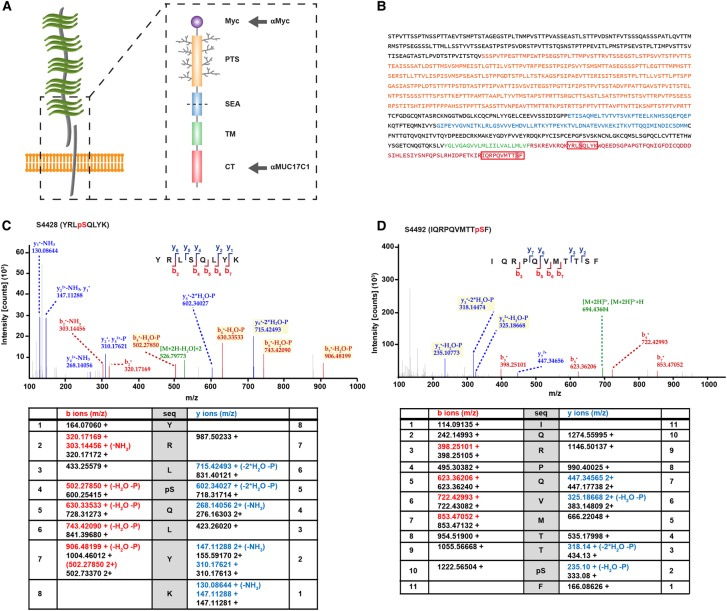
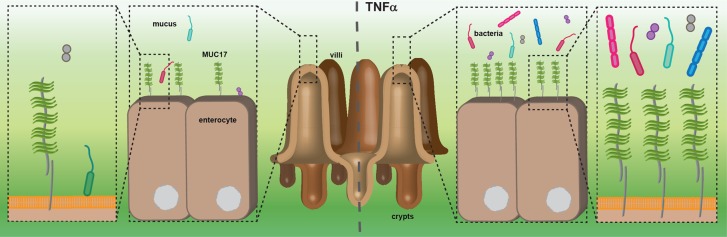
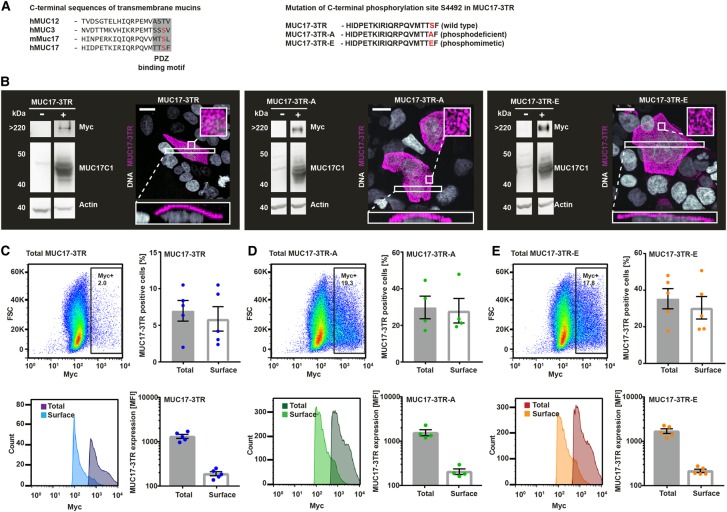
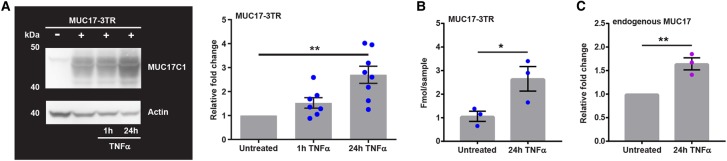
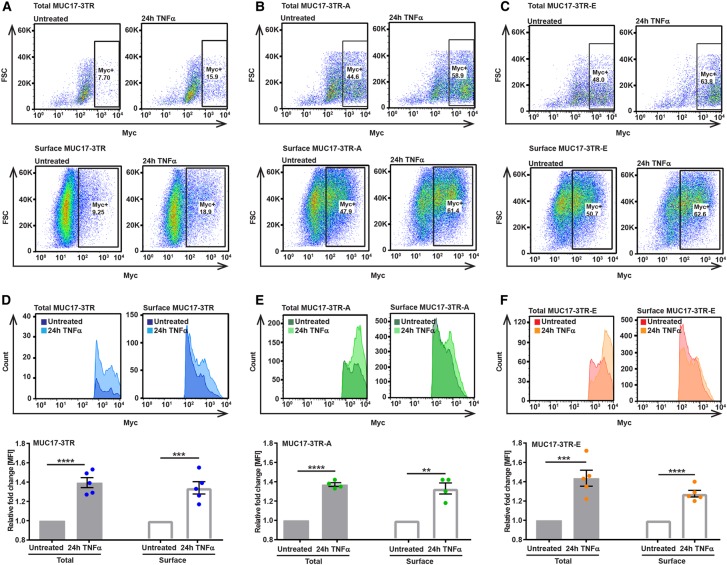
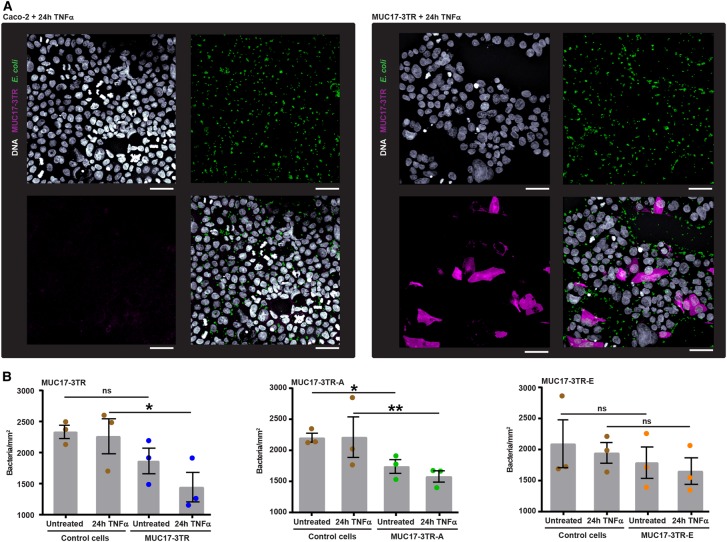
Transmembrane mucin MUC17 is an integral part of the glycocalyx as it covers the brush border membrane of small intestinal enterocytes and presents an extended -glycosylated mucin domain to the intestinal lumen. Here, we identified two unknown phosphorylated serine residues, S4428 and S4492, in the cytoplasmic tail of human MUC17. We have previously demonstrated that MUC17 is anchored to the apical membrane domain via an interaction with the scaffolding protein PDZK1. S4492, localized in the C-terminal PDZ binding motif of MUC17, was mutated to generate phosphomimetic and phosphodeficient variants of MUC17. Using Caco-2 cells as a model system, we found that induction of an inflammatory state by long-term stimulation with the proinflammatory cytokine TNFα resulted in an increase of MUC17 protein levels and enhanced insertion of MUC17 and its two phospho-variants into apical membranes. Up-regulation and apical insertion of MUC17 was followed by shedding of MUC17-containing vesicles. Transmembrane mucins have previously been shown to play a role in the prevention of bacterial colonization by acting as sheddable decoys for encroaching bacteria. Overexpression and increased presentation at the plasma membrane of wild-type MUC17 and its phosphodeficient variant MUC17 S-4492A protected Caco-2 cells against adhesion of enteropathogenic , indicating that C-terminal phosphorylation of MUC17 may play a functional role in epithelial cell protection. We propose a new function for MUC17 in inflammation, where MUC17 acts as a second line of defense by preventing attachment of bacteria to the epithelial cell glycocalyx in the small intestine.
跨膜粘蛋白 MUC17 是糖萼的组成部分,因为它覆盖了小肠肠上皮细胞的刷状缘膜,并向肠腔展示了一个扩展的糖基化粘蛋白结构域。在这里,我们在人 MUC17 的细胞质尾部鉴定了两个未知的磷酸化丝氨酸残基 S4428 和 S4492。我们之前已经证明,MUC17 通过与支架蛋白 PDZK1 的相互作用锚定在顶端膜结构域。MUC17 的 C 末端 PDZ 结合基序中的 S4492 被突变为生成 MUC17 的磷酸模拟和磷酸缺陷变体。使用 Caco-2 细胞作为模型系统,我们发现,通过用促炎细胞因子 TNFα 进行长期刺激诱导炎症状态,导致 MUC17 蛋白水平增加,并增强 MUC17 及其两种磷酸变体插入顶端膜。MUC17 的上调和顶端插入伴随着含有 MUC17 的囊泡的脱落。先前已经表明,跨膜粘蛋白通过充当侵入细菌的可脱落诱饵,在防止细菌定植方面发挥作用。野生型 MUC17 和其磷酸缺陷变体 MUC17 S-4492A 的过度表达和在质膜上的增加表达保护 Caco-2 细胞免受肠致病性 的粘附,表明 MUC17 的 C 末端磷酸化可能在上皮细胞保护中发挥功能作用。我们提出了 MUC17 在炎症中的新功能,其中 MUC17 通过防止细菌附着在小肠上皮细胞糖萼上,作为第二道防线发挥作用。