State Key Laboratory of Natural Medicines, China Pharmaceutical University, Nanjing, 211198, Jiangsu, China.
School of Life Science and Technology, China Pharmaceutical University, Nanjing, 211198, Jiangsu, China.
Nat Commun. 2019 Aug 6;10(1):3518. doi: 10.1038/s41467-019-11513-1.
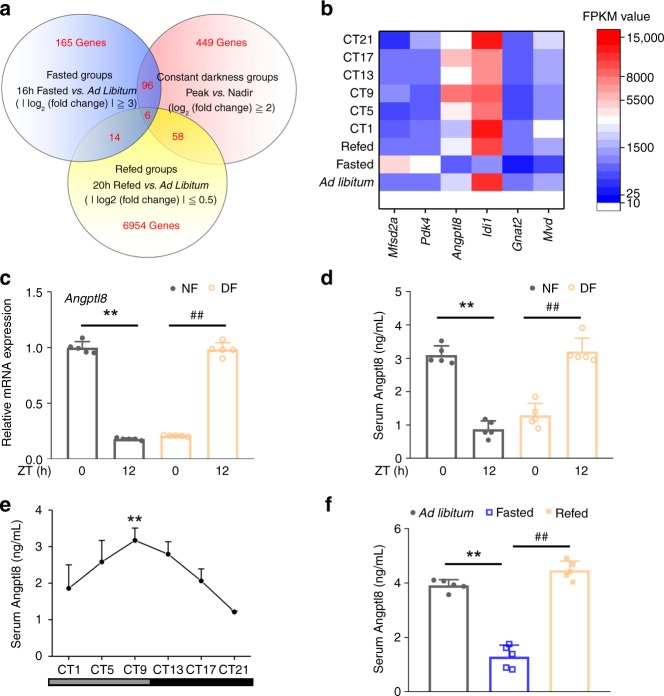
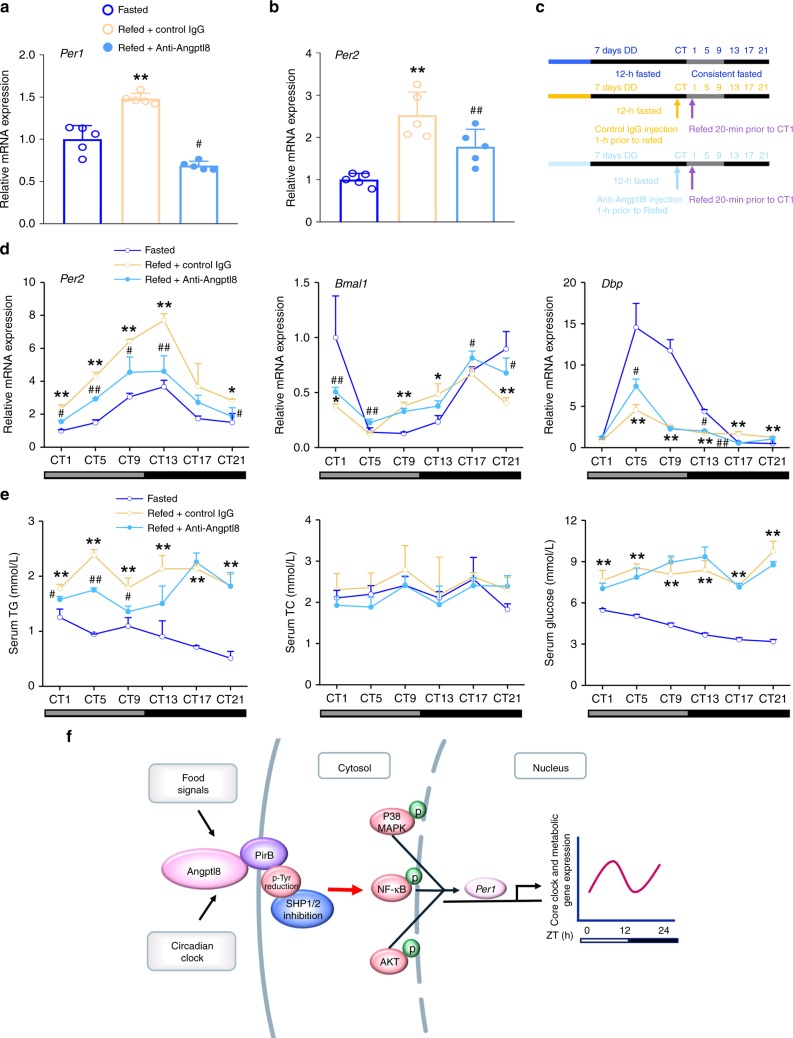
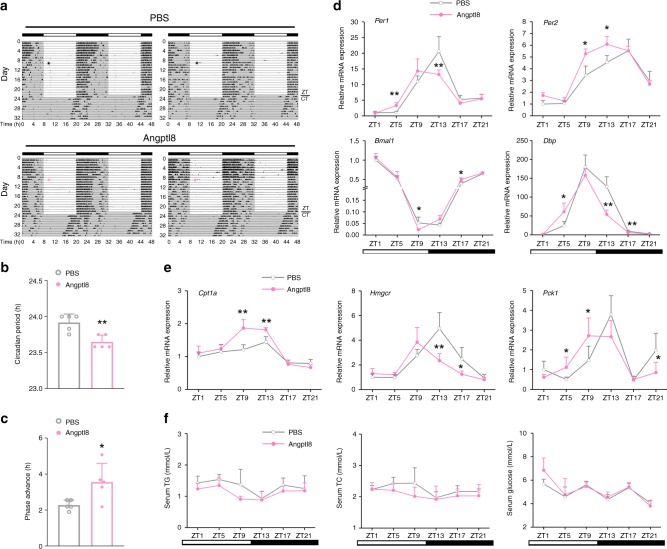
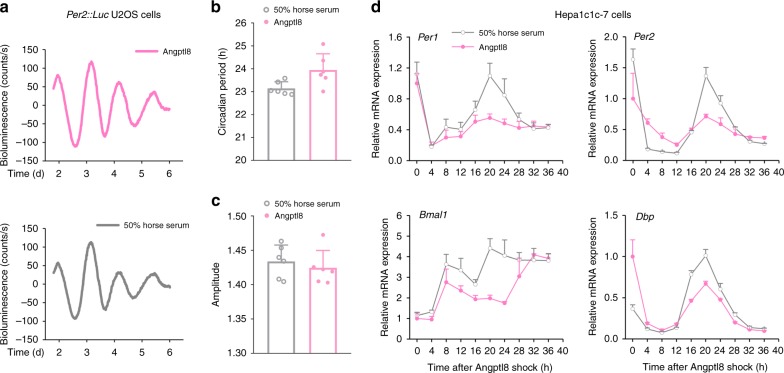
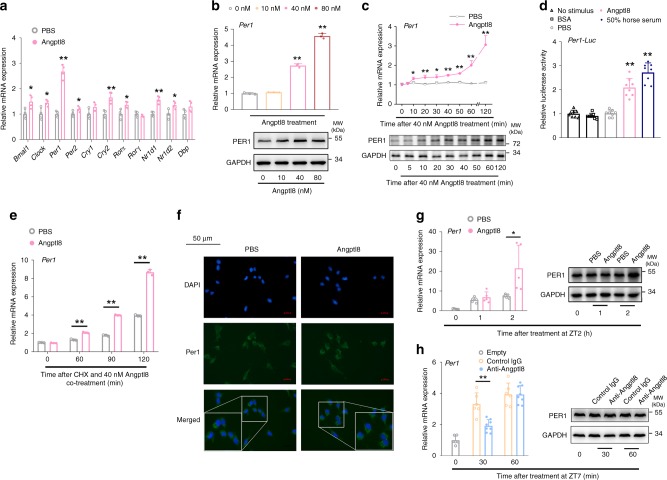
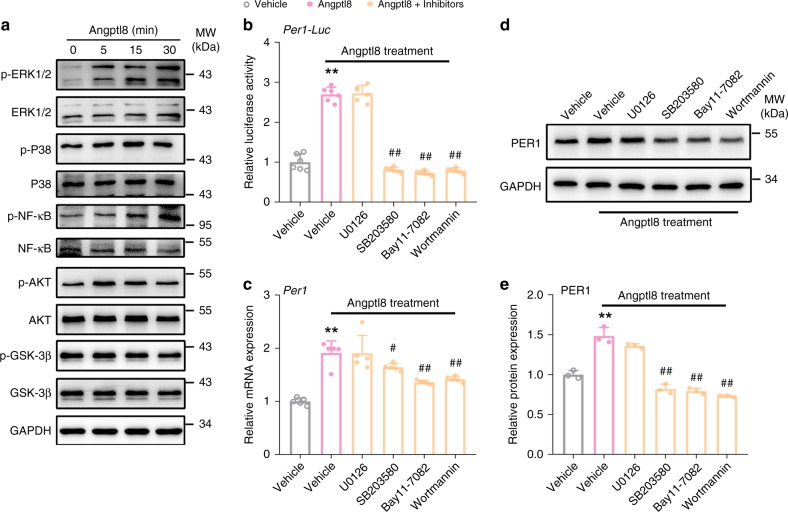
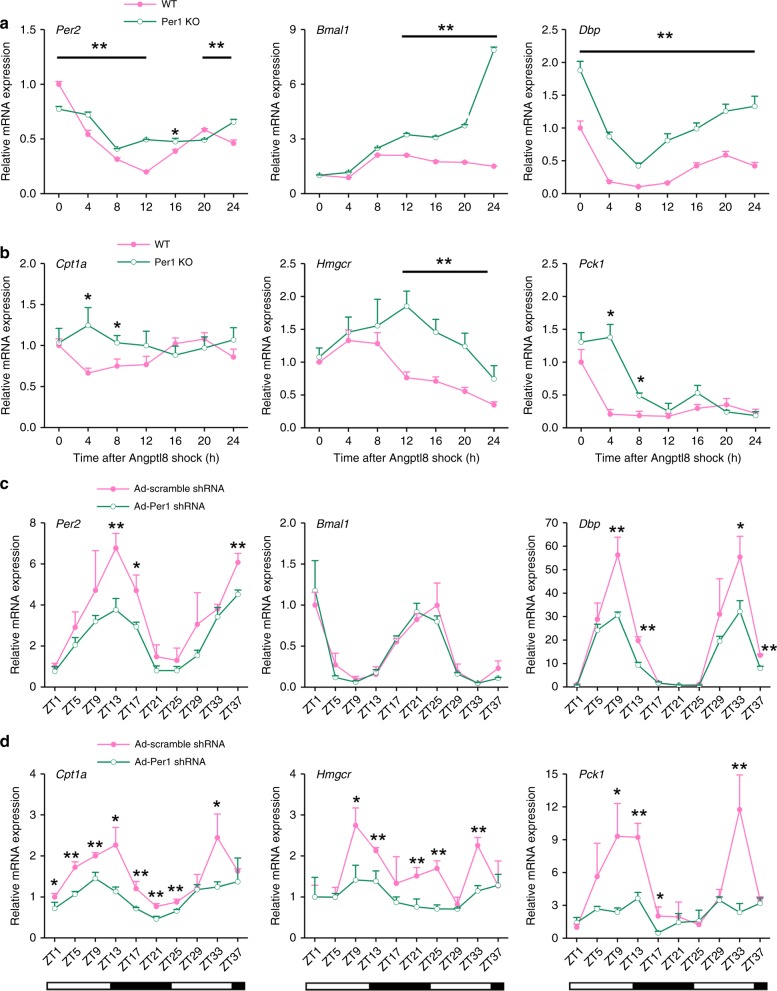
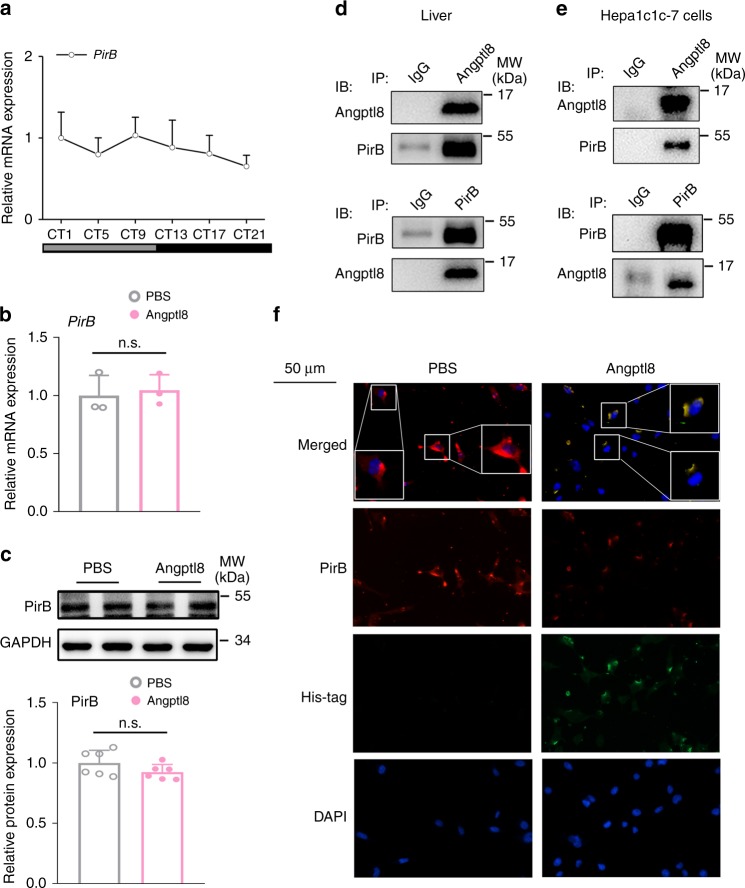
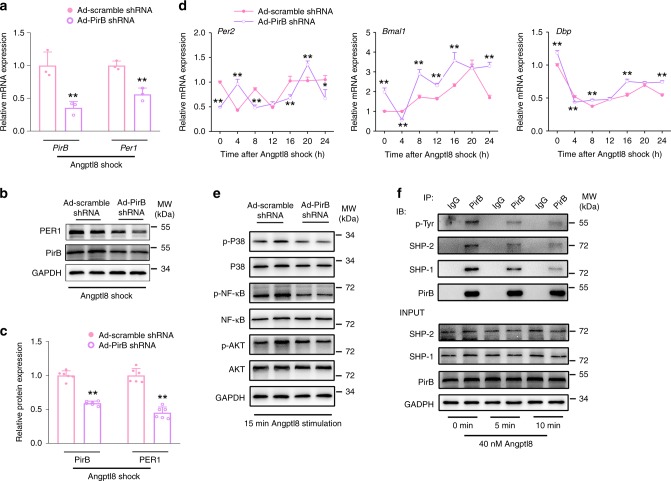
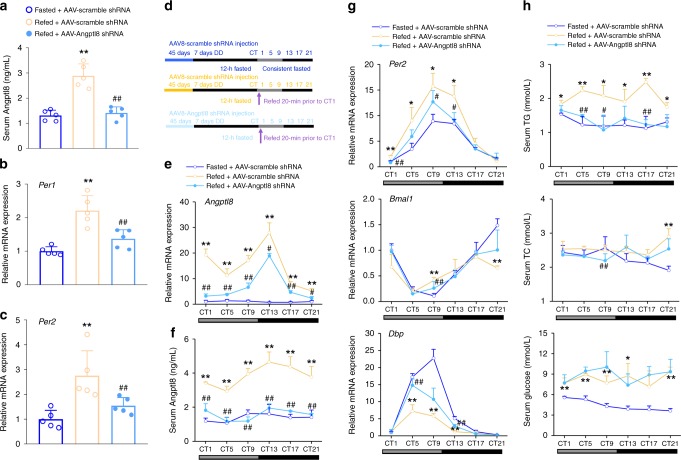
Diurnal light-dark cycle resets the master clock, while timed food intake is another potent synchronizer of peripheral clocks in mammals. As the largest metabolic organ, the liver sensitively responds to the food signals and secretes hepatokines, leading to the robust regulation of metabolic and clock processes. However, it remains unknown which hepatokine mediates the food-driven resetting of the liver clock independent of the master clock. Here, we identify Angptl8 as a hepatokine that resets diurnal rhythms of hepatic clock and metabolic genes in mice. Mechanistically, the resetting function of Angptl8 is dependent on the signal relay of the membrane receptor PirB, phosphorylation of kinases and transcriptional factors, and consequently transient activation of the central clock gene Per1. Importantly, inhibition of Angptl8 signaling partially blocks food-entrained resetting of liver clock in mice. We have thus identified Angptl8 as a key regulator of the liver clock in response to food.
昼夜光-暗循环重置主钟,而定时进食是哺乳动物外周钟另一个有力的同步器。作为最大的代谢器官,肝脏对食物信号敏感,并分泌肝分泌素,从而对代谢和时钟过程进行强有力的调节。然而,尚不清楚哪种肝分泌素在不依赖主钟的情况下介导食物驱动的肝脏时钟重置。在这里,我们鉴定出 Angptl8 是一种肝分泌素,可重置小鼠肝脏时钟和代谢基因的昼夜节律。在机制上,Angptl8 的重置功能依赖于膜受体 PirB 的信号传递、激酶和转录因子的磷酸化,以及中央时钟基因 Per1 的瞬时激活。重要的是,抑制 Angptl8 信号部分阻断了小鼠肝脏时钟的食物诱导重置。因此,我们已经确定 Angptl8 是肝脏时钟对食物反应的关键调节剂。