Xu Fuchao, Butler Russell, May Kyle, Rexhepaj Megi, Yu Dayu, Zi Jiachen, Chen Yi, Liang Yonghong, Zeng Jia, Hevel Joan, Zhan Jixun
1Department of Biological Engineering, Utah State University, 4105 Old Main Hill, Logan, UT 84322-4105 USA.
2Department of Chemistry and Biochemistry, Utah State University, 0300 Old Main Hill, Logan, UT 84322-0300 USA.
J Biol Eng. 2019 Jul 31;13:65. doi: 10.1186/s13036-019-0195-y. eCollection 2019.
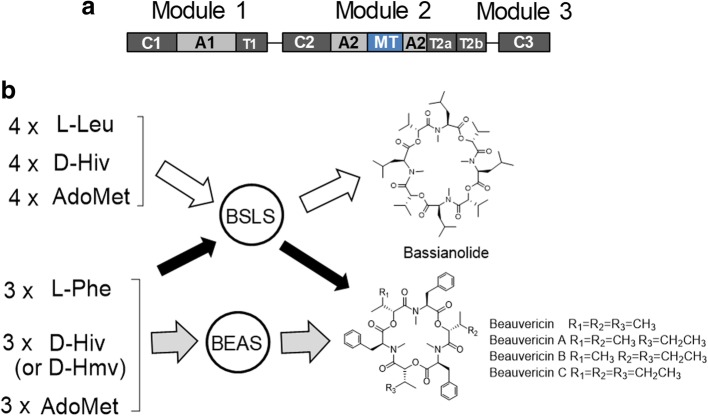
Creating designer molecules using a combination of select domains from polyketide synthases and/or nonribosomal peptide synthetases (NRPS) continues to be a synthetic goal. However, an incomplete understanding of how protein-protein interactions and dynamics affect each of the domain functions stands as a major obstacle in the field. Of particular interest is understanding the basis for a class of methyltransferase domains (MT) that are found embedded within the adenylation domain (A) of fungal NRPS systems instead of in an end-to-end architecture.
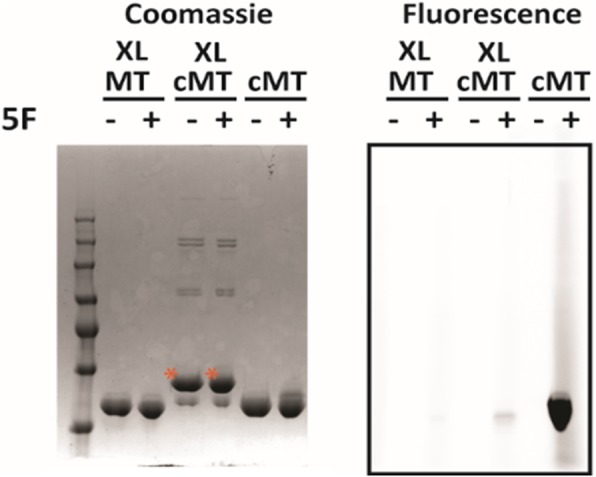
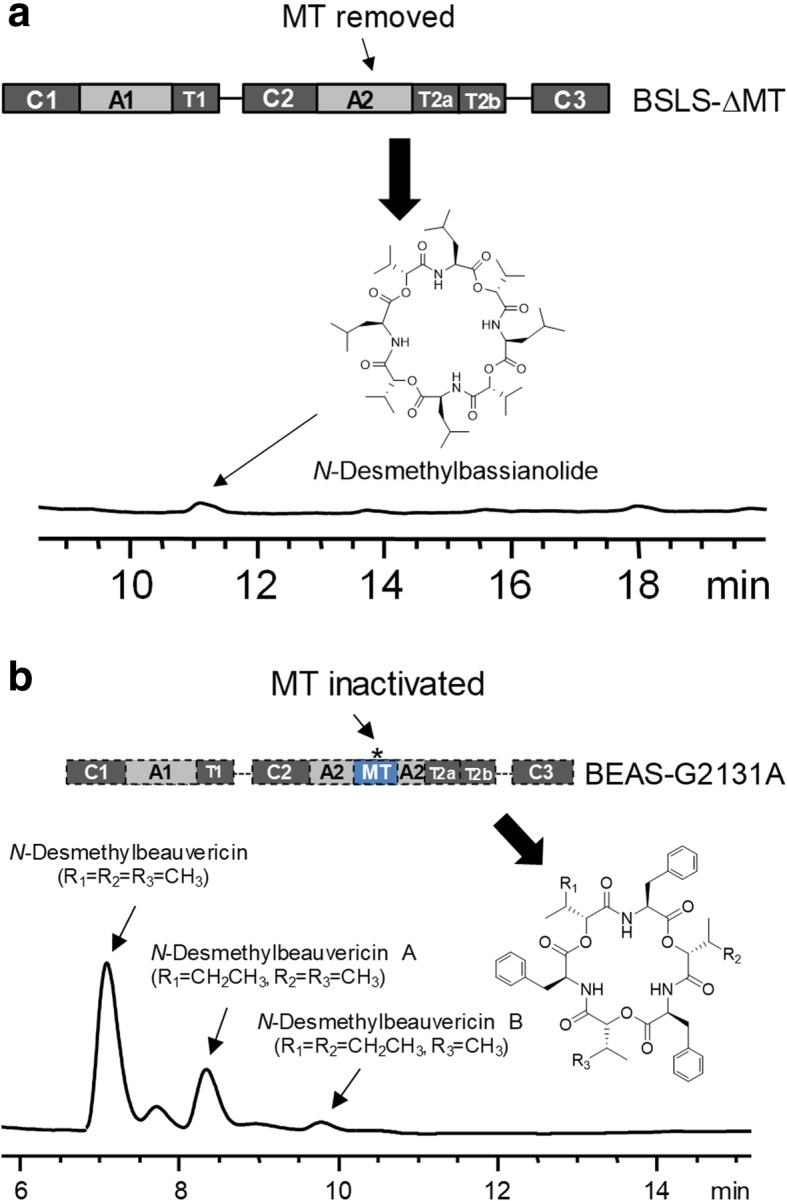
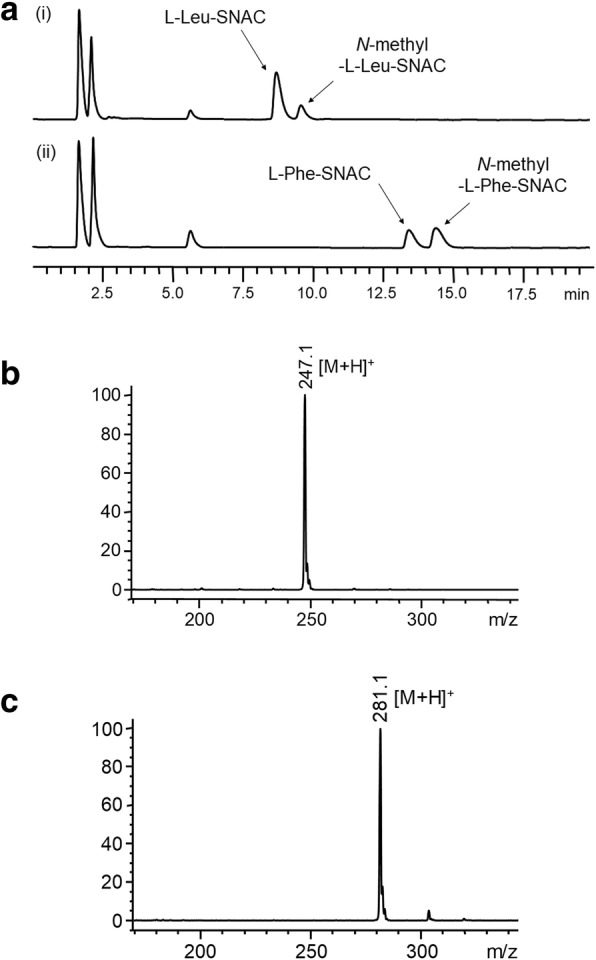
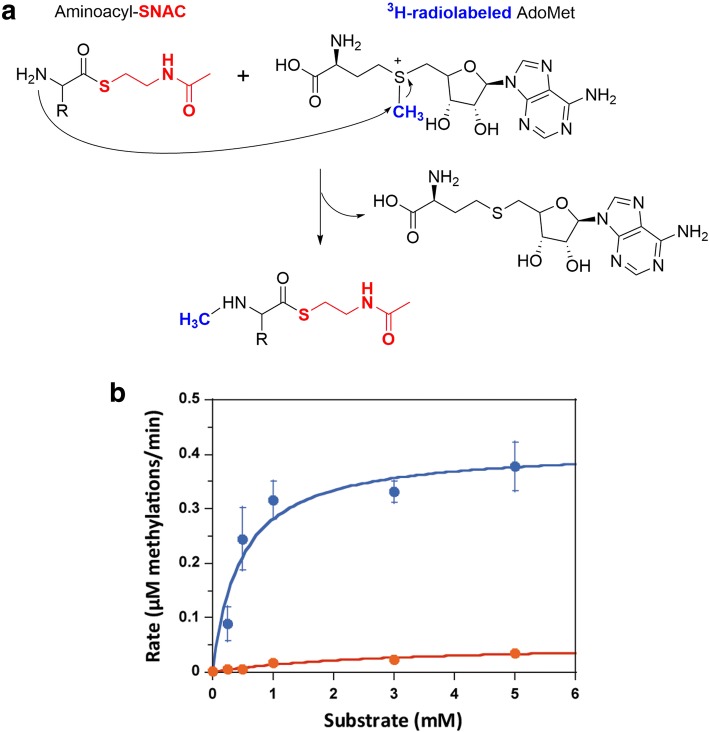
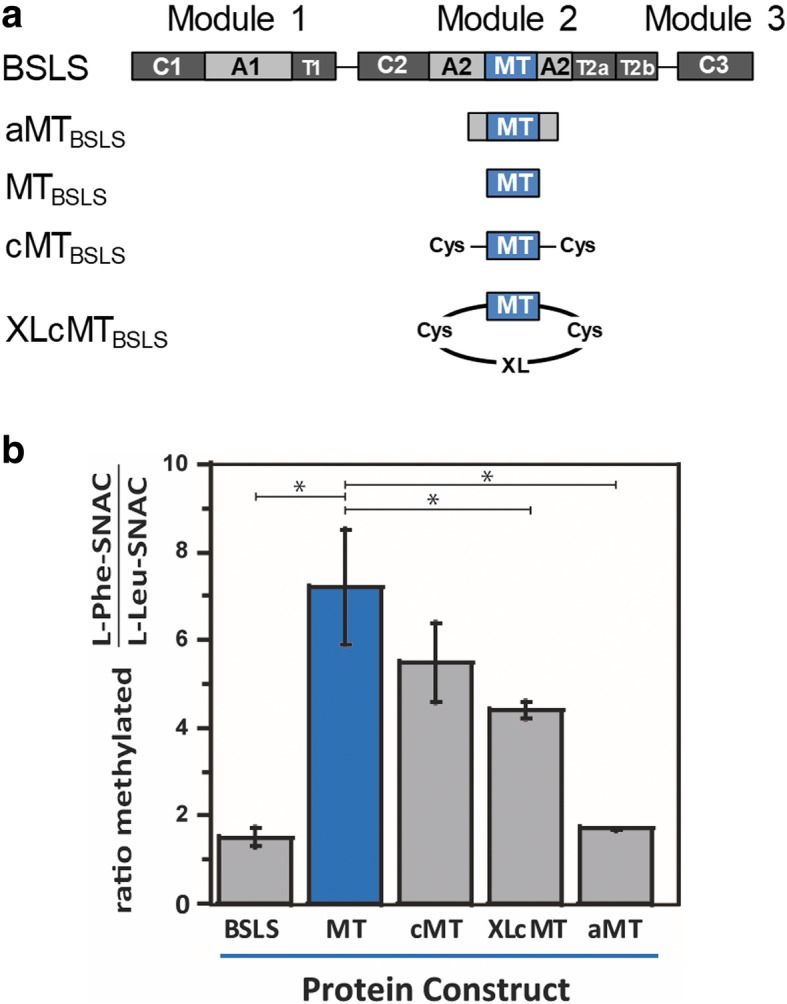
The MT domain from bassianolide synthetase (BSLS) was removed and the truncated enzyme BSLS-ΔMT was recombinantly expressed. The biosynthesis of bassianolide was abolished and -desmethylbassianolide was produced in low yields. Co-expression of BSLS-ΔMT with standalone MT did not recover bassianolide biosynthesis. In order to address the functional implications of the protein insertion, we characterized the -methyltransferase activity of the MT domain as both the isolated domain (MT) and as part of the full NRPS megaenzyme. Surprisingly, the MT construct demonstrated a relaxed substrate specificity and preferentially methylated an amino acid (L-Phe-SNAC) that is rarely incorporated into the final product. By testing the preference of a series of MT constructs (BSLS, MT, cMT, XLcMT, and aMT) to L-Phe-SNAC and L-Leu-SNAC, we further showed that restricting and/or fixing the termini of the MT by crosslinking or embedding the MT within an A domain narrowed the substrate specificity of the methyltransferase toward L-Leu-SNAC, the preferred substrate for the BSLS megaenzyme.
The embedding of MT into the A2 domain of BSLS is not required for the product assembly, but is critical for the overall yields of the final products. The substrate specificity of MT is significantly affected by the protein context within which it is present. While A domains are known to be responsible for selecting and activating the biosynthetic precursors for NRPS systems, our results suggest that embedding the MT acts as a secondary gatekeeper for the assembly line. This work thus provides new insights into the embedded MT domain in NRPSs, which will facilitate further engineering of this type of biosynthetic machinery to create structural diversity in natural products.
利用聚酮合酶和/或非核糖体肽合成酶(NRPS)的特定结构域组合来创建设计分子仍然是一个合成目标。然而,对蛋白质-蛋白质相互作用和动力学如何影响每个结构域功能的理解不完整,这是该领域的一个主要障碍。特别令人感兴趣的是了解一类甲基转移酶结构域(MT)的基础,这类结构域存在于真菌NRPS系统的腺苷化结构域(A)中,而不是以端对端的结构存在。
去除了球孢白僵菌素合成酶(BSLS)的MT结构域,并重组表达了截短的酶BSLS-ΔMT。球孢白僵菌素的生物合成被废除,去甲基球孢白僵菌素产量较低。将BSLS-ΔMT与独立的MT共表达并不能恢复球孢白僵菌素的生物合成。为了研究蛋白质插入的功能影响,我们将MT结构域作为分离的结构域(MT)以及完整NRPS巨型酶的一部分来表征其甲基转移酶活性。令人惊讶的是,MT构建体表现出宽松的底物特异性,并优先甲基化一种很少掺入最终产物的氨基酸(L-苯丙氨酸-SNAC)。通过测试一系列MT构建体(BSLS、MT、cMT、XLcMT和aMT)对L-苯丙氨酸-SNAC和L-亮氨酸-SNAC的偏好,我们进一步表明,通过交联或将MT嵌入A结构域来限制和/或固定MT的末端,会使甲基转移酶对L-亮氨酸-SNAC(BSLS巨型酶的首选底物)的底物特异性变窄。
将MT嵌入BSLS的A2结构域对于产物组装不是必需的,但对最终产物的总体产量至关重要。MT的底物特异性受到其所在蛋白质环境的显著影响。虽然已知A结构域负责为NRPS系统选择和激活生物合成前体,但我们的结果表明,嵌入MT充当了装配线的二级守门人。因此,这项工作为NRPS中嵌入的MT结构域提供了新的见解,这将有助于进一步改造这类生物合成机制以创造天然产物的结构多样性。