Hefty Kira L, Stewart Kelley M
1Department of Biology, University of Nevada, 1664 N. Virginia St. Reno, Reno, NV 89557 USA.
2Department of Natural Resources and the Environment, University of Arizona, 1064 East Lowell Street, Tucson, AZ 85719 USA.
Mov Ecol. 2019 Aug 2;7:23. doi: 10.1186/s40462-019-0168-2. eCollection 2019.
Movement decisions made in space and time define how wildlife meet competing extrinsic and intrinsic demands to maximize fitness. Differential selection of resource patches provides one example of how to measure how animals balance conflicting demands. We hypothesized that individual spatial selection of patch types between dynamic seasons would signify flexible strategies used to minimize risk and optimize foraging efforts.
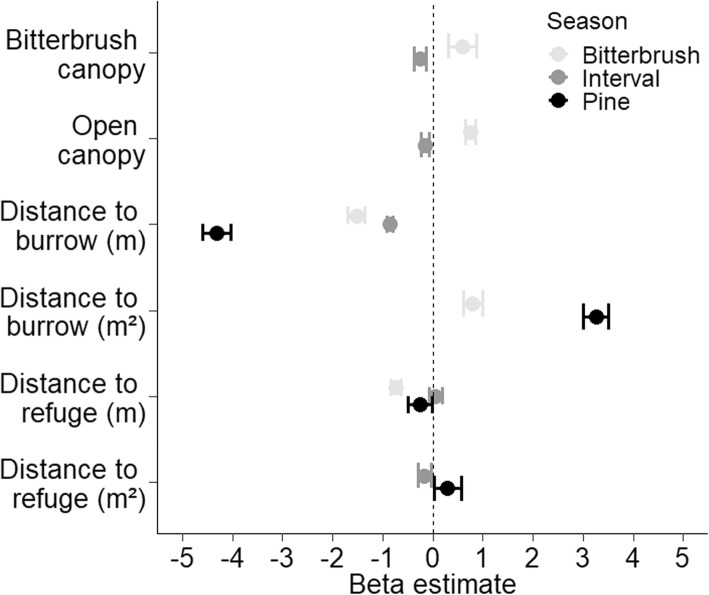
We used data collected from GPS loggers on golden-mantled ground squirrels () to model selection or avoidance of resources in two seasons of seed availability and one season in which no seeds were available. Movement decisions were measured in short-term discrete time intervals using high resolution location data. Selection or avoidance of specific resource features that entail fitness consequences were then assessed using resource selection functions.
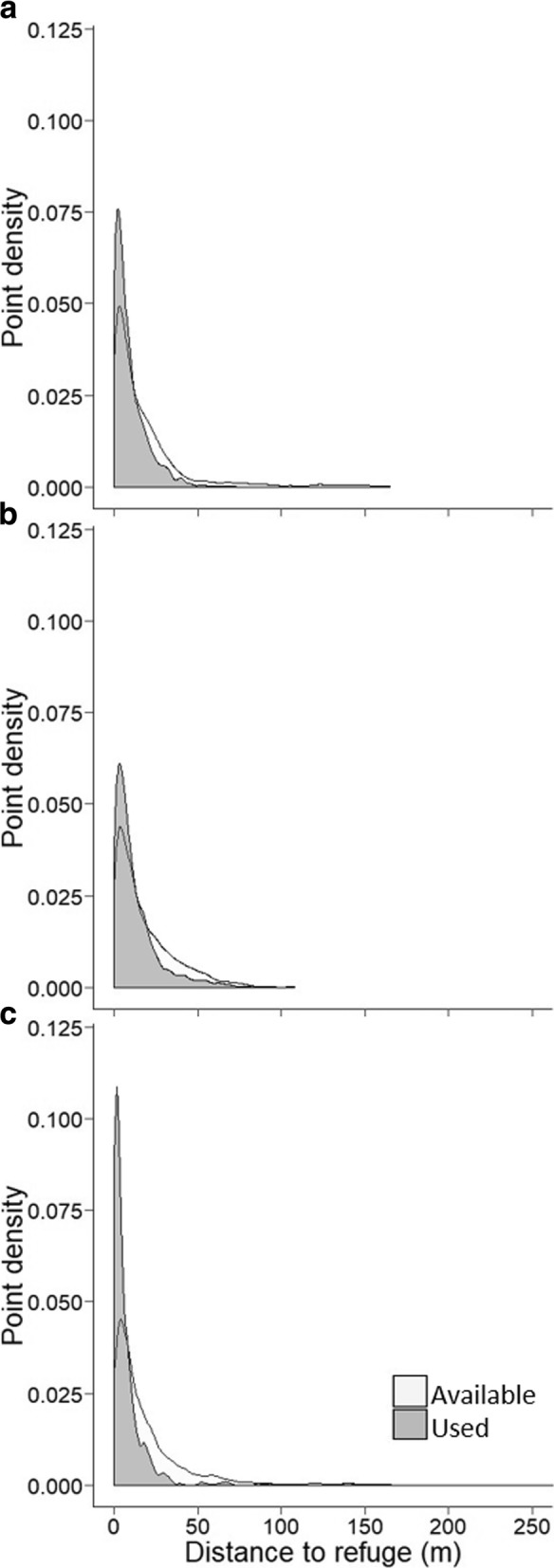
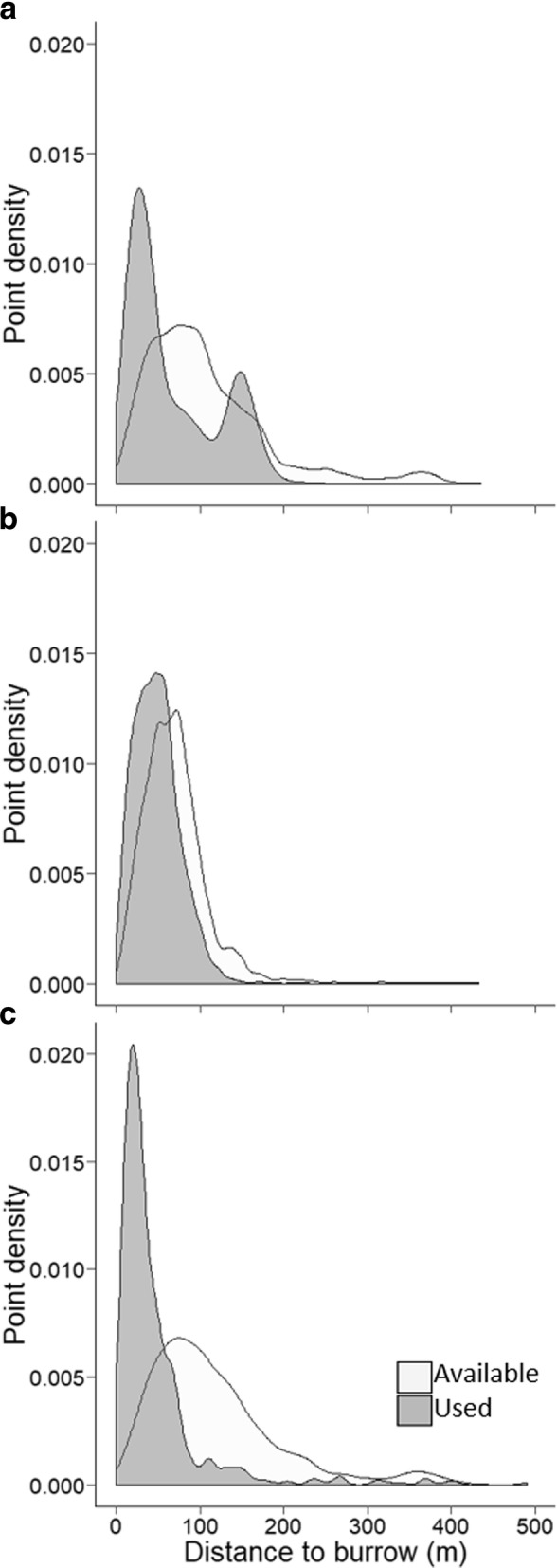
Seasonality of food availability, food type, and spatial distribution of food largely influenced how individuals selected resources within their home ranges. Overall, when seeds were available, individuals mediated risks of predation and loss of food by using patches closer to refuge and selected intermediate distances to the burrow. When food was not available, individuals minimized exposure to heightened risk by staying close to the burrow and avoiding riskier patch types.
Results indicate that individuals used flexible, dynamic strategies to select habitat patches which may allow them to balance conflicting seasonal demands. Advances in GPS technology for research of small mammals provide greater insight into how prey species in high risk environments differentially use resources to minimize risk and maintain fitness.
在空间和时间上做出的移动决策决定了野生动物如何满足相互竞争的外在和内在需求,以实现适应性最大化。对资源斑块的差异选择提供了一个如何衡量动物如何平衡相互冲突的需求的例子。我们假设,在动态季节之间对斑块类型的个体空间选择将表明用于最小化风险和优化觅食努力的灵活策略。
我们使用从金黄地松鼠()的GPS记录器收集的数据,对种子可获得的两个季节和一个无种子的季节中资源的选择或回避进行建模。使用高分辨率位置数据在短期离散时间间隔内测量移动决策。然后使用资源选择函数评估对具有适应性后果的特定资源特征的选择或回避。
食物可获得性、食物类型和食物空间分布的季节性在很大程度上影响了个体在其家域内选择资源的方式。总体而言,当有种子时,个体通过使用更靠近避难所的斑块来调节被捕食和食物损失的风险,并选择到洞穴的中间距离。当没有食物时,个体通过靠近洞穴并避免风险更高的斑块类型来最小化暴露于更高风险的情况。
结果表明,个体使用灵活、动态的策略来选择栖息地斑块,这可能使它们能够平衡相互冲突的季节性需求。用于小型哺乳动物研究的GPS技术的进步为高风险环境中的猎物物种如何差异利用资源以最小化风险和维持适应性提供了更深入的见解。