Kim Hyeon Chang, Ihm Sang-Hyun, Kim Gheun-Ho, Kim Ju Han, Kim Kwang-Il, Lee Hae-Young, Lee Jang Hoon, Park Jong-Moo, Park Sungha, Pyun Wook Bum, Shin Jinho, Chae Shung Chull
1Department of Preventive Medicine, Yonsei University College of Medicine, Seoul, South Korea.
2Department of Internal Medicine, College of Medicine, The Catholic University of Korea, Seoul, South Korea.
Clin Hypertens. 2019 Aug 1;25:16. doi: 10.1186/s40885-019-0121-0. eCollection 2019.
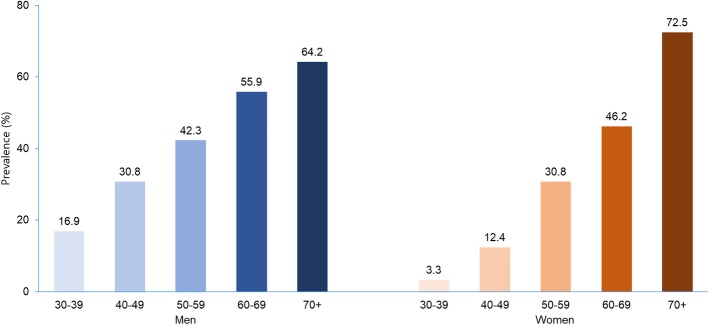
The Korean Society of Hypertension guideline defines hypertension as systolic blood pressure ≥ 140 mmHg or diastolic blood pressure ≥ 90 mmHg, where the effectiveness of pharmacological treatment has been established. It is confirmed that higher blood pressure levels are associated with increased risk of cardiovascular disease and mortality also in the Korean population. About one third of Korean adults aged 30 years or older are estimated to have hypertension, and the prevalence of hypertension gradually increases as the age increases. The awareness, treatment, and control rates of hypertension are generally improving in Korea, but more efforts are required to increase awareness and treatment among younger patients with hypertension and to improve lifestyle modification compliance at all ages. More studies are required to determine the magnitude and impact of white coat hypertension and masked hypertension in the Korean population.
韩国高血压学会指南将高血压定义为收缩压≥140 mmHg或舒张压≥90 mmHg,且药物治疗的有效性已得到证实。在韩国人群中,血压水平升高与心血管疾病风险增加及死亡率上升相关这一点已得到确认。据估计,韩国30岁及以上的成年人中约有三分之一患有高血压,且高血压患病率随年龄增长而逐渐上升。在韩国,高血压的知晓率、治疗率和控制率总体上正在提高,但仍需做出更多努力,以提高年轻高血压患者的知晓率和治疗率,并在各年龄段提高生活方式改善的依从性。需要开展更多研究来确定韩国人群中白大衣高血压和隐匿性高血压的程度及影响。