Gameiro Steven F, Ghasemi Farhad, Barrett John W, Nichols Anthony C, Mymryk Joe S
Department of Microbiology and Immunology, The University of Western Ontario, London, ON N6A 3K7, Canada.
Department of Otolaryngology, Head & Neck Surgery, The University of Western Ontario, London, ON N6A 3K7, Canada.
Cancers (Basel). 2019 Aug 7;11(8):1129. doi: 10.3390/cancers11081129.
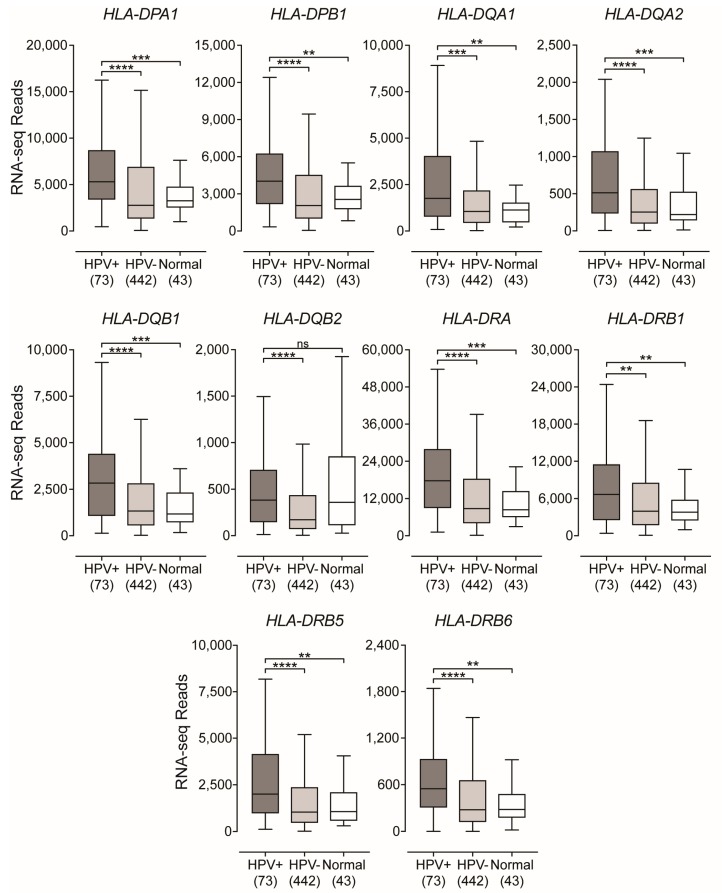
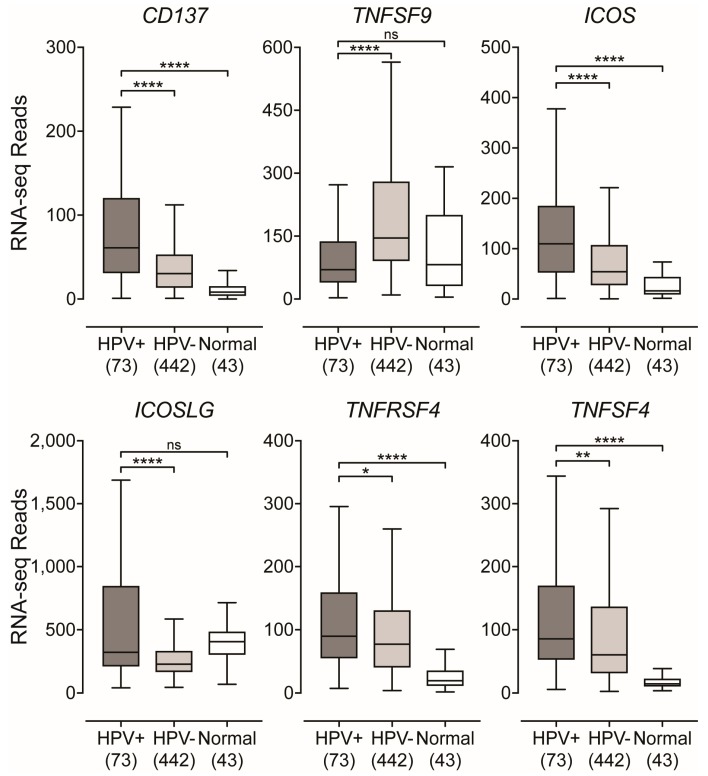
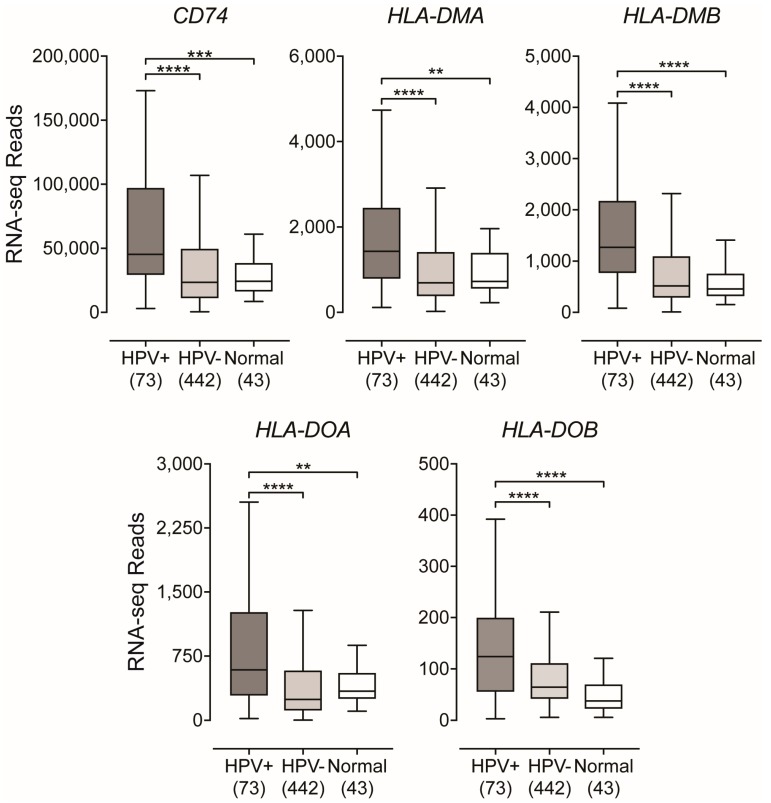
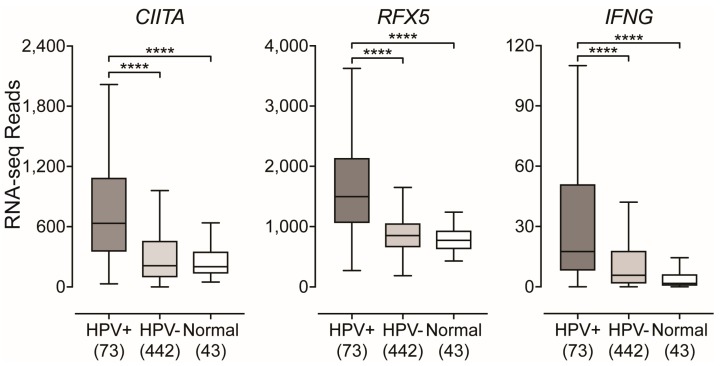
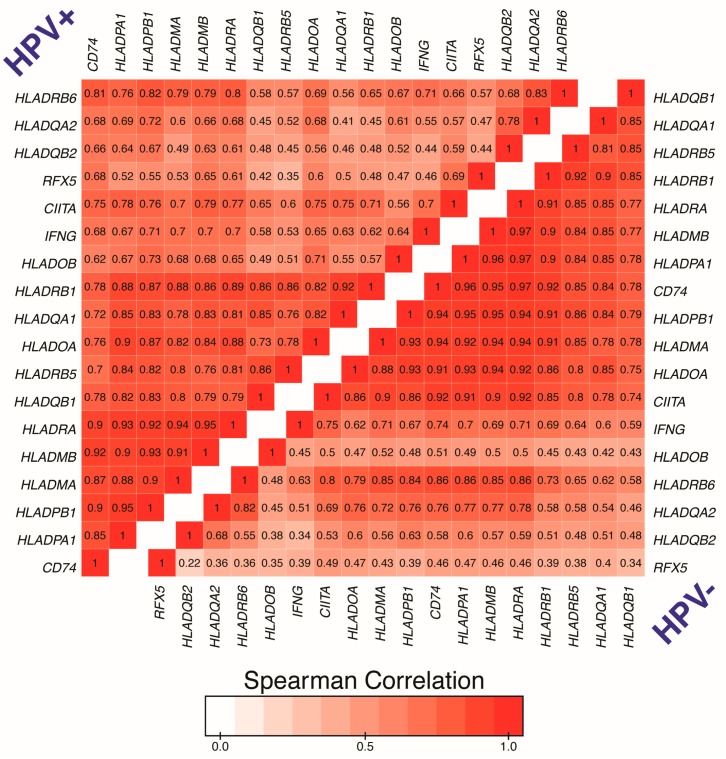
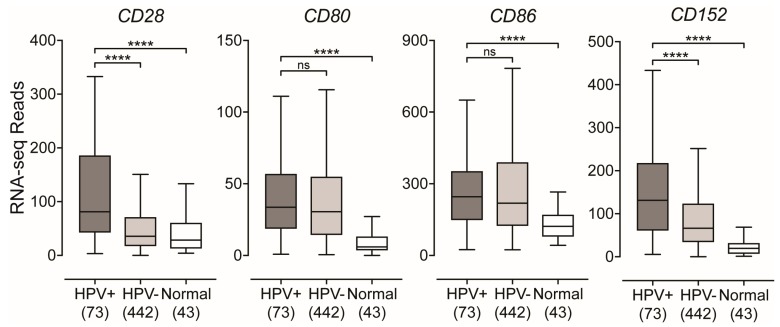
High-risk human papillomaviruses (HPVs) are responsible for a subset of head and neck squamous cell carcinomas (HNSCC). Expression of class II major histocompatibility complex (MHC-II) is associated with antigen presenting cells (APCs). During inflammation, epithelial cells can be induced to express MHC-II and function as accessory APCs. Utilizing RNA-seq data from over 500 HNSCC patients from The Cancer Genome Atlas, we determined the impact of HPV-status on the expression of MHC-II genes and related genes involved in their regulation, antigen presentation, and T-cell co-stimulation. Expression of virtually all MHC-II genes was significantly upregulated in HPV+ carcinomas compared to HPV- or normal control tissue. Similarly, genes that encode products involved in antigen presentation were also significantly upregulated in the HPV+ cohort. In addition, the expression of and -regulators of MHC-II-were significantly upregulated in HPV+ tumors. This coordinated upregulation of MHC-II genes was correlated with higher intratumoral levels of interferon-gamma in HPV+ carcinomas. Furthermore, genes that encode various co-stimulatory molecules involved in T-cell activation and survival were also significantly upregulated in HPV+ tumors. Collectively, these results suggest a previously unappreciated role for epithelial cells in antigen presentation that functionally contributes to the highly immunogenic tumor microenvironment observed in HPV+ HNSCC.
高危型人乳头瘤病毒(HPV)是一部分头颈鳞状细胞癌(HNSCC)的致病原因。II类主要组织相容性复合体(MHC-II)的表达与抗原呈递细胞(APC)相关。在炎症过程中,上皮细胞可被诱导表达MHC-II并发挥辅助性APC的功能。利用来自癌症基因组图谱(The Cancer Genome Atlas)的500多名HNSCC患者的RNA测序数据,我们确定了HPV状态对MHC-II基因及其调控、抗原呈递和T细胞共刺激相关基因表达的影响。与HPV阴性或正常对照组织相比,几乎所有MHC-II基因在HPV阳性癌中的表达均显著上调。同样,编码参与抗原呈递产物的基因在HPV阳性队列中也显著上调。此外,MHC-II的α和β调节因子的表达在HPV阳性肿瘤中也显著上调。MHC-II基因的这种协同上调与HPV阳性癌中肿瘤内较高水平的γ干扰素相关。此外,编码参与T细胞活化和存活的各种共刺激分子的基因在HPV阳性肿瘤中也显著上调。总的来说,这些结果表明上皮细胞在抗原呈递中发挥了以前未被认识到的作用,这在功能上促成了在HPV阳性HNSCC中观察到的高度免疫原性肿瘤微环境。