Key Laboratory of Nasihu Lake Wetland Ecosystem & Environment Protection, Qufu Normal University, Qufu, Shandong, China.
PLoS One. 2019 Aug 9;14(8):e0220975. doi: 10.1371/journal.pone.0220975. eCollection 2019.
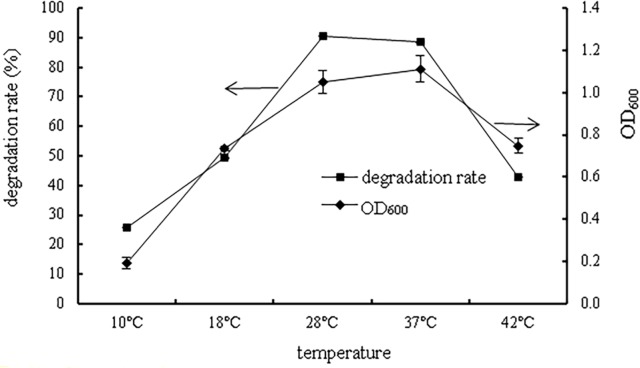
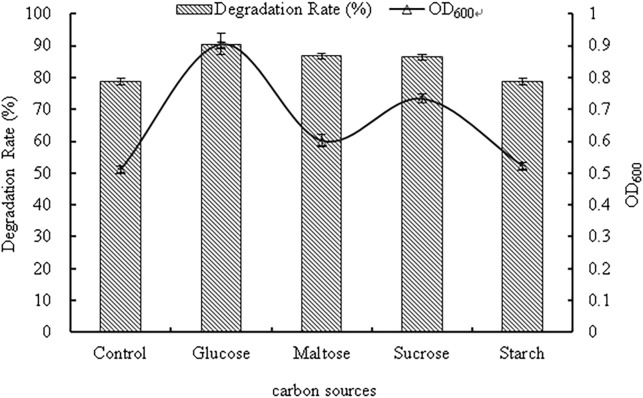
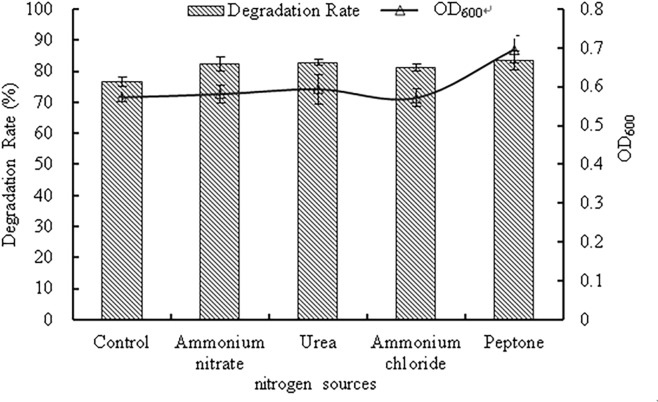
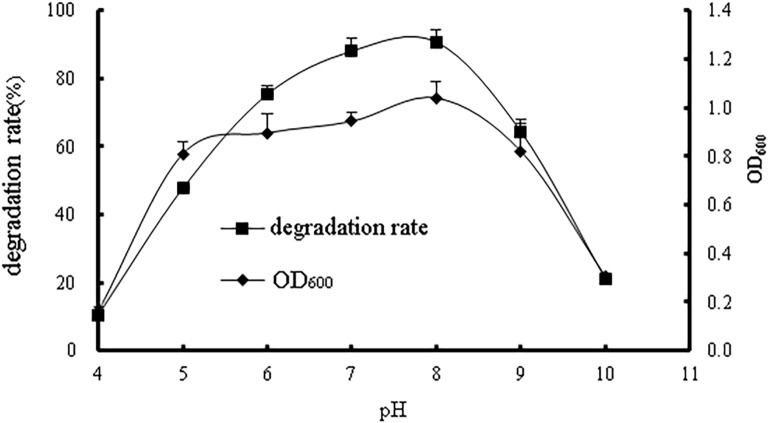
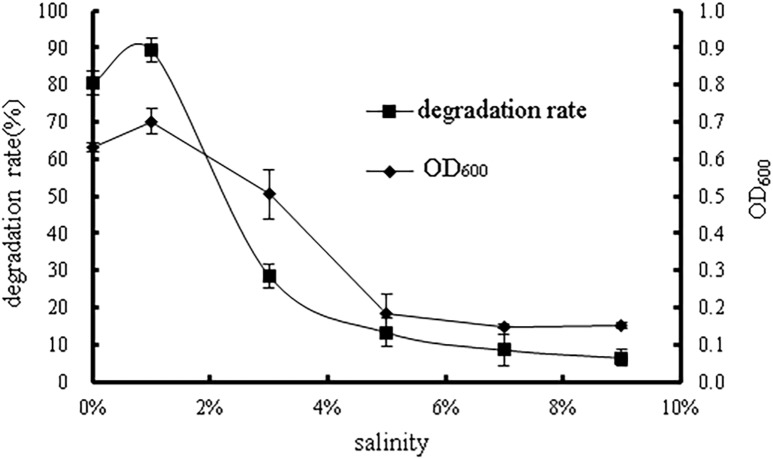
The bacterial strain WD-2, which was capable of efficiently degrading prochloraz-manganese, was isolated from soil contaminated with prochloraz-manganese, selected through enrichment culturing and identified as Bacillus cereus. Test results indicated that the optimal temperature and pH for bacterial growth were 35-40°C and 7.0-8.0, respectively. The highest degradation rate was above 88-90% when the pH was 7.08.0 and reached a maximum value (90.7%) at approximately 8.0. In addition, the bacterium showed the greatest growth ability with an OD600 of 0.805 and the highest degradation rate (68.2%) when glucose was chosen as the carbon source, while the difference in nitrogen source had no obvious influence on bacterial growth. The degradation rate exceeded 80% when the NaCl concentration was 02% and the rate reached 89.2% at 1%. When the concentration was higher than 7%, the growth of WD-2 and the degradation of prochloraz-manganese were found to be inhibited, and the degradation rate was merely 8.5%. The results indicated that strain WD-2 was able to effectively degrade prochloraz-manganese and might contribute to the bioremediation of contaminated soils.
WD-2 菌株能够有效降解百菌清-锰,从百菌清-锰污染的土壤中分离出来,通过富集培养和鉴定为蜡状芽孢杆菌。试验结果表明,细菌生长的最佳温度和 pH 值分别为 35-40°C 和 7.0-8.0。当 pH 值为 7.08.0 时,降解率最高可达 88-90%以上,在 pH 值约为 8.0 时达到最大值(90.7%)。此外,当选择葡萄糖作为碳源时,细菌表现出最大的生长能力,OD600 值为 0.805,降解率(68.2%)最高,而氮源的差异对细菌生长没有明显影响。当 NaCl 浓度为 02%时,降解率超过 80%,在 1%时达到 89.2%。当浓度高于 7%时,WD-2 的生长和百菌清-锰的降解受到抑制,降解率仅为 8.5%。结果表明,菌株 WD-2 能够有效降解百菌清-锰,可能有助于污染土壤的生物修复。