Cancer Biology and Genetics Program, Memorial Sloan Kettering Cancer Center, New York, NY 10065, USA.
Department of Computational Biology, University of Lausanne, 1005 Lausanne, Switzerland; Swiss Institute of Bioinformatics (SIB), 1005 Lausanne, Switzerland.
Cell. 2019 Aug 8;178(4):807-819.e21. doi: 10.1016/j.cell.2019.07.031.
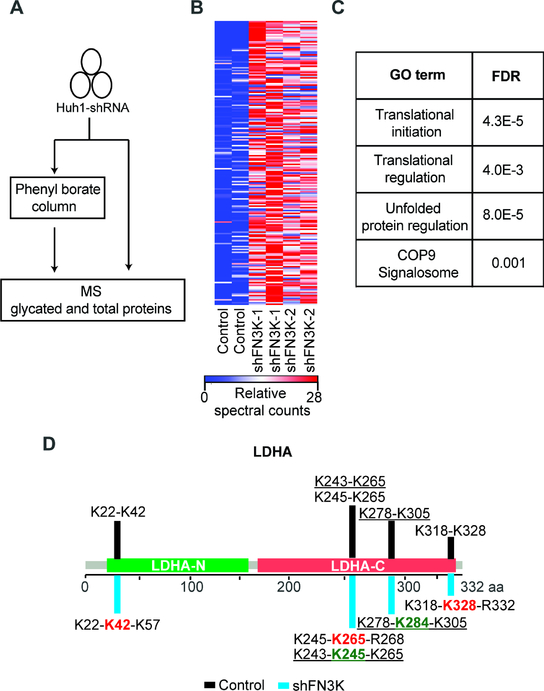
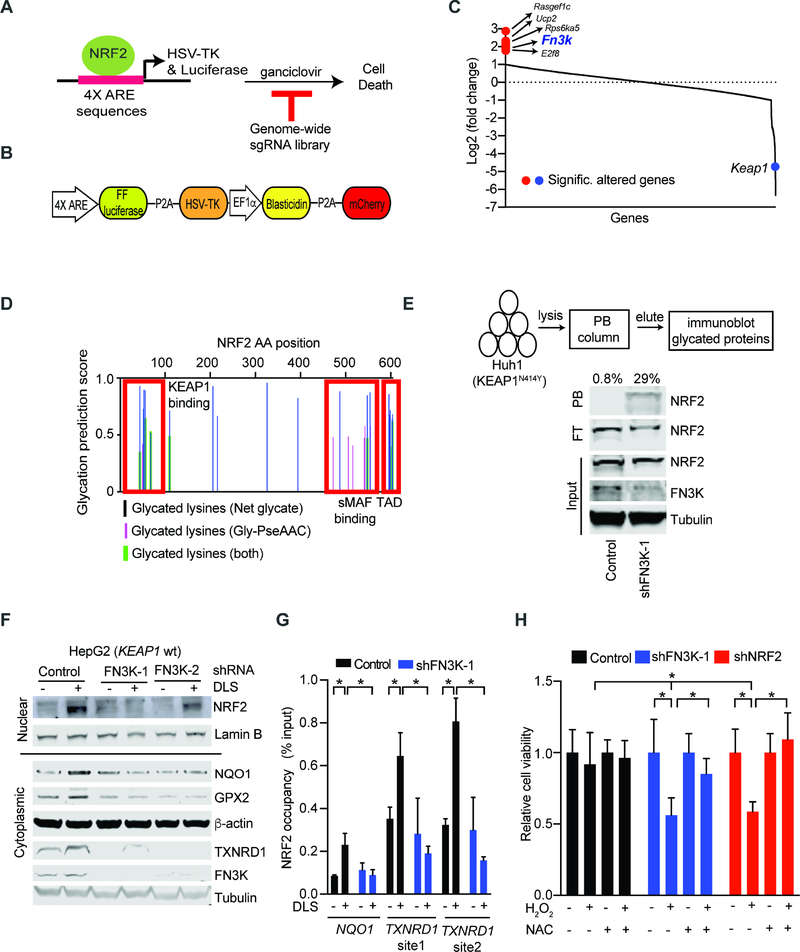
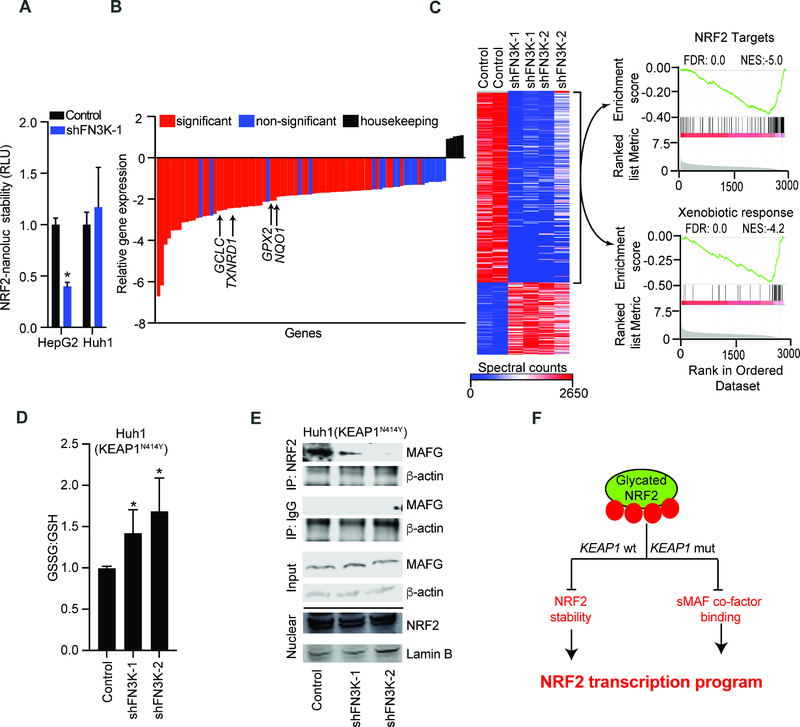
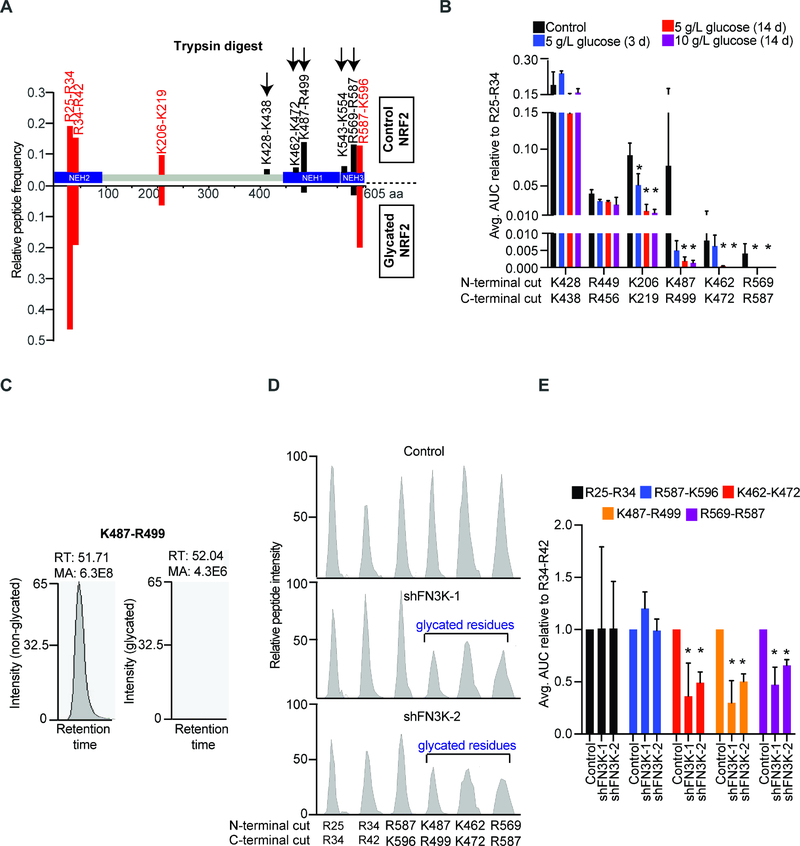
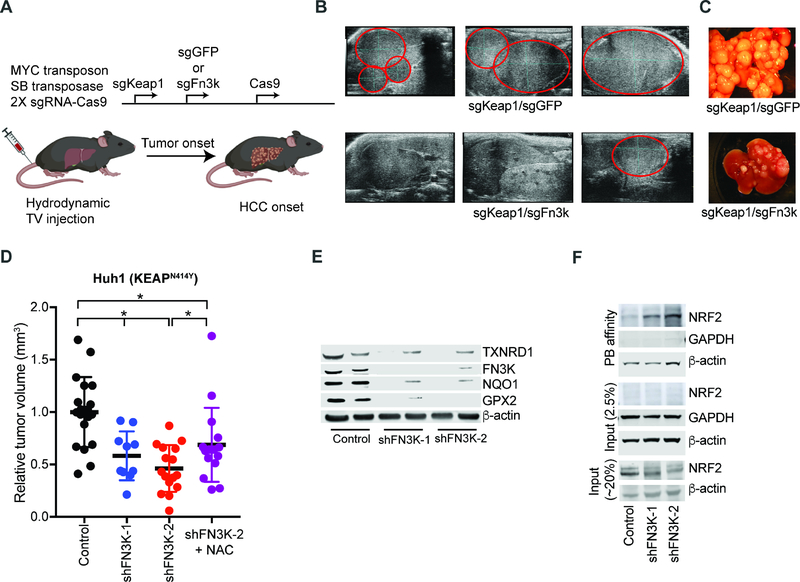
The NRF2 transcription factor controls a cell stress program that is implicated in cancer and there is great interest in targeting NRF2 for therapy. We show that NRF2 activity depends on Fructosamine-3-kinase (FN3K)-a kinase that triggers protein de-glycation. In its absence, NRF2 is extensively glycated, unstable, and defective at binding to small MAF proteins and transcriptional activation. Moreover, the development of hepatocellular carcinoma triggered by MYC and Keap1 inactivation depends on FN3K in vivo. N-acetyl cysteine treatment partially rescues the effects of FN3K loss on NRF2 driven tumor phenotypes indicating a key role for NRF2-mediated redox balance. Mass spectrometry reveals that other proteins undergo FN3K-sensitive glycation, including translation factors, heat shock proteins, and histones. How glycation affects their functions remains to be defined. In summary, our study reveals a surprising role for the glycation of cellular proteins and implicates FN3K as targetable modulator of NRF2 activity in cancer.
NRF2 转录因子控制着一种细胞应激程序,该程序与癌症有关,因此人们对针对 NRF2 进行治疗的方法非常感兴趣。我们发现 NRF2 的活性依赖于果糖胺-3-激酶(FN3K)——一种触发蛋白去糖基化的激酶。在 FN3K 缺失的情况下,NRF2 会被广泛糖基化,不稳定,并且无法与小 MAF 蛋白结合,也无法进行转录激活。此外,MYC 和 Keap1 失活引发的肝细胞癌的发展依赖于体内的 FN3K。N-乙酰半胱氨酸处理部分挽救了 FN3K 缺失对 NRF2 驱动的肿瘤表型的影响,表明 NRF2 介导的氧化还原平衡起着关键作用。质谱分析显示,其他蛋白质也会发生 FN3K 敏感的糖基化,包括翻译因子、热休克蛋白和组蛋白。糖基化如何影响它们的功能还有待确定。总之,我们的研究揭示了细胞蛋白糖基化的惊人作用,并表明 FN3K 可作为癌症中 NRF2 活性的靶向调节剂。