Department of Microbiology and Immunology, D.H. Smith Center for Vaccine Biology and Immunology, University of Rochester Medical Center, Rochester, NY 14642; and.
Department of Pathobiological Sciences, School of Veterinary Medicine, University of Wisconsin, Madison, Madison, WI 53706.
J Immunol. 2019 Sep 15;203(6):1502-1508. doi: 10.4049/jimmunol.1900819. Epub 2019 Aug 9.
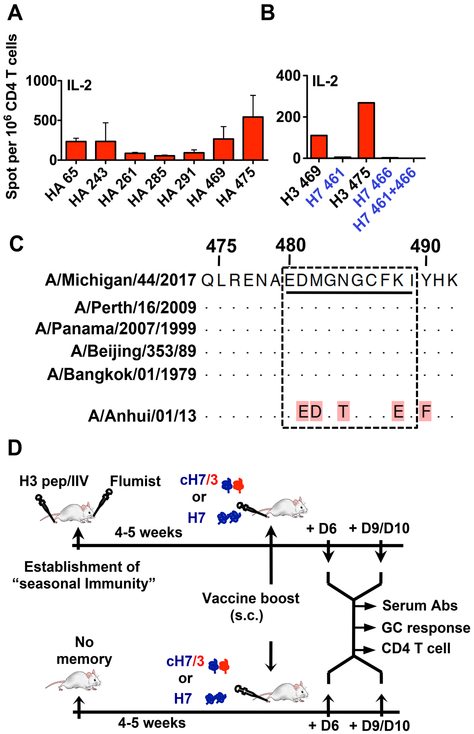
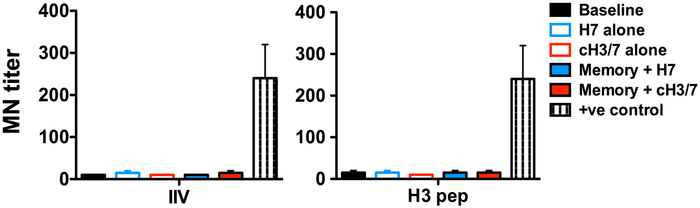
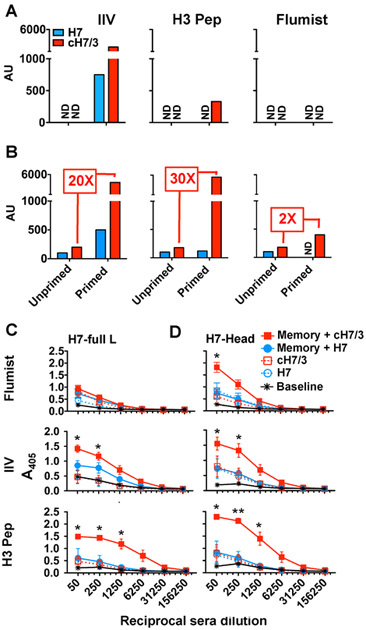
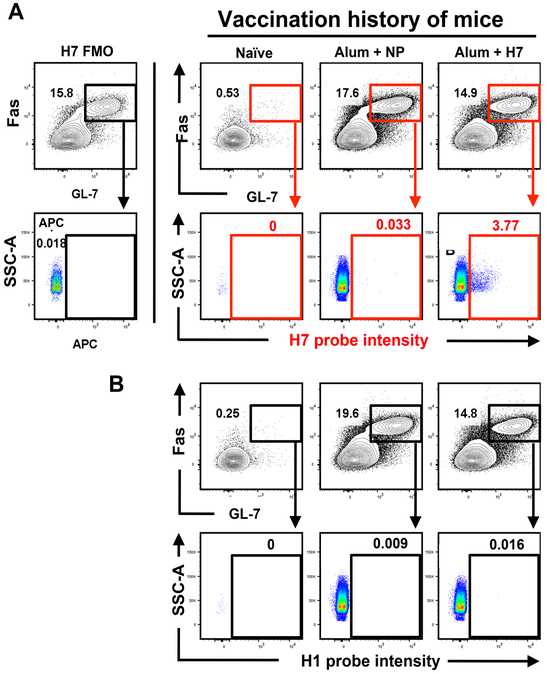
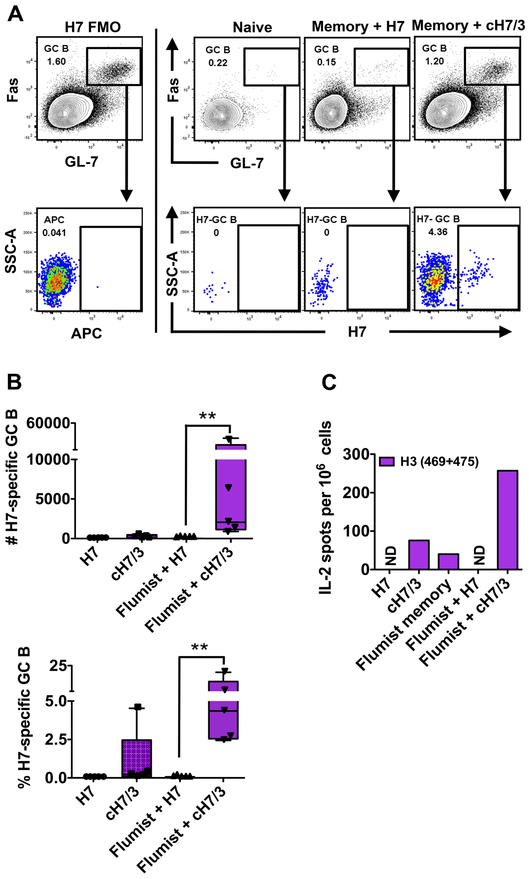
Avian influenza vaccines exhibit poor immunogenicity in humans. We hypothesized that one factor underlying weak B cell responses was sequence divergence between avian and seasonal influenza hemagglutinin proteins, thus limiting the availability of adequate CD4 T cell help. To test this, a novel chimeric hemagglutinin protein (cH7/3) was derived, comprised of the stem domain from seasonal H3 hemagglutinin and the head domain from avian H7. Immunological memory to seasonal influenza was established in mice, through strategies that included seasonal inactivated vaccines, Flumist, and synthetic peptides derived from the H3 stalk domain. After establishment of memory, mice were vaccinated with H7 or cH7/3 protein. The cH7/3 Ag was able to recall H3-specific CD4 T cells, and this potentiated CD4 T cell response was associated with enhanced early germinal center response and rapid elicitation of Abs to H7, including Abs specific for the H7 head domain. These results suggest that in pandemic situations, inclusion of CD4 T cell epitopes from seasonal viruses have the potential to overcome the poor immunogenicity of avian vaccines by helping B cells and conferring greater subtype-specific Ab response to viral HA.
禽流感疫苗在人类中表现出较差的免疫原性。我们假设,弱 B 细胞反应的一个原因是禽源和季节性流感血凝素蛋白之间的序列差异,从而限制了足够的 CD4 T 细胞辅助的可用性。为了验证这一点,我们衍生了一种新型嵌合血凝素蛋白(cH7/3),由季节性 H3 血凝素的茎域和禽源 H7 的头部域组成。通过包括季节性灭活疫苗、Flumist 和源自 H3 柄域的合成肽在内的策略,在小鼠中建立了针对季节性流感的免疫记忆。在建立记忆后,用 H7 或 cH7/3 蛋白对小鼠进行疫苗接种。cH7/3 抗原能够召回 H3 特异性 CD4 T 细胞,并且这种增强的 CD4 T 细胞反应与增强的早期生发中心反应和快速诱导对 H7 的抗体有关,包括针对 H7 头部域的抗体。这些结果表明,在大流行情况下,包含季节性病毒的 CD4 T 细胞表位有可能通过帮助 B 细胞克服禽源疫苗的低免疫原性,并赋予针对病毒 HA 的更大的亚型特异性抗体反应。