School of Biological Sciences, University of Nairobi, P.O. Box 30197-00100 Nairobi, Kenya.
Biosciences Eastern and Central Africa-International Livestock Research Institute (BecA-ILRI) Hub, P.O. Box 30709-00100 Nairobi, Kenya.
Toxins (Basel). 2019 Aug 9;11(8):467. doi: 10.3390/toxins11080467.
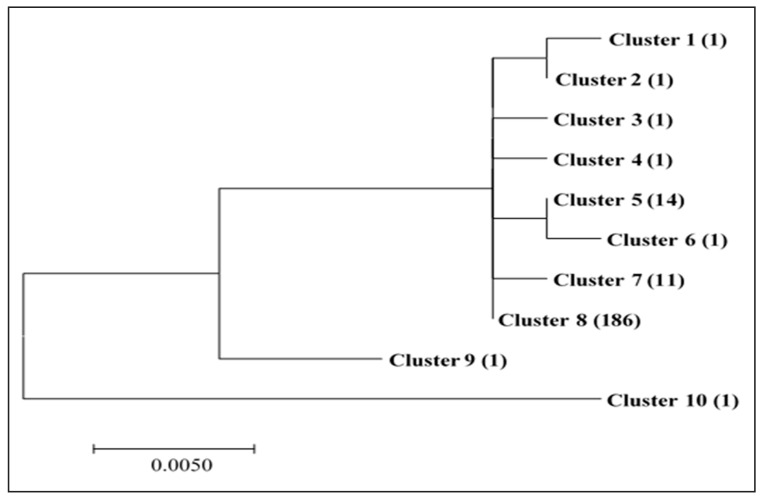
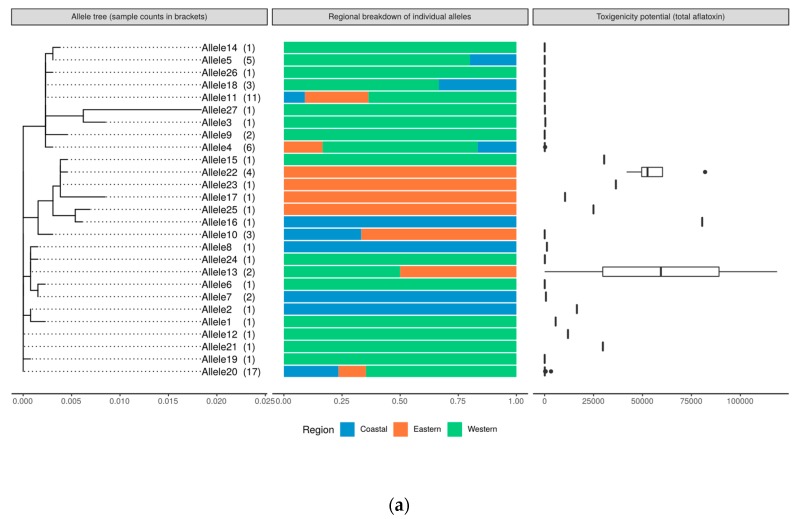
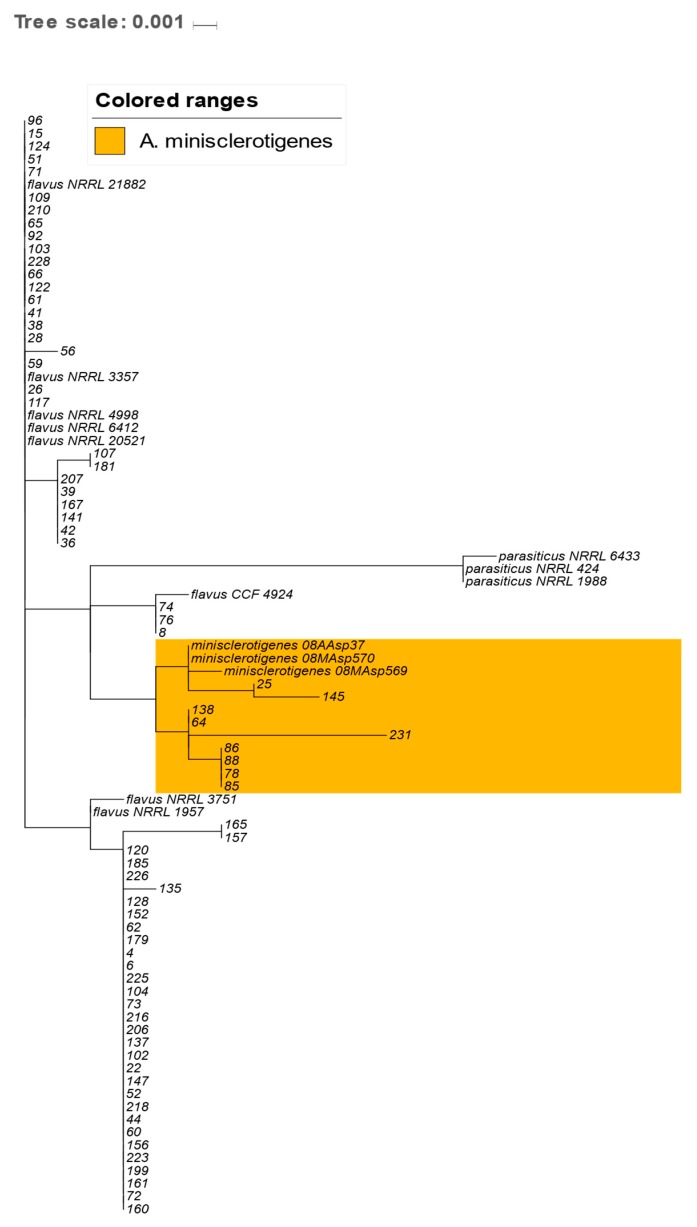
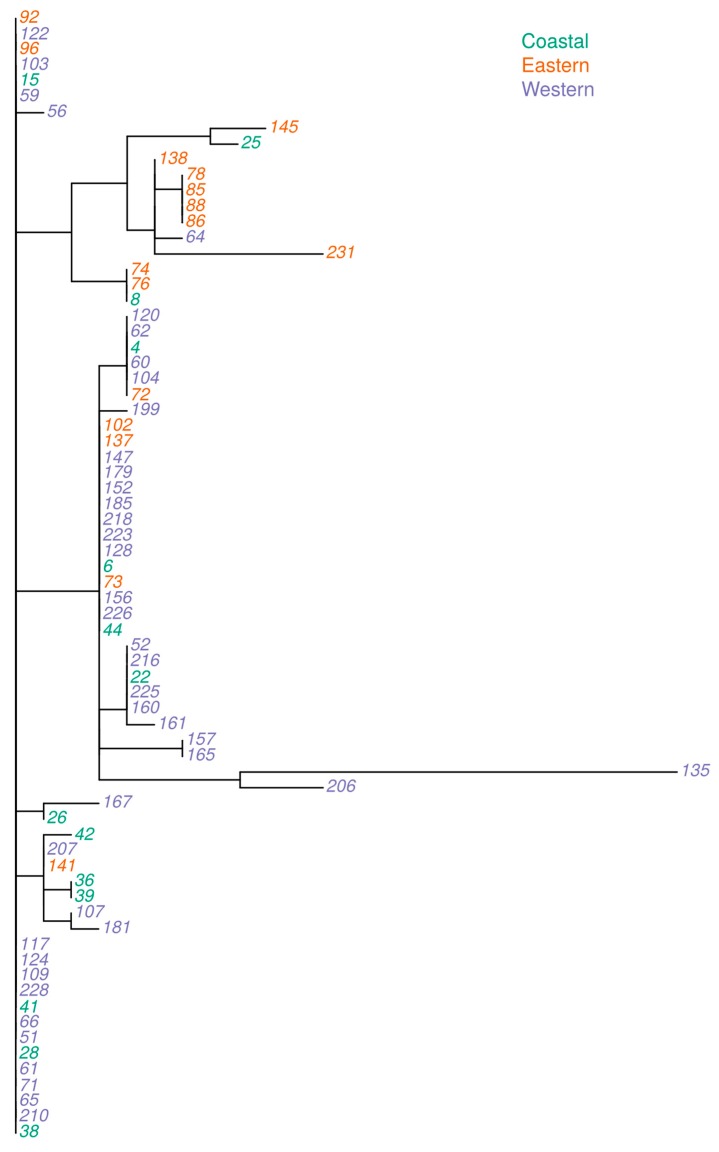
Highly toxigenic strains of have been reported to frequently contaminate maize, causing fatal aflatoxin poisoning in Kenya. To gain insights into the environmental and genetic factors that influence toxigenicity, fungi ( = 218) that were culturally identified as were isolated from maize grains samples ( = 120) from three regions of Kenya. The fungi were further characterized to confirm their identities using a PCR-sequence analysis of the internal transcribed spacer (ITS) region of rDNA which also revealed all of them to be . A subset of 72 isolates representing ITS sequence-based phylogeny and the agroecological origin of maize samples was constituted for subsequent analysis. The analysis of partial calmodulin gene sequences showed that the subset consisted of (87%) and (13%). No obvious association was detected between the presence of seven aflatoxin biosynthesis genes and fungal species or region. However, the presence of the and genes showed some association with aflatoxin production. The assessment of toxigenicity showed higher aflatoxin production potential in isolates. Given that were mainly observed in maize samples from Eastern Kenya, a known aflatoxin hotspot, we speculate that production of copious aflatoxin is an adaptative trait of this recently discovered species in the region.
已报道产毒能力很强的菌株经常污染玉米,导致肯尼亚致命的黄曲霉毒素中毒。为了深入了解影响产毒的环境和遗传因素,从肯尼亚三个地区的玉米籽粒样本(n = 120)中分离出了文化上鉴定为 ( = 218)的真菌。使用核糖体 DNA 内部转录间隔区(ITS)区域的 PCR 序列分析进一步鉴定这些真菌,结果表明它们均为 。选择代表 ITS 序列系统发育和玉米样本农业生态起源的 72 个菌株子集进行后续分析。部分钙调蛋白基因序列分析表明,该子集由 (87%)和 (13%)组成。未检测到七种黄曲霉毒素生物合成基因的存在与真菌种类或地区之间存在明显关联。然而,存在 和 基因与黄曲霉毒素的产生有一定的关联。产毒能力评估显示 菌株具有更高的黄曲霉毒素产生潜力。鉴于 主要存在于肯尼亚东部已知的黄曲霉毒素热点地区的玉米样本中,我们推测在该地区大量产生黄曲霉毒素是该新发现物种的适应特征。