Kwiecińska-Piróg Joanna, Skowron Krzysztof, Bogiel Tomasz, Białucha Agata, Przekwas Jana, Gospodarek-Komkowska Eugenia
Department of Microbiology, Nicolaus Copernicus University in Toruń, L. Rydygier Collegium Medicum in Bydgoszcz, 9 M. Skłodowska-Curie St., 85-094 Bydgoszcz, Poland.
Department of Clinical Microbiology, Antoni Jurasz University Hospital No. 1, Bydgoszcz, 9 M. Skłodowska-Curie St., 85-094 Bydgoszcz, Poland.
Antibiotics (Basel). 2019 Aug 11;8(3):116. doi: 10.3390/antibiotics8030116.
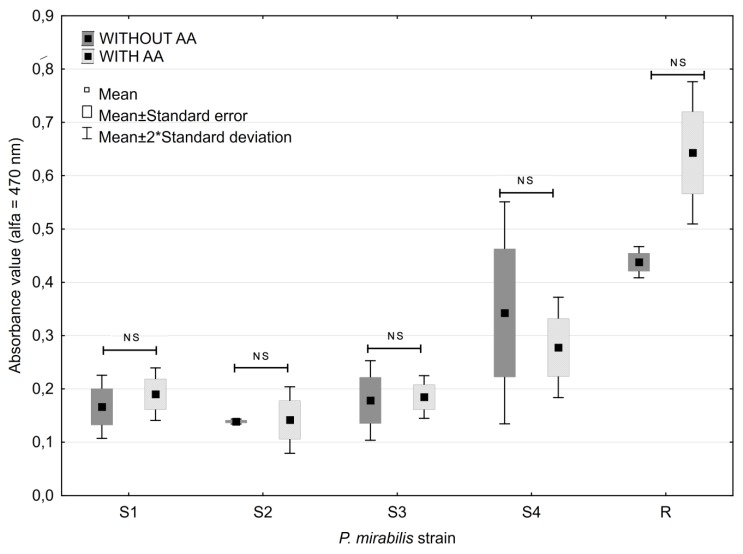
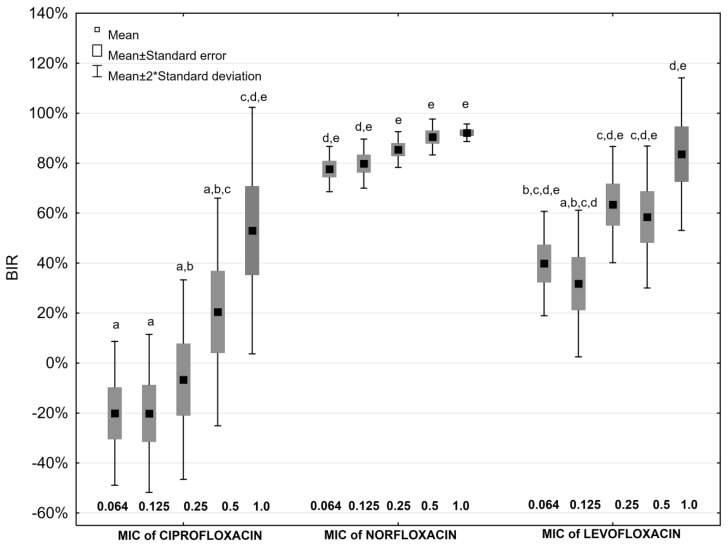
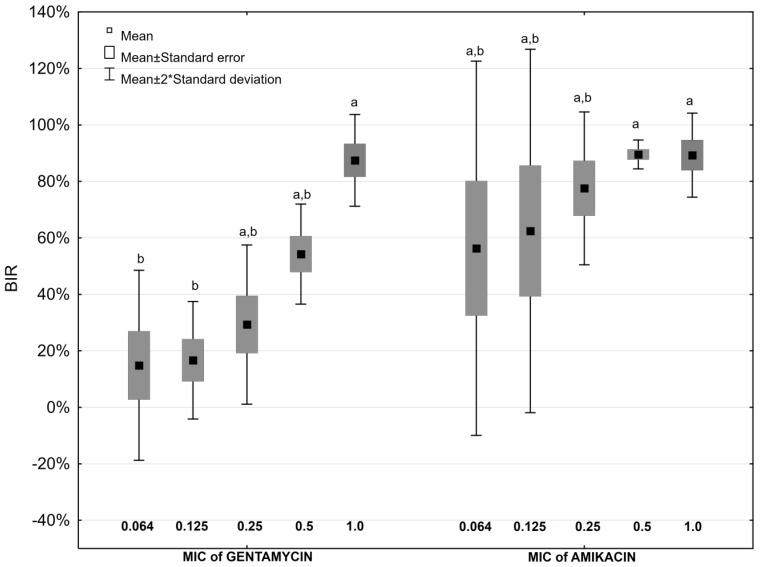
Vitamin C has antimicrobial activity and is often used as an oral supplement accompanying antibiotic treatment in urinary tract infections (UTI). is the third common species responsible for UTIs that are mostly treated with fluoroquinolones or aminoglycosides. Treatment of the UTI caused by is problematic due to the ability to form biofilm on the urinary catheters. The aim of the study was to evaluate the influence of ascorbic acid in combination with antibiotics on abilities to form biofilm. The susceptibility of reference strain ATCC 29906™ and four clinical strains isolated from the urine samples of patients with urinary catheter were evaluated according to EUCAST recommendations. The influence of ascorbic acid (0.4 mg × mL) in combination with antibiotics on biofilm formation was evaluated spectrophotometrically. Aminoglycosides at sub-inhibitory concentrations more successfully limited biofilm formation by strains without ascorbic acid addition. Inhibition rate differences at the lowest concentrations of gentamicin and amikacin were statistically significant ( ≤ 0.05). Ascorbic acid addition to the culture medium limited the inhibitory effect of fluoroquinolones, facilitating biofilm formation by strains. The addition of ascorbic acid during aminoglycosides therapy may disturb treatment of urinary tract infections related to the presence of biofilm.
维生素C具有抗菌活性,在尿路感染(UTI)的抗生素治疗中常作为口服补充剂使用。[具体细菌名称]是导致UTI的第三常见菌种,UTI大多用氟喹诺酮类或氨基糖苷类药物治疗。由于[具体细菌名称]能够在导尿管上形成生物膜,因此由其引起的UTI治疗存在问题。本研究的目的是评估抗坏血酸与抗生素联合使用对[具体细菌名称]形成生物膜能力的影响。根据欧洲抗菌药物敏感性试验委员会(EUCAST)的建议,评估了[具体细菌名称]参考菌株ATCC 29906™和从导尿管患者尿液样本中分离出的四株临床菌株的敏感性。采用分光光度法评估了抗坏血酸(0.4 mg×mL)与抗生素联合使用对生物膜形成的影响。在不添加抗坏血酸的情况下,亚抑菌浓度的氨基糖苷类药物更成功地限制了[具体细菌名称]菌株的生物膜形成。庆大霉素和阿米卡星最低浓度时的抑制率差异具有统计学意义(P≤0.05)。向培养基中添加抗坏血酸会限制氟喹诺酮类药物的抑制作用,促进[具体细菌名称]菌株形成生物膜。在氨基糖苷类药物治疗期间添加抗坏血酸可能会干扰与[具体细菌名称]生物膜相关的尿路感染的治疗。