Liu Zewen, Ren Zhangpin, Zhang Jun, Chuang Chia-Chen, Kandaswamy Eswar, Zhou Tingyang, Zuo Li
Radiologic Sciences and Respiratory Therapy Division, School of Health and Rehabilitation Sciences, The Ohio State University College of Medicine, The Ohio State University Wexner Medical Center, Columbus, OH, United States.
Department of Anesthesiology, Affiliated Ezhou Central Hospital, Wuhan University, Ezhou, China.
Front Physiol. 2018 May 17;9:477. doi: 10.3389/fphys.2018.00477. eCollection 2018.
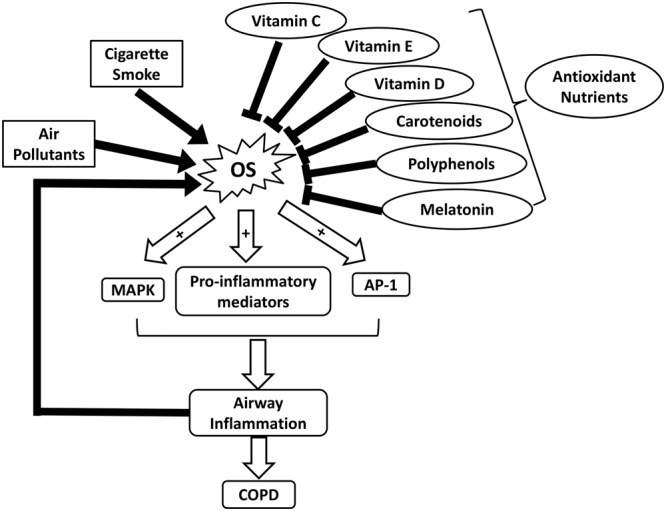
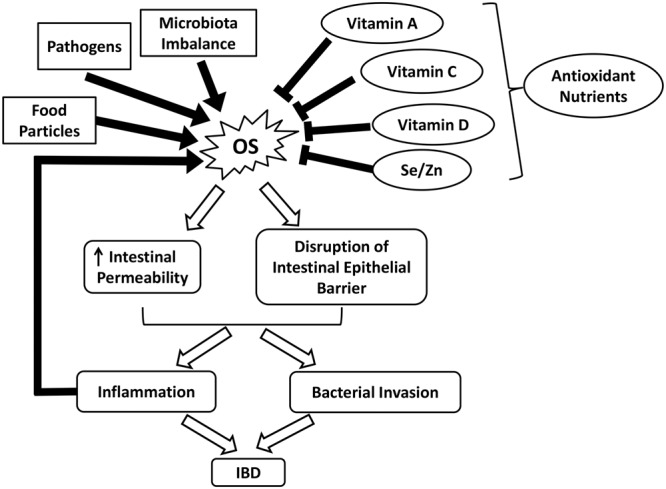
The overproduction of reactive oxygen species (ROS) has been implicated in the development of various chronic and degenerative diseases such as cancer, respiratory, neurodegenerative, and digestive diseases. Under physiological conditions, the concentrations of ROS are subtlety regulated by antioxidants, which can be either generated endogenously or externally supplemented. A combination of antioxidant-deficiency and malnutrition may render individuals more vulnerable to oxidative stress, thereby increasing the risk of cancer occurrence. In addition, antioxidant defense can be overwhelmed during sustained inflammation such as in chronic obstructive pulmonary diseases, inflammatory bowel disease, and neurodegenerative disorders, cardiovascular diseases, and aging. Certain antioxidant vitamins, such as vitamin D, are essential in regulating biochemical pathways that lead to the proper functioning of the organs. Antioxidant supplementation has been shown to attenuate endogenous antioxidant depletion thus alleviating associated oxidative damage in some clinical research. However, some results indicate that antioxidants exert no favorable effects on disease control. Thus, more studies are warranted to investigate the complicated interactions between ROS and different types of antioxidants for restoration of the redox balance under pathologic conditions. This review highlights the potential roles of ROS and nutritional antioxidants in the pathogenesis of several redox imbalance-related diseases and the attenuation of oxidative stress-induced damages.
活性氧(ROS)的过度产生与多种慢性和退行性疾病的发展有关,如癌症、呼吸系统疾病、神经退行性疾病和消化系统疾病。在生理条件下,ROS的浓度由抗氧化剂精细调节,抗氧化剂可以内源性产生或外源性补充。抗氧化剂缺乏和营养不良的共同作用可能使个体更容易受到氧化应激的影响,从而增加患癌风险。此外,在持续性炎症期间,如慢性阻塞性肺疾病、炎症性肠病、神经退行性疾病、心血管疾病和衰老过程中,抗氧化防御可能会不堪重负。某些抗氧化维生素,如维生素D,对于调节导致器官正常功能的生化途径至关重要。在一些临床研究中,补充抗氧化剂已被证明可以减轻内源性抗氧化剂的消耗,从而减轻相关的氧化损伤。然而,一些结果表明抗氧化剂对疾病控制没有有利影响。因此,有必要进行更多研究来调查ROS与不同类型抗氧化剂之间复杂的相互作用,以在病理条件下恢复氧化还原平衡。本综述强调了ROS和营养抗氧化剂在几种氧化还原失衡相关疾病的发病机制以及减轻氧化应激诱导损伤方面的潜在作用。