Department of Nanobiomedical Science, Dankook University, Cheonan 31116, Korea.
Department of Microbiology, Dankook University, Cheonan 31116, Korea.
Cells. 2019 Aug 12;8(8):878. doi: 10.3390/cells8080878.
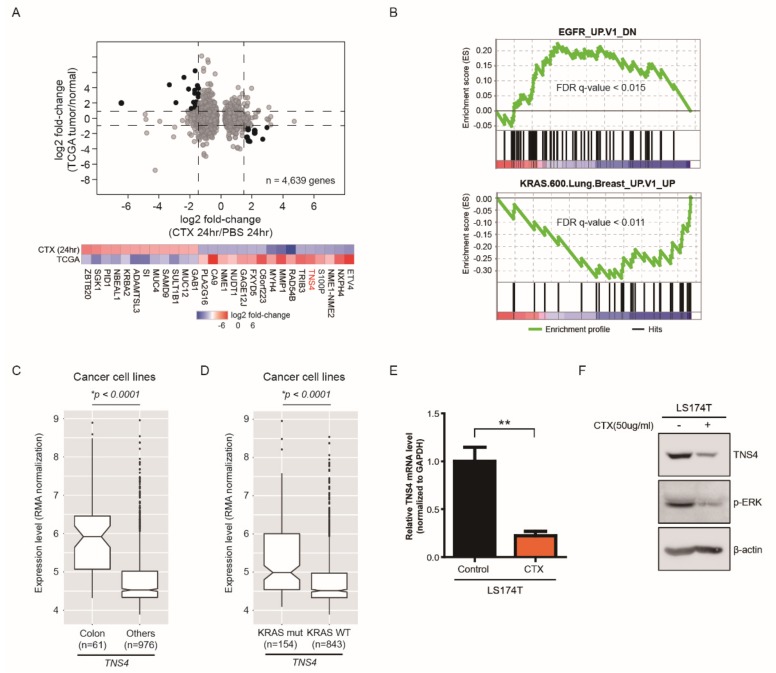
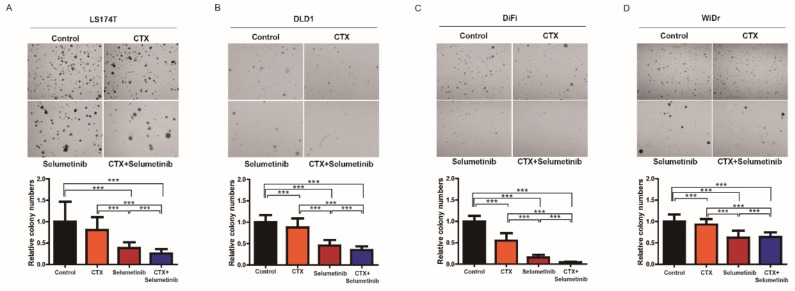
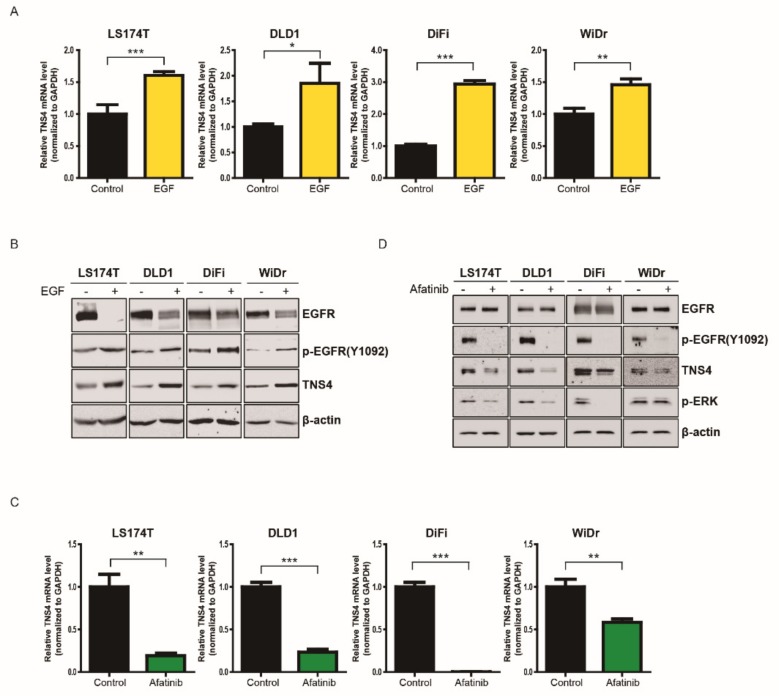
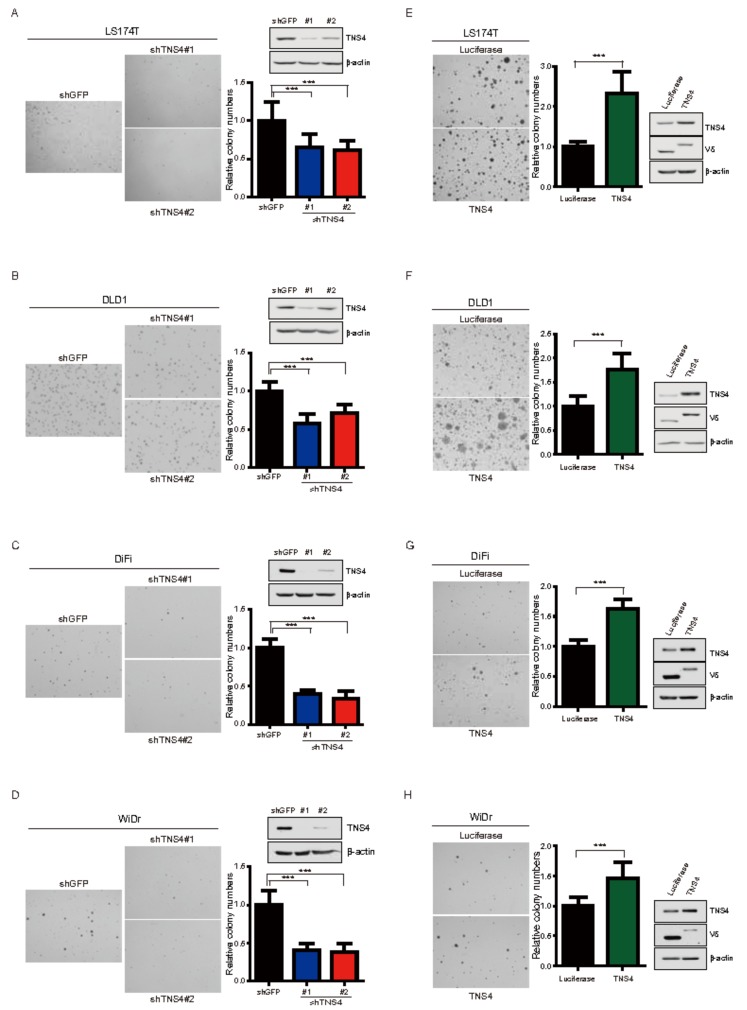
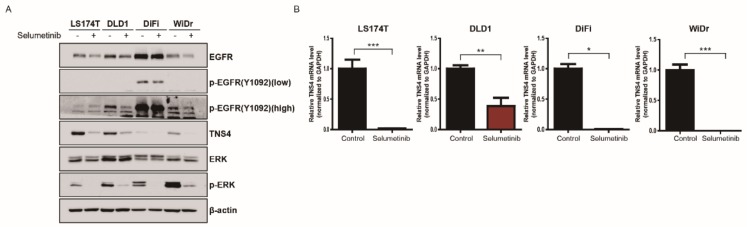
The targeting of activated epidermal growth factor receptor (EGFR) with therapeutic anti-EGFR monoclonal antibodies (mAbs) such as cetuximab and panitumumab has been used as an effective strategy in the treatment of colorectal cancer (CRC). However, its clinical efficacy occurs only in a limited number of patients. Here, we performed whole-transcriptome analysis in xenograft mouse tumors induced by mutation-bearing LS174T CRC cells following treatment with either cetuximab or PBS. Through integrated analyses of differential gene expression with TCGA and CCLE public database, we identified TNS4, overexpressed in CRC patients and mutation-harboring CRC cell lines, significantly downregulated by cetuximab. While ablation of TNS4 expression via shRNA results in significant growth inhibition of LS174T, DLD1, WiDr, and DiFi CRC cell lines, conversely, its ectopic expression increases the oncogenic growth of these cells. Furthermore, TNS4 expression is transcriptionally regulated by MAP kinase signaling pathway. Consistent with this finding, selumetinib, a MEK1/2 inhibitor, suppressed oncogenic activity of CRC cells, and this effect is more profound in combination with cetuximab. Altogether, we propose that TNS4 plays a crucial role in CRC tumorigenesis, and that suppression of TNS4 would be an effective therapeutic strategy in treating a subset of cetuximab-refractory CRC patients including activating mutations.
靶向激活的表皮生长因子受体(EGFR)的治疗性抗 EGFR 单克隆抗体(mAb),如西妥昔单抗和帕尼单抗,已被用于结直肠癌(CRC)的治疗中,是一种有效的策略。然而,其临床疗效仅在少数患者中出现。在这里,我们在携带 突变的 LS174T CRC 细胞诱导的异种移植小鼠肿瘤中进行了全转录组分析,这些肿瘤在接受西妥昔单抗或 PBS 治疗后。通过对差异基因表达与 TCGA 和 CCLE 公共数据库的综合分析,我们鉴定出 TNS4,在 CRC 患者和携带 突变的 CRC 细胞系中过表达,西妥昔单抗显著下调。虽然通过 shRNA 敲低 TNS4 表达导致 LS174T、DLD1、WiDr 和 DiFi CRC 细胞系的生长显著抑制,但相反,其异位表达增加了这些细胞的致癌生长。此外,TNS4 的表达受 MAP 激酶信号通路的转录调控。与这一发现一致的是,MEK1/2 抑制剂 selumetinib 抑制 CRC 细胞的致癌活性,并且与西妥昔单抗联合使用时效果更为显著。总之,我们提出 TNS4 在 CRC 肿瘤发生中起着关键作用,抑制 TNS4 将是治疗包括 激活突变在内的西妥昔单抗耐药 CRC 患者的一种有效治疗策略。