Department of Clinical Pharmacy and Pharmacology, University Medical Center Groningen, University of Groningen, Hanzeplein 1, 9713JZ, Groningen, The Netherlands.
Department of Surgery, University Medical Center Groningen, Groningen, The Netherlands.
J Transl Med. 2019 Aug 13;17(1):265. doi: 10.1186/s12967-019-2013-1.
Hypothermia, leading to mitochondrial inhibition, is widely used to reduce ischemic injury during kidney preservation. However, the exact effect of hypothermic kidney preservation on mitochondrial function remains unclear.
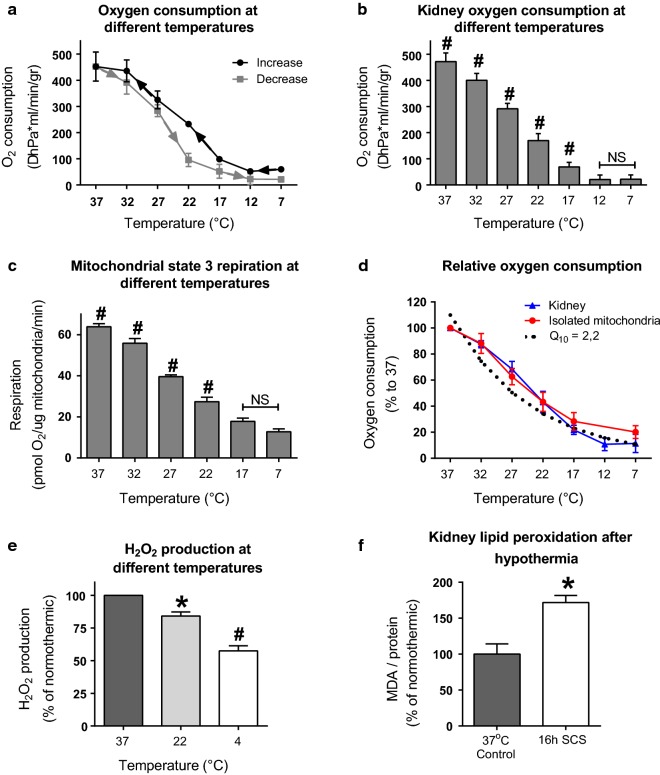
We evaluated mitochondrial function [i.e. oxygen consumption and production of reactive oxygen species (ROS)] in different models (porcine kidney perfusion, isolated kidney mitochondria, and HEK293 cells) at temperatures ranging 7-37 °C.
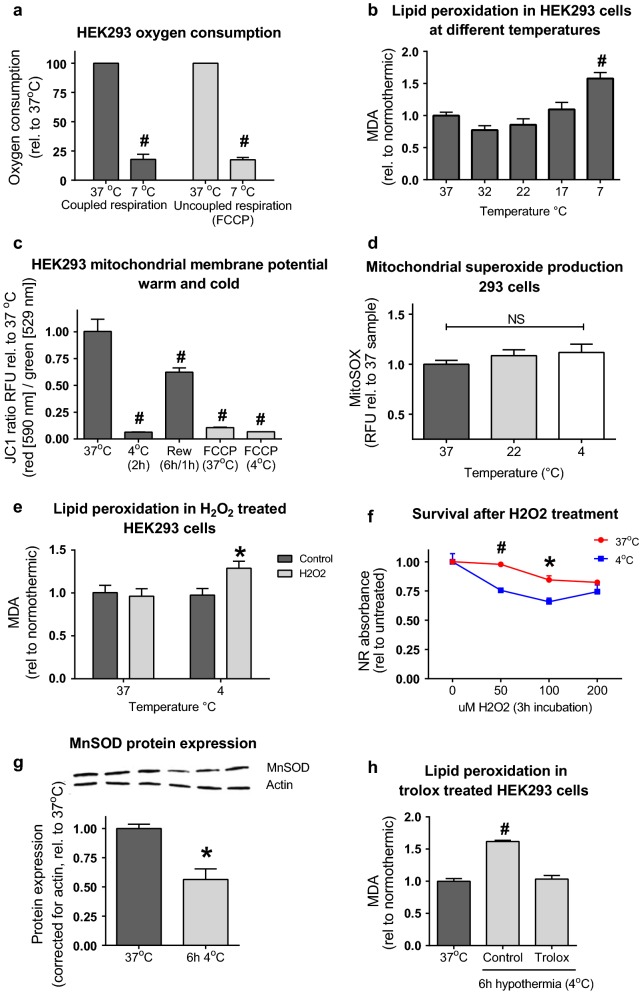
Lowering temperature in perfused kidneys and isolated mitochondria resulted in a rapid decrease in oxygen consumption (65% at 27 °C versus 20% at 7 °C compared to normothermic). Decreased oxygen consumption at lower temperatures was accompanied by a reduction in mitochondrial ROS production, albeit markedly less pronounced and amounting only 50% of normothermic values at 7 °C. Consequently, malondialdehyde (a marker of ROS-induced lipid peroxidation) accumulated in cold stored kidneys. Similarly, low temperature incubation of kidney cells increased lipid peroxidation, which is due to a loss of ROS scavenging in the cold.
Lowering of temperature highly affects mitochondrial function, resulting in a progressive discrepancy between the lowering of mitochondrial respiration and their production of ROS, explaining the deleterious effects of hypothermia in transplantation procedures. These results highlight the necessity to develop novel strategies to decrease the formation of ROS during hypothermic organ preservation.
低温导致线粒体抑制,被广泛用于减少肾脏保存过程中的缺血性损伤。然而,低温保存肾脏对线粒体功能的确切影响仍不清楚。
我们在不同模型(猪肾灌注、分离的肾线粒体和 HEK293 细胞)中评估了温度在 7-37°C 范围内的线粒体功能[即氧消耗和活性氧(ROS)的产生]。
在灌注肾脏和分离的线粒体中降低温度会导致氧消耗迅速下降(与正常温度相比,27°C 时下降 65%,7°C 时下降 20%)。较低温度下的氧消耗减少伴随着线粒体 ROS 产生的减少,但幅度明显较小,在 7°C 时仅为正常温度的 50%。因此,冷储存肾脏中丙二醛(ROS 诱导的脂质过氧化的标志物)积累。同样,低温孵育肾细胞会增加脂质过氧化,这是由于低温下 ROS 清除的丧失。
降低温度会严重影响线粒体功能,导致线粒体呼吸降低和 ROS 产生之间的差异逐渐增大,这解释了低温在移植过程中的有害影响。这些结果强调了需要开发新的策略来减少低温器官保存过程中 ROS 的形成。