Hospital São José de Doenças Infecciosas - Secretaria de Saúde do Ceará, Fortaleza, Ceará, Brazil.
Núcleo de Medicina Tropical, Faculdade de Medicina, Universidade de Brasília, Brasília, Distrito Federal, Brazil.
Sci Rep. 2019 Aug 13;9(1):11789. doi: 10.1038/s41598-019-48111-6.
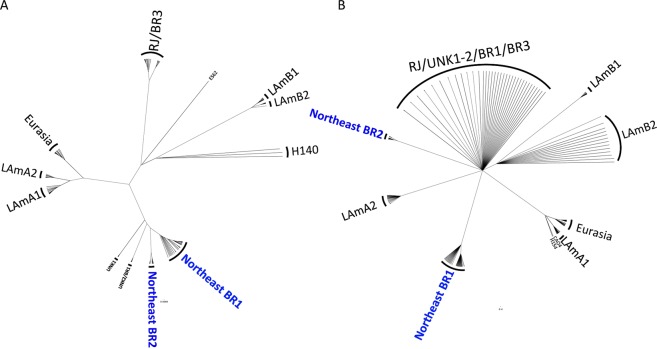
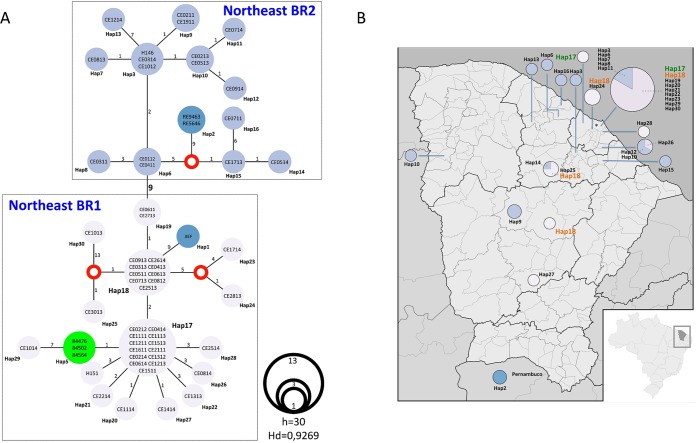
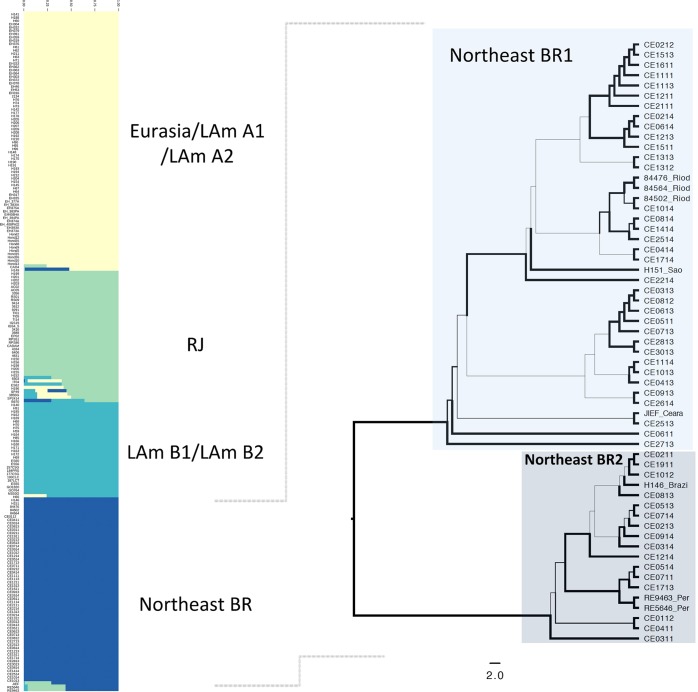
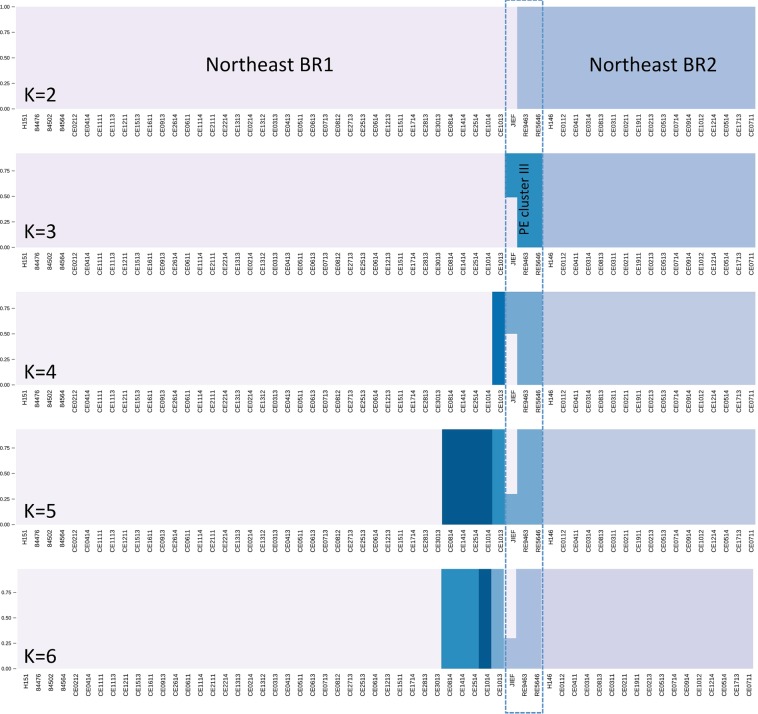
Histoplasmosis is a worldwide-distributed deep mycosis that affects healthy and immunocompromised hosts. Severe and disseminated disease is especially common in HIV-infected patients. At least 11 phylogenetic species are recognized and the majority of diversity is found in Latin America. The northeastern region of Brazil has one of the highest HIV/AIDS prevalence in Latin America and Ceará State has one of the highest death rates due to histoplasmosis in the world, where the mortality rate varies between 33-42%. The phylogenetic distribution and population genetic structure of 51 clinical isolates from Northeast Brazil was studied. For that morphological characteristics, exoantigens profile, and fungal mating types were evaluated. The genotypes were deduced by a MSLT in order to define local population structure of this fungal pathogen. In addition, the relationships of H. capsulatum genotypes with clinically relevant phenotypes and clinical aspects were investigated. The results suggest two cryptic species, herein named population Northeast BR1 and population Northeast BR2. These populations are recombining, exhibit a high level of haplotype diversity, and contain different ratios of mating types MAT1-1 and MAT1-2. However, differences in phenotypes or clinical aspects were not observed within these new cryptic species. A HIV patient can be co-infected by two or more genotypes from Northeast BR1 and/or Northeast BR2, which may have significant impact on disease progression due to the impaired immune response. We hypothesize that co-infections could be the result of multiple exposure events and may indicate higher risk of disseminated histoplasmosis, especially in HIV infected patients.
组织胞浆菌病是一种分布广泛的深部真菌感染,可影响健康和免疫功能低下的宿主。严重和播散性疾病尤其常见于 HIV 感染者。目前已至少鉴定出 11 个种系发生的物种,且大部分多样性存在于拉丁美洲。巴西东北部地区是拉丁美洲 HIV/AIDS 发病率最高的地区之一,而塞阿拉州是世界上因组织胞浆菌病死亡率最高的州之一,死亡率在 33-42%之间。本研究调查了来自巴西东北部的 51 株临床分离株的种系发生分布和群体遗传结构。为此,评估了形态特征、外抗原谱和真菌交配型。通过 MSLT 推断基因型,以确定该真菌病原体的局部种群结构。此外,还研究了 H. capsulatum 基因型与临床相关表型和临床方面的关系。结果表明存在两个隐种,分别命名为东北 BR1 种群和东北 BR2 种群。这些种群正在重组,表现出高水平的单倍型多样性,并包含不同比例的交配型 MAT1-1 和 MAT1-2。然而,在这些新的隐种内并未观察到表型或临床方面的差异。HIV 患者可能同时感染来自东北 BR1 和/或东北 BR2 的两种或更多基因型,这可能会由于免疫反应受损而对疾病进展产生重大影响。我们假设合并感染可能是多次暴露事件的结果,并可能表明播散性组织胞浆菌病的风险更高,尤其是在 HIV 感染者中。