Department of Surgery, NorthShore University Research Institute, Affiliate of University of Chicago Pritzker School of Medicine, Evanston, IL, 60201, USA.
Department of Pathology, Saint Louis University School of Medicine, 1402 South Grand Blvd., Saint Louis, MO, 63104, USA.
Lab Invest. 2019 Dec;99(12):1822-1834. doi: 10.1038/s41374-019-0296-8. Epub 2019 Aug 13.
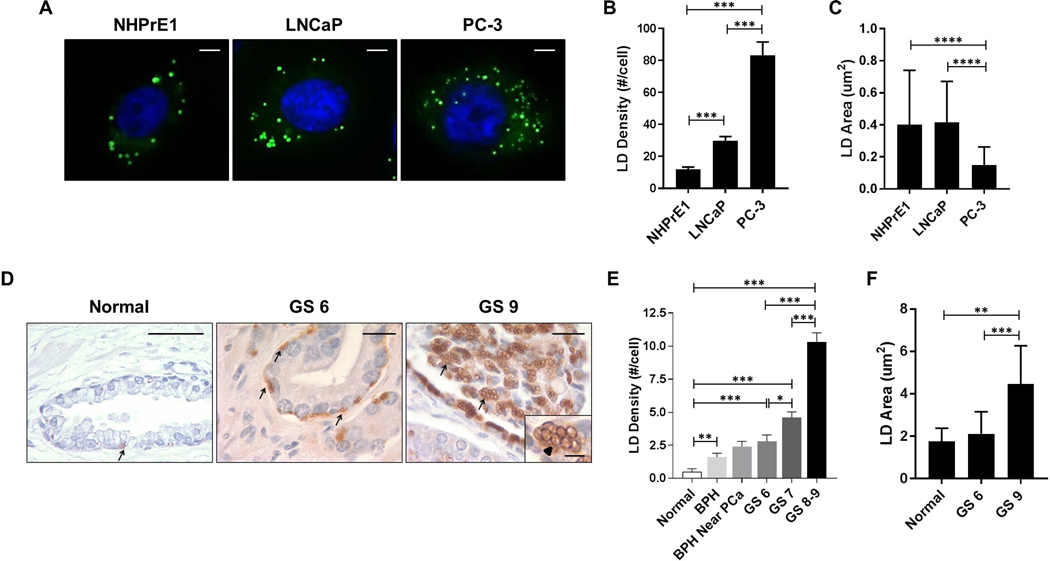
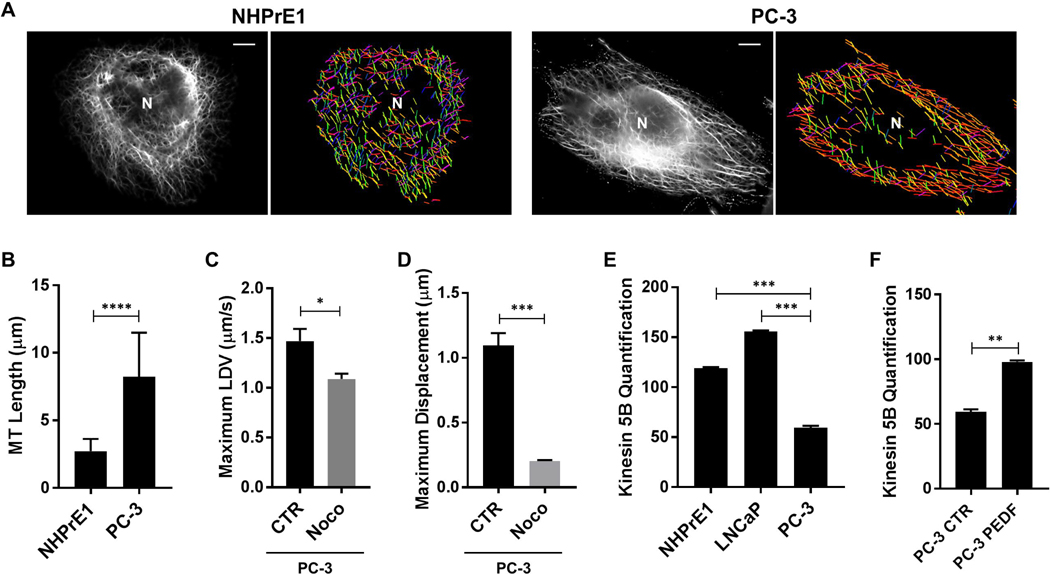
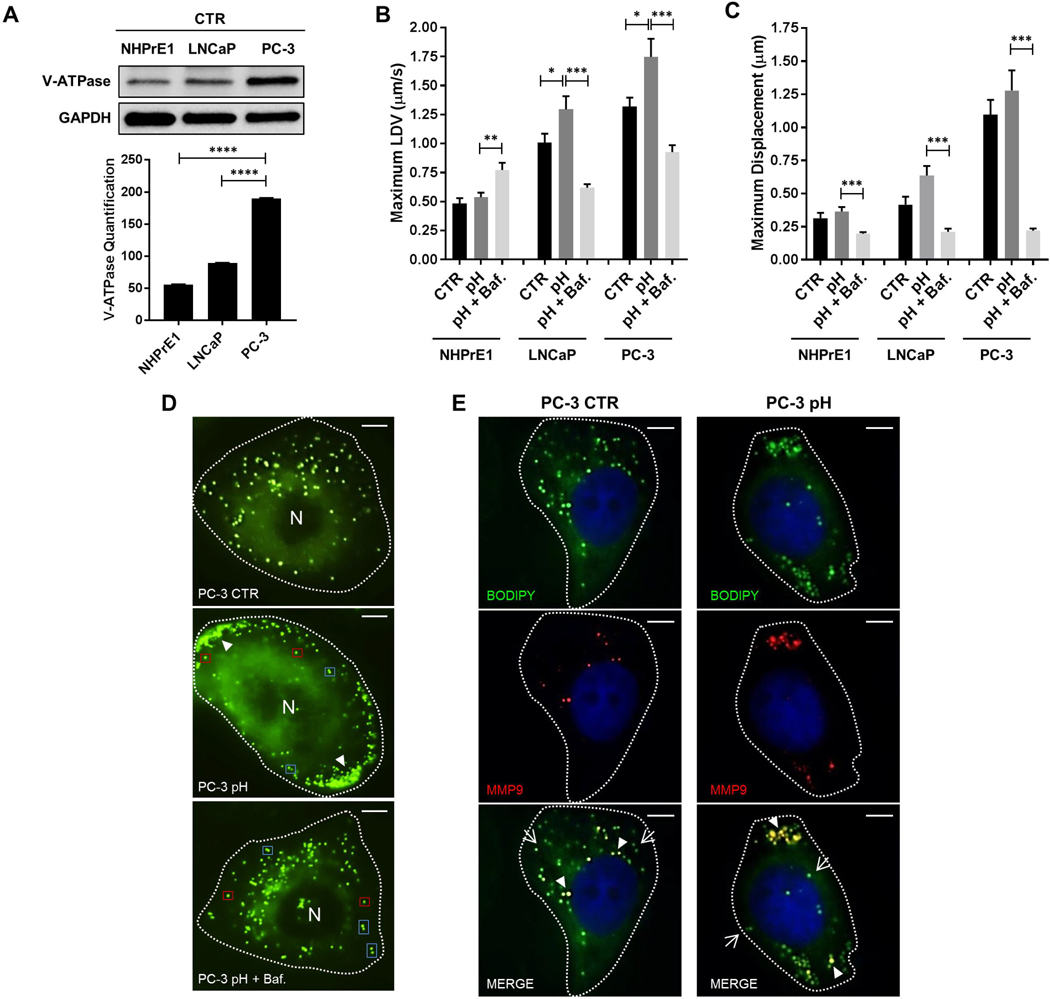
Lipid droplets (LDs) utilize microtubules (MTs) to participate in intracellular trafficking of cargo proteins. Cancer cells accumulate LDs and acidify their tumor microenvironment (TME) by increasing the proton pump V-ATPase. However, it is not known whether these two metabolic changes are mechanistically related or influence LD movement. We postulated that LD density and velocity are progressively increased with tumor aggressiveness and are dependent on V-ATPase and the lipolysis regulator pigment epithelium-derived factor (PEDF). LD density was assessed in human prostate cancer (PCa) specimens across Gleason scores (GS) 6-8. LD distribution and velocity were analyzed in low and highly aggressive tumors using live-cell imaging and in cells exposed to low pH and/or treated with V-ATPase inhibitors. The MT network was disrupted and analyzed by α-tubulin staining. LD density positively correlated with advancing GS in human tumors. Acidification promoted peripheral localization and clustering of LDs. Highly aggressive prostate, breast, and pancreatic cell lines had significantly higher maximum LD velocity (LDVmax) than less aggressive and benign cells. LDVmax was MT-dependent and suppressed by blocking V-ATPase directly or indirectly with PEDF. Upon lowering pH, LDs moved to the cell periphery and carried metalloproteinases. These results suggest that acidification of the TME can alter intracellular LD movement and augment velocity in cancer. Restoration of PEDF or blockade of V-ATPase can normalize LD distribution and decrease velocity. This study identifies V-ATPase and PEDF as new modulators of LD trafficking in the cancer microenvironment.
脂滴 (LDs) 利用微管 (MTs) 参与货物蛋白的细胞内运输。癌细胞通过增加质子泵 V-ATPase 积累 LDs 并使肿瘤微环境 (TME) 酸化。然而,尚不清楚这两种代谢变化是否在机制上相关或影响 LD 运动。我们推测 LD 密度和速度随着肿瘤侵袭性的增加而逐渐增加,并且依赖于 V-ATPase 和脂解调节剂色素上皮衍生因子 (PEDF)。在人前列腺癌 (PCa) 标本中评估了不同 Gleason 评分 (GS) 6-8 的 LD 密度。使用活细胞成像分析低侵袭性和高侵袭性肿瘤中的 LD 分布和速度,并在暴露于低 pH 值和/或用 V-ATPase 抑制剂处理的细胞中分析。通过 α-微管蛋白染色破坏和分析 MT 网络。LD 密度与人肿瘤的 GS 进展呈正相关。酸化促进了 LD 的外周定位和聚集。高度侵袭性的前列腺、乳腺和胰腺细胞系的最大 LD 速度 (LDVmax) 明显高于侵袭性较低和良性的细胞。LDVmax 依赖于 MT,并通过直接或间接用 PEDF 阻断 V-ATPase 受到抑制。降低 pH 值后,LD 移动到细胞外周并携带金属蛋白酶。这些结果表明,TME 的酸化可以改变细胞内 LD 的运动并增加癌症中的速度。恢复 PEDF 或阻断 V-ATPase 可以使 LD 分布正常化并降低速度。本研究确定 V-ATPase 和 PEDF 是癌症微环境中 LD 运输的新调节剂。