Lv Mingfen, Ou Rongying, Zhang Qianwen, Lin Fan, Li Xiangyun, Wang Keyu, Xu Yunsheng
Department of Dermatology, The First Affiliated Hospital of Wenzhou Medical University, Wenzhou, Zhejiang 325000, People's Republic of China.
Department of Dermatology, Qilu Hospital, Shandong University, Jinan, Shandong 250012, People's Republic of China.
Drug Des Devel Ther. 2019 Jul 17;13:2371-2379. doi: 10.2147/DDDT.S203399. eCollection 2019.
Cervical cancer is the second most common malignant cancer in women worldwide. Evidence indicated that miR-664 was significantly downregulated in cervical cancer. However, the mechanisms by which miR-664 regulates the tumorigenesis of cervical cancer remain unclear. Thus, this study aimed to investigate the role of miR-664 in cervical cancer.
Quantitative reverse transcription polymerase chain reaction was used to detect the level of miR-664 in tumor tissues and cell line. The dual luciferase reporter system assay and Western blotting were used to explore the interaction of miR-664 and c-Kit in cervical cancer.
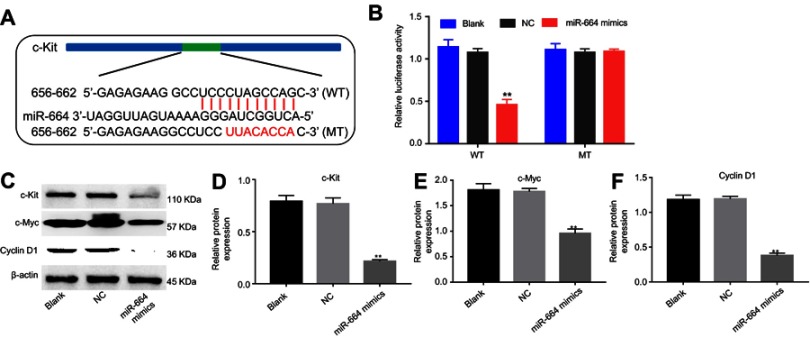
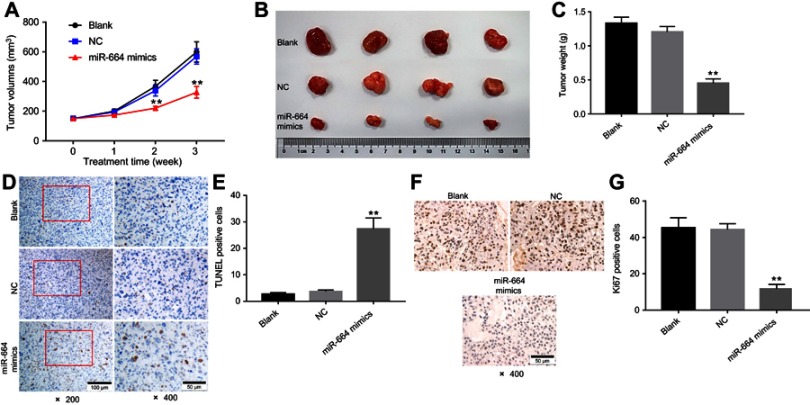
The expression of miR-664 in patients with cervical cancer was dramatically decreased compared with that in adjacent tissues. MiR-664 mimics significantly inhibited proliferation in SiHa cells via inducing apoptosis. In addition, miR-664 mimics induced apoptosis in SiHa cells via increasing the expressions of Bax and active caspase 3 and decreasing the level of Bcl-2. Moreover, dual-luciferase assay showed that c-Kit was the directly binding target of miR-664 in SiHa cells; overexpression of miR-664 downregulated the expression of c-Kit. Meanwhile, upregulation of miR-664 significantly decreased the levels of c-Myc and Cyclin D in cells. Furthermore, miR-664 markedly inhibited tumor growth of cervical cancer in xenograft.
Our data indicated that miR-664 exerted antitumor effects on SiHa cells by directly targeting c-Kit in vitro and in vivo. Therefore, miR-664 might be a potential therapeutic target for the treatment of patients with cervical cancer.
宫颈癌是全球女性中第二常见的恶性肿瘤。有证据表明,miR - 664在宫颈癌中显著下调。然而,miR - 664调节宫颈癌肿瘤发生的机制仍不清楚。因此,本研究旨在探讨miR - 664在宫颈癌中的作用。
采用定量逆转录聚合酶链反应检测肿瘤组织和细胞系中miR - 664的水平。利用双荧光素酶报告系统检测和蛋白质免疫印迹法探讨miR - 664与c - Kit在宫颈癌中的相互作用。
与癌旁组织相比,宫颈癌患者中miR - 664的表达显著降低。miR - 664模拟物通过诱导凋亡显著抑制SiHa细胞的增殖。此外,miR - 664模拟物通过增加Bax和活化的半胱天冬酶3的表达以及降低Bcl - 2的水平诱导SiHa细胞凋亡。此外,双荧光素酶检测表明c - Kit是SiHa细胞中miR - 664的直接结合靶点;miR - 664的过表达下调了c - Kit的表达。同时,miR - 664的上调显著降低了细胞中c - Myc和细胞周期蛋白D的水平。此外,miR - 664显著抑制了异种移植中宫颈癌的肿瘤生长。
我们的数据表明,miR - 664在体外和体内通过直接靶向c - Kit对SiHa细胞发挥抗肿瘤作用。因此,miR - 664可能是治疗宫颈癌患者的潜在治疗靶点。