Wang Yufeng, Miao Chuanhui, Gao Xiang
Department of Gynecology, Jinan Second Maternal and Child Health Hospital, Jinan, Shandong, 271199, People's Republic of China.
Department of Obstetrics and Gynecology, Shizhong District People's Hospital, Zaozhuang, Shandong, 277100, People's Republic of China.
Onco Targets Ther. 2021 Apr 28;14:2853-2865. doi: 10.2147/OTT.S278710. eCollection 2021.
Cervical cancer is a common female malignancy, which accounts for a large proportion of cancer-related mortality in the world. Therefore, exploring the mechanisms of cervical cancer progression and seeking new therapeutic targets are extraordinarily needful. The aim of this study was to explore the role of TCEB3 in cervical cancer progression.
TCEB3 expression was detected in cervical cancer tissue and adjacent normal tissues using qRT-PCR and immunohistochemistry analysis. TCEB3 expression was measured in cells using Western blot and qRT-PCR assay. Flow cytometer, CCK-8, colony formation and transwell assays were used to detect cell apoptosis, viability, colony-forming ability and invasion of cervical cancer cells. The expression of Ki-67, MMP-2, and MMP-9 was detected using Western blot. Bioinformatics analysis was used to predict circRNA-miRNA and miRNA-mRNA interactions. RIP and luciferase reporter assay were used to determine the interaction relationship.
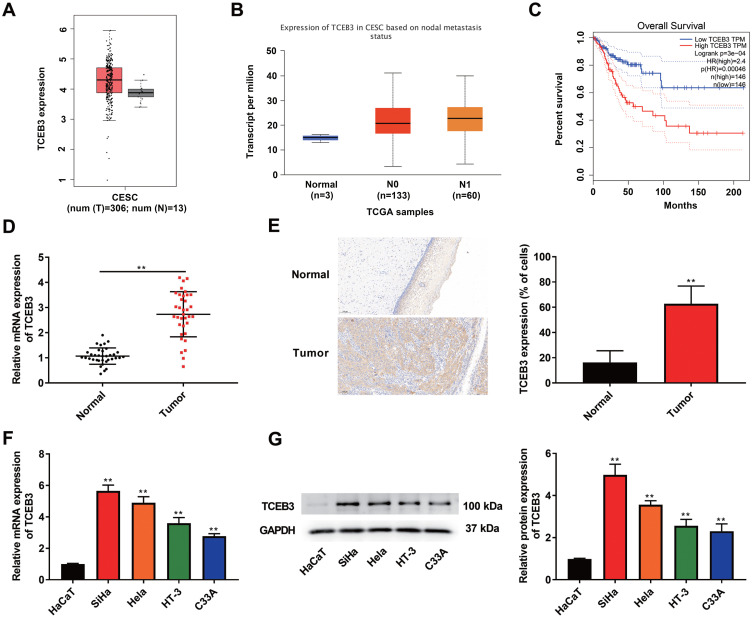
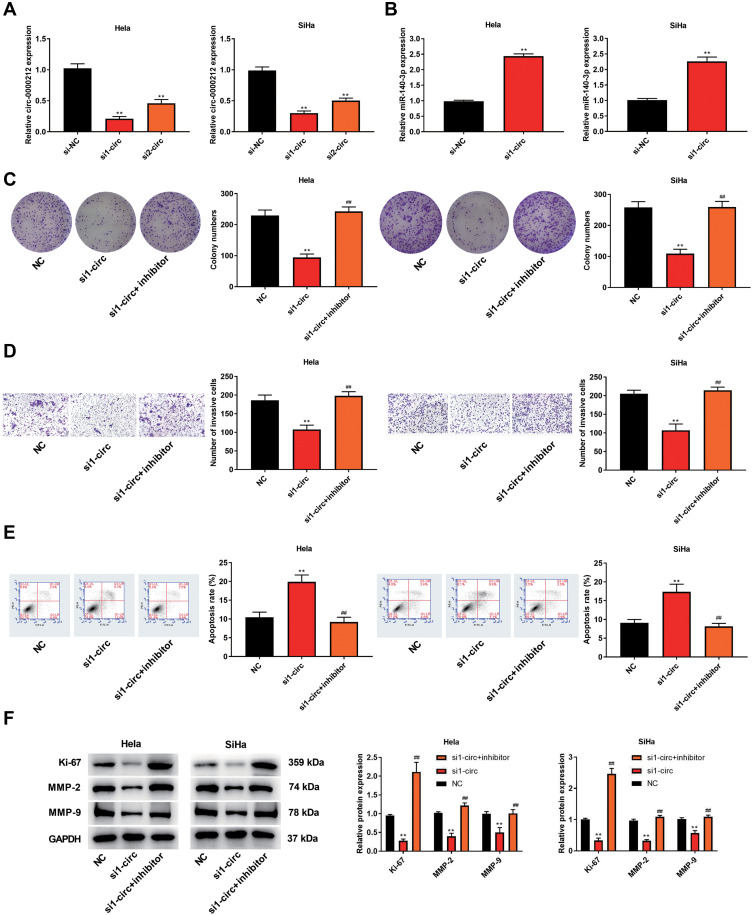
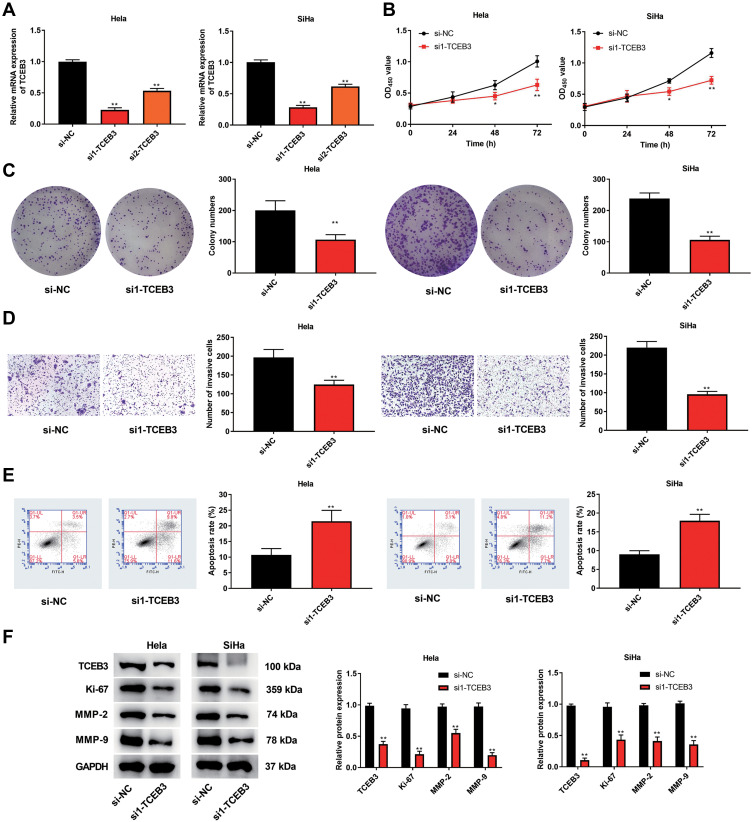
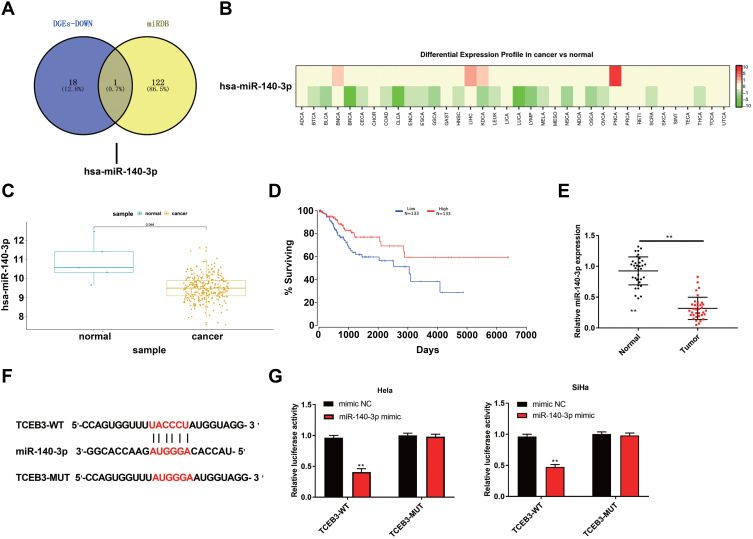
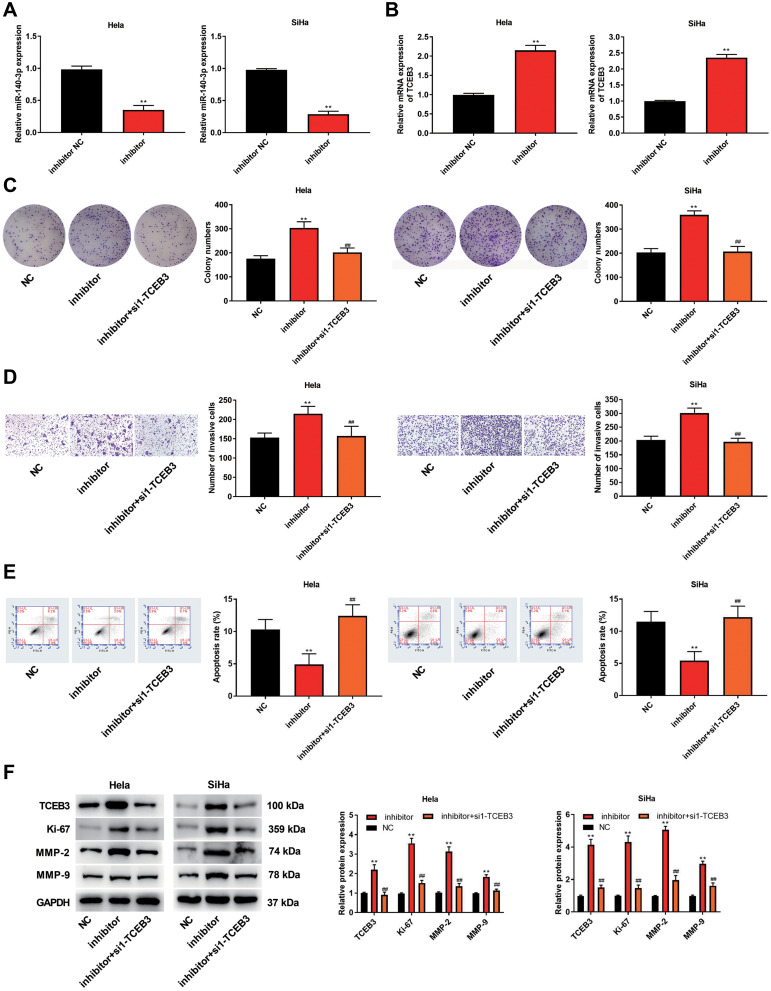
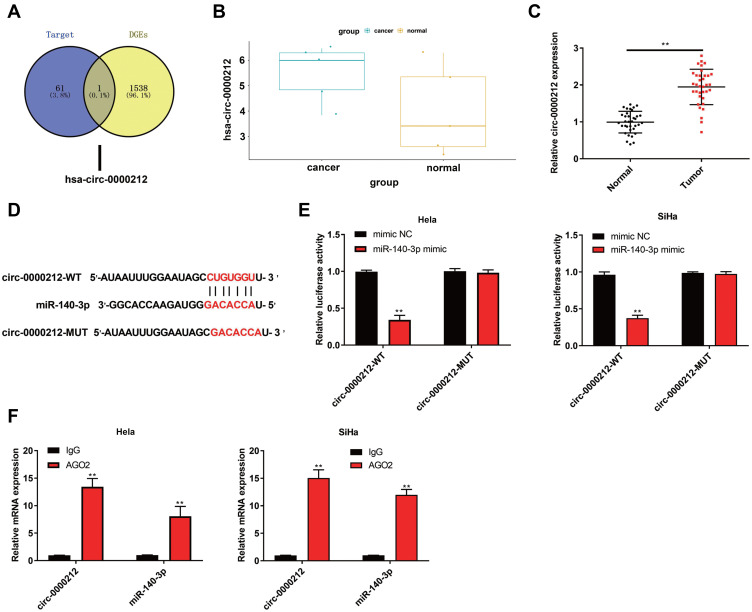
TCEB3 expression was up-regulated in both cervical cancer tissues and cells. Silencing of TCEB3 inhibited cell proliferation and invasion and promoted apoptosis of cervical cancer cells. Additionally, silencing of TCEB3 reduced the protein expression of Ki-67, MMP-2, and MMP-9 of cervical cancer cells. Mechanistically, we identified that TCEB3 was directly targeted gene of miR-140-3p, and circ-0000212 acted as a sponge of miR-140-3p. Moreover, TCEB3 was regulated by circ-0000212/miR-140-3p axis and played a tumor promotive role in cervical cancer.
Silencing of TCEB3 attenuated cell proliferation and invasion and promoted apoptosis of cervical cancer cells, and this effect was regulated by circ-0000212/miR-140-3p axis. Our findings may provide a novel promising target for cervical cancer treatment.
宫颈癌是一种常见的女性恶性肿瘤,在全球癌症相关死亡率中占很大比例。因此,探索宫颈癌进展机制并寻找新的治疗靶点非常必要。本研究旨在探讨TCEB3在宫颈癌进展中的作用。
采用qRT-PCR和免疫组织化学分析检测宫颈癌组织及癌旁正常组织中TCEB3的表达。利用蛋白质免疫印迹法和qRT-PCR检测细胞中TCEB3的表达。采用流式细胞仪、CCK-8、集落形成实验和Transwell实验检测宫颈癌细胞的凋亡、活力、集落形成能力和侵袭能力。通过蛋白质免疫印迹法检测Ki-67、MMP-2和MMP-9的表达。利用生物信息学分析预测circRNA-miRNA和miRNA-mRNA相互作用。采用RNA免疫沉淀实验(RIP)和荧光素酶报告基因实验确定相互作用关系。
TCEB3在宫颈癌组织和细胞中均高表达。沉默TCEB3可抑制宫颈癌细胞增殖和侵袭并促进其凋亡。此外,沉默TCEB3可降低宫颈癌细胞中Ki-67、MMP-2和MMP-9的蛋白表达。机制上,我们发现TCEB3是miR-140-3p的直接靶基因,circ-0000212作为miR-140-3p的海绵。此外,TCEB3受circ-0000212/miR-140-3p轴调控并在宫颈癌中发挥肿瘤促进作用。
沉默TCEB3可减弱宫颈癌细胞增殖和侵袭并促进其凋亡,且这种作用受circ-0000212/miR-140-3p轴调控。我们的研究结果可能为宫颈癌治疗提供一个新的有前景的靶点。