Yu Mi-Kyung, Kim Mi-Ah, Rosa Vinicius, Hwang Yun-Chan, Del Fabbro Massimo, Sohn Won-Jun, Min Kyung-San
Chonbuk National University, School of Dentistry and Institute of Oral Bioscience, Department of Conservative Dentistry, Jeonju, Korea.
Chonbuk National University, Research Institute of Clinical Medicine, Jeonju, Korea.
J Appl Oral Sci. 2019 Aug 12;27:e20180699. doi: 10.1590/1678-7757-2018-0699.
This study investigated the role of extracellular deoxyribonucleic acid (eDNA) on Enterococcus faecalis ( E. faecalis ) biofilm and the susceptibility of E. faecalis to sodium hypochlorite (NaOCl).
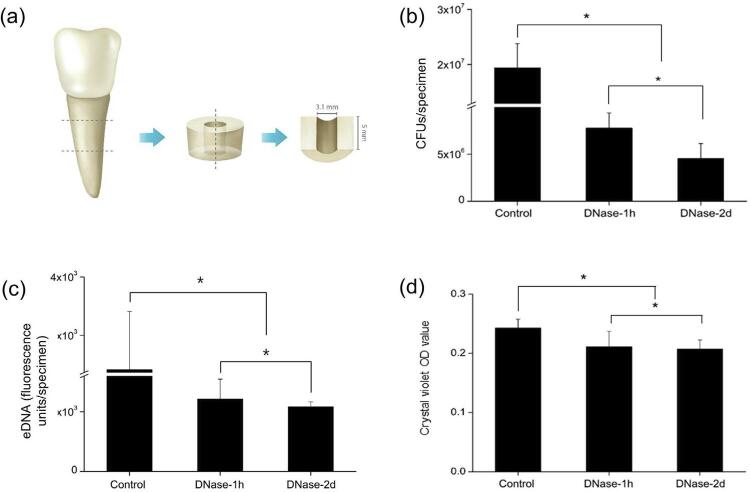
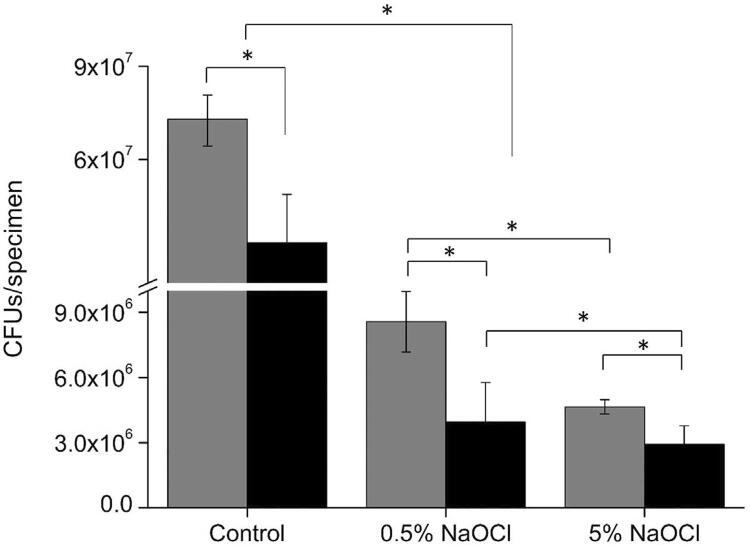
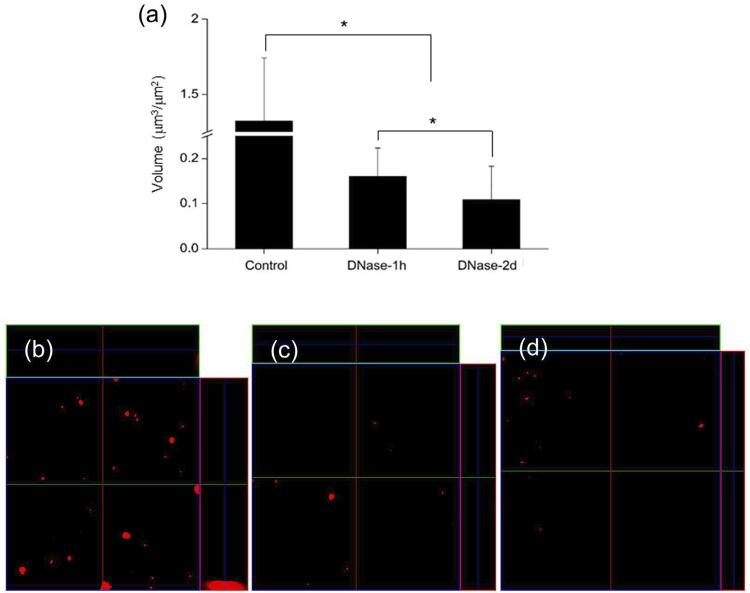
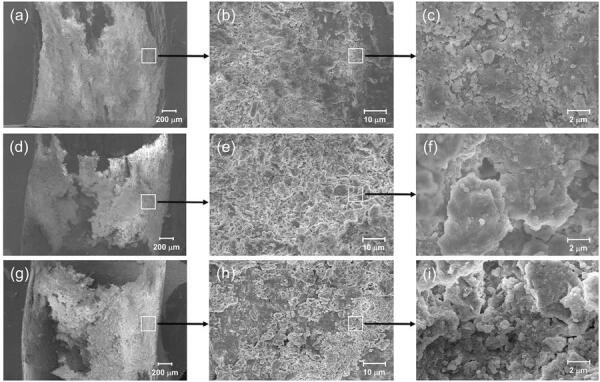
E. faecalis biofilm was formed in bovine tooth specimens and the biofilm was cultured with or without deoxyribonuclease (DNase), an inhibitor of eDNA. Then, the role of eDNA in E. faecalis growth and biofilm formation was investigated using colony forming unit (CFUs) counting, eDNA level assay, crystal violet staining, confocal laser scanning microscopy, and scanning electron microscopy. The susceptibility of E. faecalis biofilm to low (0.5%) or high (5%) NaOCl concentrations was also analyzed by CFU counting.
CFUs and biofilm formation decreased significantly with DNase treatment (p<0.05). The microstructure of DNase-treated biofilms exhibited less structured features when compared to the control. The volume of exopolysaccharides in the DNase-treated biofilm was significantly lower than that of control (p<0.05). Moreover, the CFUs, eDNA level, biofilm formation, and exopolysaccharides volume were lower when the biofilm was treated with DNase de novo when compared to when DNase was applied to matured biofilm (p<0.05). E. faecalis in the biofilm was more susceptible to NaOCl when it was cultured with DNase (p<0.05). Furthermore, 0.5% NaOCl combined with DNase treatment was as efficient as 5% NaOCl alone regarding susceptibility (p>0.05).
Inhibition of eDNA leads to decrease of E. faecalis biofilm formation and increase of susceptibility of E. faecalis to NaOCl even at low concentrations. Therefore, our results suggest that inhibition of eDNA would be beneficial in facilitating the efficacy of NaOCl and reducing its concentration.
本研究调查了细胞外脱氧核糖核酸(eDNA)在粪肠球菌生物膜形成中的作用以及粪肠球菌对次氯酸钠(NaOCl)的敏感性。
在牛牙标本中形成粪肠球菌生物膜,并在有或没有脱氧核糖核酸酶(DNase,一种eDNA抑制剂)的情况下培养生物膜。然后,通过菌落形成单位(CFU)计数、eDNA水平测定、结晶紫染色、共聚焦激光扫描显微镜和扫描电子显微镜研究eDNA在粪肠球菌生长和生物膜形成中的作用。还通过CFU计数分析了粪肠球菌生物膜对低浓度(0.5%)或高浓度(5%)NaOCl的敏感性。
经DNase处理后,CFU和生物膜形成显著减少(p<0.05)。与对照组相比,经DNase处理的生物膜微观结构显示出结构特征较少。经DNase处理的生物膜中胞外多糖的体积显著低于对照组(p<0.05)。此外,与将DNase应用于成熟生物膜相比,从头用DNase处理生物膜时,CFU、eDNA水平、生物膜形成和胞外多糖体积更低(p<0.05)。与用DNase一起培养时,生物膜中的粪肠球菌对NaOCl更敏感(p<0.05)。此外,就敏感性而言,0.5% NaOCl与DNase联合处理与单独使用5% NaOCl一样有效(p>0.05)。
抑制eDNA会导致粪肠球菌生物膜形成减少,并增加粪肠球菌对NaOCl的敏感性,即使在低浓度下也是如此。因此,我们的结果表明,抑制eDNA将有助于提高NaOCl的疗效并降低其浓度。