• 文献检索
  • 文档翻译
  • 深度研究
  • 学术资讯
  • Suppr Zotero 插件Zotero 插件
  • 邀请有礼
  • 套餐&价格
  • 历史记录
应用&插件
Suppr Zotero 插件Zotero 插件浏览器插件Mac 客户端Windows 客户端微信小程序
定价
高级版会员购买积分包购买API积分包
服务
文献检索文档翻译深度研究API 文档MCP 服务
关于我们
关于 Suppr公司介绍联系我们用户协议隐私条款
关注我们

Suppr 超能文献

核心技术专利:CN118964589B侵权必究
粤ICP备2023148730 号-1Suppr @ 2026

文献检索

告别复杂PubMed语法,用中文像聊天一样搜索,搜遍4000万医学文献。AI智能推荐,让科研检索更轻松。

立即免费搜索

文件翻译

保留排版,准确专业,支持PDF/Word/PPT等文件格式,支持 12+语言互译。

免费翻译文档

深度研究

AI帮你快速写综述,25分钟生成高质量综述,智能提取关键信息,辅助科研写作。

立即免费体验

视频反馈和电子学习增强了医学实验室科学专业学生的实验室技能和参与度。

Video feedback and e-Learning enhances laboratory skills and engagement in medical laboratory science students.

机构信息

School of Health and Sport Sciences, University of the Sunshine Coast, 90 Sippy Downs Drive, Sippy Downs, 4556, Queensland, Australia.

出版信息

BMC Med Educ. 2019 Aug 14;19(1):310. doi: 10.1186/s12909-019-1745-1.

DOI:10.1186/s12909-019-1745-1
PMID:31412864
原文链接:https://pmc.ncbi.nlm.nih.gov/articles/PMC6693214/
Abstract

BACKGROUND

Traditionally, the training of medical laboratory science students has taken place in the laboratory and has been led by academic and pathology experts in a face-to-face context. In recent years, budgetary pressures, increasing student enrolments and limited access to laboratory equipment have resulted in reduced staff-student contact hours in medical laboratory science education. While this restructure in resources has been challenging, it has encouraged innovation in online blended learning.

METHODS

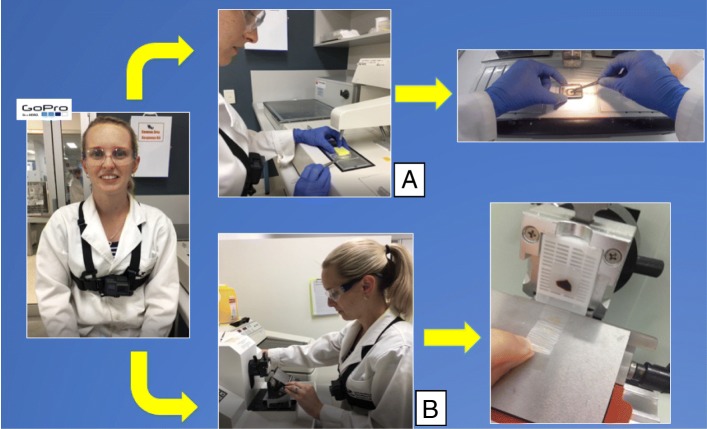
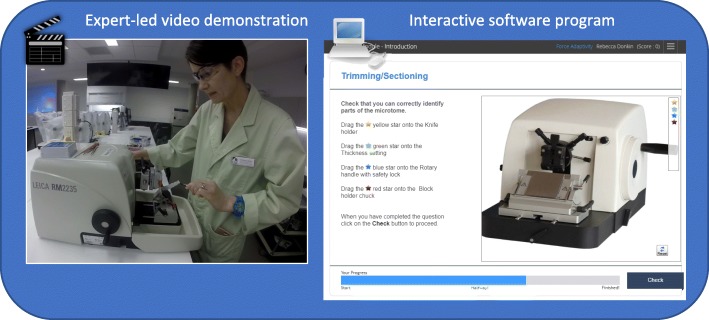
Blended learning histology lessons were implemented in a face-to-face and e-Learning format in a medical laboratory science program to teach tissue morphology and technical procedures outside of the traditional laboratory classroom. Participating students were randomly allocated to either the 'video' group (n = 14) or the 'control' group (n = 14). After all students attempted the e-Learning lessons and viewed expert-led video recordings online, students demonstrated their hands-on practical skills in the laboratory. Technical skills, demonstration of safety awareness, and use of histology equipment was captured by video through first person 'point of view' recordings for the 'video' group only. The 'control' group performed the same activities but were not recorded. Prior to summative assessment, the 'video' group students had a digital resource portfolio that enabled them to review their skills, receive captured feedback and retain a visual copy of their recorded procedure.

RESULTS

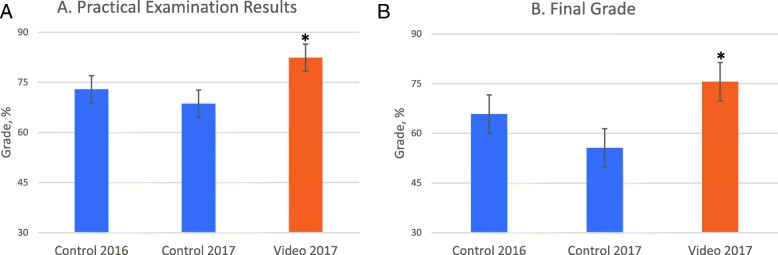
Results showed that students who participated in the online video format had statistically better practical examination scores and final grades compared to the control group.

CONCLUSION

Findings from this study suggest that students are engaged and motivated when being taught in a blended learning format and respond positively to the use of video recordings with expert feedback for the initial learning of hands-on techniques. For the academic, developing a blended learning medical laboratory science program, which includes annotated virtual microscopy, video demonstrations, and online interactive e-Learning activities, provides an effective and economic approach to learning and teaching.

摘要

背景

传统上,医学实验室科学专业学生的培训是在实验室中进行的,由学术和病理学专家面对面指导。近年来,预算压力、学生人数增加以及实验室设备有限,导致医学实验室科学教育中师生接触时间减少。虽然这种资源重组具有挑战性,但它鼓励了在线混合式学习的创新。

方法

在医学实验室科学课程中,采用面对面和电子学习混合式教学方法教授组织形态学和技术操作,以在传统实验室课堂之外教授组织形态学。参与学生被随机分配到“视频”组(n=14)或“对照”组(n=14)。在所有学生尝试电子学习课程并在线观看专家主导的视频记录后,学生在实验室中展示他们的实际操作技能。仅对“视频”组的学生通过第一人称“视角”记录进行动手实践技能、安全意识演示和组织学设备使用的视频记录。“对照”组执行相同的活动但不记录。在总结性评估之前,“视频”组学生有一个数字资源组合,使他们能够复习技能、接收记录的反馈并保留记录过程的可视化副本。

结果

结果表明,与对照组相比,参加在线视频格式学习的学生在实践考试成绩和最终成绩方面具有统计学上的优势。

结论

本研究的结果表明,学生在混合式学习中被教授时会感到参与和激励,并对使用带有专家反馈的视频记录进行初始实践技术学习做出积极响应。对于学术人员来说,开发包括注释虚拟显微镜、视频演示和在线互动电子学习活动的混合式医学实验室科学课程是一种有效且经济的学习和教学方法。
https://cdn.ncbi.nlm.nih.gov/pmc/blobs/f692/6693214/a74456b530c8/12909_2019_1745_Fig5_HTML.jpg
https://cdn.ncbi.nlm.nih.gov/pmc/blobs/f692/6693214/dbd5f9b680fd/12909_2019_1745_Fig1_HTML.jpg
https://cdn.ncbi.nlm.nih.gov/pmc/blobs/f692/6693214/4d5d66d9db7e/12909_2019_1745_Fig2_HTML.jpg
https://cdn.ncbi.nlm.nih.gov/pmc/blobs/f692/6693214/b13a053c4f00/12909_2019_1745_Fig3_HTML.jpg
https://cdn.ncbi.nlm.nih.gov/pmc/blobs/f692/6693214/5ff7ea52e271/12909_2019_1745_Fig4_HTML.jpg
https://cdn.ncbi.nlm.nih.gov/pmc/blobs/f692/6693214/a74456b530c8/12909_2019_1745_Fig5_HTML.jpg
https://cdn.ncbi.nlm.nih.gov/pmc/blobs/f692/6693214/dbd5f9b680fd/12909_2019_1745_Fig1_HTML.jpg
https://cdn.ncbi.nlm.nih.gov/pmc/blobs/f692/6693214/4d5d66d9db7e/12909_2019_1745_Fig2_HTML.jpg
https://cdn.ncbi.nlm.nih.gov/pmc/blobs/f692/6693214/b13a053c4f00/12909_2019_1745_Fig3_HTML.jpg
https://cdn.ncbi.nlm.nih.gov/pmc/blobs/f692/6693214/5ff7ea52e271/12909_2019_1745_Fig4_HTML.jpg
https://cdn.ncbi.nlm.nih.gov/pmc/blobs/f692/6693214/a74456b530c8/12909_2019_1745_Fig5_HTML.jpg

相似文献

1
Video feedback and e-Learning enhances laboratory skills and engagement in medical laboratory science students.视频反馈和电子学习增强了医学实验室科学专业学生的实验室技能和参与度。
BMC Med Educ. 2019 Aug 14;19(1):310. doi: 10.1186/s12909-019-1745-1.
2
Blended Learning Educational Format for Third-Year Pediatrics Clinical Rotation.三年级儿科学临床轮转的混合式学习教育模式。
J Am Osteopath Assoc. 2017 Apr 1;117(4):234-243. doi: 10.7556/jaoa.2017.041.
3
The relationship between student engagement with online content and achievement in a blended learning anatomy course.混合式学习解剖课程中学生对在线内容的参与度与学习成绩之间的关系。
Anat Sci Educ. 2018 Sep;11(5):471-477. doi: 10.1002/ase.1761. Epub 2017 Dec 13.
4
Concept and benefits of the Inverted Classroom method for a competency-based biochemistry course in the pre-clinical stage of a human medicine course of studies.针对人类医学课程临床前阶段基于能力的生物化学课程的翻转课堂方法的概念与益处。
GMS J Med Educ. 2017 Aug 15;34(3):Doc31. doi: 10.3205/zma001108. eCollection 2017.
5
A Cost-Effectiveness Analysis of Blended Versus Face-to-Face Delivery of Evidence-Based Medicine to Medical Students.针对医学生的循证医学混合式教学与面对面教学的成本效益分析
J Med Internet Res. 2015 Jul 21;17(7):e182. doi: 10.2196/jmir.4346.
6
Investigation of blended learning video resources to teach health students clinical skills: An integrative review.调查混合学习视频资源以教授健康专业学生临床技能:综合评价。
Nurse Educ Today. 2018 Apr;63:101-107. doi: 10.1016/j.nedt.2018.01.021. Epub 2018 Jan 31.
7
Internet-based virtual classroom and educational management software enhance students' didactic and clinical experiences in perfusion education programs.基于互联网的虚拟教室和教育管理软件提升了学生在灌注教育项目中的教学和临床体验。
J Extra Corpor Technol. 2004 Sep;36(3):235-9.
8
Linking the choice of the class format and preclass learning experiences sheds light on a step further in blended medical education.将班级形式的选择和课前学习经验联系起来,为混合医学教育更进了一步。
Med Educ Online. 2023 Dec;28(1):2186207. doi: 10.1080/10872981.2023.2186207.
9
Effectiveness of Digital Education on Communication Skills Among Medical Students: Systematic Review and Meta-Analysis by the Digital Health Education Collaboration.数字教育对医学生沟通技能的有效性:数字健康教育合作组织的系统评价与荟萃分析
J Med Internet Res. 2019 Aug 27;21(8):e12967. doi: 10.2196/12967.
10
A randomized controlled pilot trial comparing the impact of access to clinical endocrinology video demonstrations with access to usual revision resources on medical student performance of clinical endocrinology skills.一项随机对照初步试验比较了临床内分泌学视频演示资源与常规复习资源对医学生临床内分泌学技能表现的影响。
BMC Med Educ. 2013 Oct 3;13:135. doi: 10.1186/1472-6920-13-135.

引用本文的文献

1
Exploring the role of digital technology for feedback exchange in clinical training: a scoping review.探索数字技术在临床培训反馈交流中的作用:一项范围综述。
Syst Rev. 2024 Dec 4;13(1):298. doi: 10.1186/s13643-024-02705-y.
2
Enhancing puncture skills training with generative AI and digital technologies: a parallel cohort study.利用生成式人工智能和数字技术增强穿刺技能培训:一项平行队列研究。
BMC Med Educ. 2024 Nov 19;24(1):1328. doi: 10.1186/s12909-024-06217-0.
3
Advancing medical laboratory practice in Pakistan: insights from a focus group study on technologists' training needs.

本文引用的文献

1
Motivation and emotion predict medical students' attention to computer-based feedback.动机和情感预测医学生对基于计算机的反馈的关注。
Adv Health Sci Educ Theory Pract. 2018 Aug;23(3):465-485. doi: 10.1007/s10459-017-9806-x. Epub 2017 Dec 14.
2
Video-based feedback as a method for training rural healthcare workers to manage medical emergencies: a pilot study.基于视频的反馈作为培训农村医疗工作者处理医疗急症的方法:一项试点研究。
BMC Med Educ. 2017 Aug 31;17(1):149. doi: 10.1186/s12909-017-0975-3.
3
An evaluation of outcomes following the replacement of traditional histology laboratories with self-study modules.
推进巴基斯坦医学实验室实践:技术人员培训需求焦点组研究的见解。
BMC Med Educ. 2024 Aug 28;24(1):938. doi: 10.1186/s12909-024-05836-x.
4
Understanding the Functional Components of Technology-Enhanced Learning Environment in Medical Education: A Scoping Review.理解医学教育中技术增强学习环境的功能组件:一项范围综述。
Med Sci Educ. 2023 Feb 28;33(2):595-609. doi: 10.1007/s40670-023-01747-6. eCollection 2023 Apr.
5
Investigating medical students' satisfaction towards video-based learning versus face-to-face lectures: a Jordanian tertiary teaching hospital experience.调查医学生对基于视频的学习与面对面讲座的满意度:约旦一所三级教学医院的经验。
Korean J Med Educ. 2023 Mar;35(1):21-32. doi: 10.3946/kjme.2023.246. Epub 2023 Feb 28.
6
Validation of questionnaire regarding online teaching (QOT) during Covid-19 in Karachi, Pakistan.针对巴基斯坦卡拉奇在新冠疫情期间的在线教学(QOT)的调查问卷的验证。
PLoS One. 2022 Sep 12;17(9):e0274268. doi: 10.1371/journal.pone.0274268. eCollection 2022.
7
Asynchronous E-learning after synchronous E-learning in the pathology course. When is the proper time for this transition?病理学课程中同步电子学习后的异步电子学习。这种转变的适当时机是什么时候?
J Educ Health Promot. 2022 Jun 30;11:200. doi: 10.4103/jehp.jehp_1236_21. eCollection 2022.
8
Effects of a sudden change in curriculum delivery mode in postgraduate clinical studies, following the COVID-19 pandemic.COVID-19大流行后研究生临床研究课程授课模式突然改变的影响。
J Chiropr Educ. 2022 Oct 1;36(2):132-141. doi: 10.7899/JCE-21-31.
9
Evaluating e-Learning in the Pathology Course During the COVID-19 Pandemic.评估新冠疫情期间病理学课程中的电子学习
Adv Med Educ Pract. 2022 Mar 30;13:285-300. doi: 10.2147/AMEP.S353935. eCollection 2022.
10
Experiences with alternative online lectures in medical education in obstetrics and gynecology during the COVID-19 pandemic-possible efficient and student-orientated models for the future?COVID-19 大流行期间妇产科医学教育中替代在线讲座的经验——未来可能的高效和以学生为导向的模式?
Arch Gynecol Obstet. 2022 Apr;305(4):1041-1053. doi: 10.1007/s00404-021-06356-5. Epub 2021 Dec 28.
对用自学模块取代传统组织学实验室后的结果进行评估。
Anat Sci Educ. 2017 Jun;10(3):276-285. doi: 10.1002/ase.1659. Epub 2016 Oct 31.
4
Self-evaluation and peer-feedback of medical students' communication skills using a web-based video annotation system. Exploring content and specificity.使用基于网络的视频注释系统对医学生沟通技巧进行自我评估和同伴反馈。探索内容和特异性。
Patient Educ Couns. 2015 Mar;98(3):356-63. doi: 10.1016/j.pec.2014.11.007. Epub 2014 Nov 20.
5
The "educational alliance" as a framework for reconceptualizing feedback in medical education.“教育联盟”作为重新构想医学教育中反馈的框架。
Acad Med. 2015 May;90(5):609-14. doi: 10.1097/ACM.0000000000000560.
6
Improving biotech education through gamified laboratory simulations.通过游戏化实验室模拟改善生物技术教育。
Nat Biotechnol. 2014 Jul;32(7):694-7. doi: 10.1038/nbt.2955.
7
Human anatomy: let the students tell us how to teach.人体解剖学:让学生告诉我们怎么教。
Anat Sci Educ. 2014 Jul-Aug;7(4):262-72. doi: 10.1002/ase.1424. Epub 2013 Nov 18.
8
Nursing students' experiences of being video-recorded during examination in a fictive emergency care situation.护理专业学生在模拟急救护理情境考试中被录像的经历。
Int J Nurs Pract. 2014 Oct;20(5):540-8. doi: 10.1111/ijn.12199. Epub 2013 Oct 11.
9
Web-based feedback after summative assessment: how do students engage?基于网络的总结性评估后反馈:学生如何参与?
Med Educ. 2013 Jul;47(7):734-44. doi: 10.1111/medu.12209.
10
The effectiveness of digital microscopy as a teaching tool in medical laboratory science curriculum.数字显微镜作为医学检验科学课程教学工具的有效性。
Clin Lab Sci. 2012 Fall;25(4 Suppl):4-4-11.