School of Zoology, Tel-Aviv University, Tel Aviv, Ramat Aviv, Israel.
Department of Clinical Biochemistry and Pharmacology, Ben-Gurion University of the Negev, Beer Sheva, Israel.
Sci Rep. 2019 Aug 14;9(1):11865. doi: 10.1038/s41598-019-48326-7.
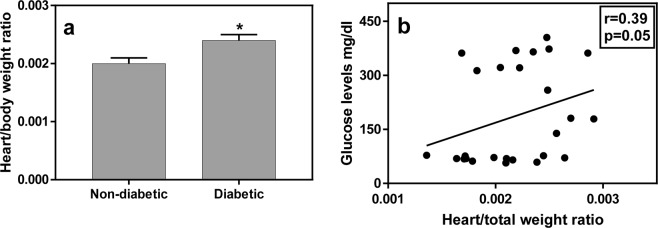
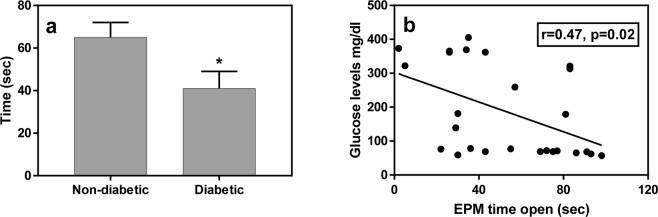
It was recently suggested that the Metabolic Syndrome should be renamed to "Circadian Syndrome". In this context, we explored the effects of living under standard laboratory conditions, where light is the only cycling variable (relevant to human modern life), in a diurnal mammal, on the relationships between affective-like pathology, type 2 diabetes mellitus (T2DM), and cardiac hypertrophy. After 20 weeks, some of the animals spontaneously developed T2DM, depressive and anxiety-like behavior and cardiac hypertrophy. There were significant correlations between levels of anxiety-like behavior and glucose tolerance, and between heart/total body weight ratio and glucose tolerance. Our data suggest a relationship between the development of T2DM, emotional and cardiac pathology as seen in diurnal humans. Furthermore, our data show a possible relationship between reduced daily cycling cues in the laboratory and what has been regularly termed "Metabolic Syndrome" and recently proposed by us to be renamed to "Circadian Syndrome".
最近有人提出,代谢综合征应该更名为“生物钟综合征”。在这方面,我们研究了在标准实验室条件下生活的影响,在这种条件下,光(与人类现代生活相关)是唯一的循环变量,在一种昼夜哺乳动物中,对情感样病理学、2 型糖尿病 (T2DM) 和心脏肥大之间的关系的影响。20 周后,一些动物自发地患上了 T2DM、抑郁和焦虑样行为以及心脏肥大。焦虑样行为水平与葡萄糖耐量之间,以及心脏/体重比与葡萄糖耐量之间存在显著相关性。我们的数据表明,在昼夜节律的人类中,T2DM、情绪和心脏病理学的发展之间存在关系。此外,我们的数据还显示,实验室中日常循环线索的减少与通常被称为“代谢综合征”的情况之间存在可能的关系,最近我们提出将其更名为“生物钟综合征”。