Belova M M, Shipunova V O, Kotelnikova P A, Babenyshev A V, Rogozhin E A, Cherednichenko M Yu, Deyev S M
Russian State Agrarian University-Moscow Timiryazev Agricultural Academy, Timiryazevskaya Str. 49 , Moscow, 127550, Russia.
Shemyakin-Ovchinnikov Institute of Bioorganic Chemistry of the Russian Academy of Sciences, GSP-7, Miklukho-Maklaya Str. 16/10, Moscow, 117997, Russia.
Acta Naturae. 2019 Apr-Jun;11(2):47-53. doi: 10.32607/20758251-2019-11-2-47-53.
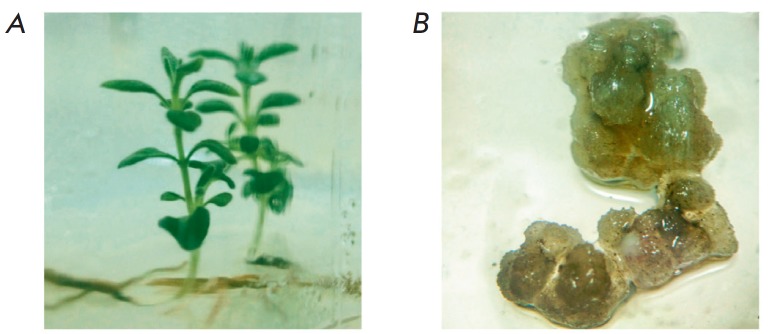
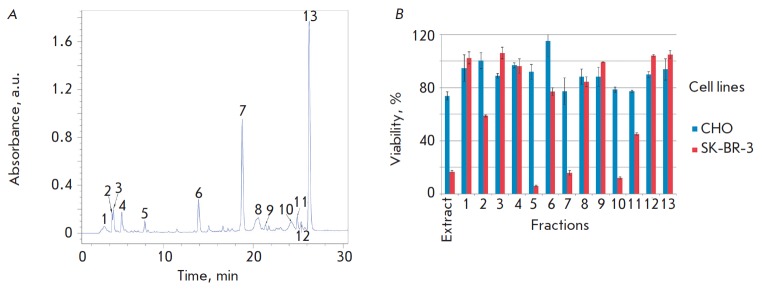
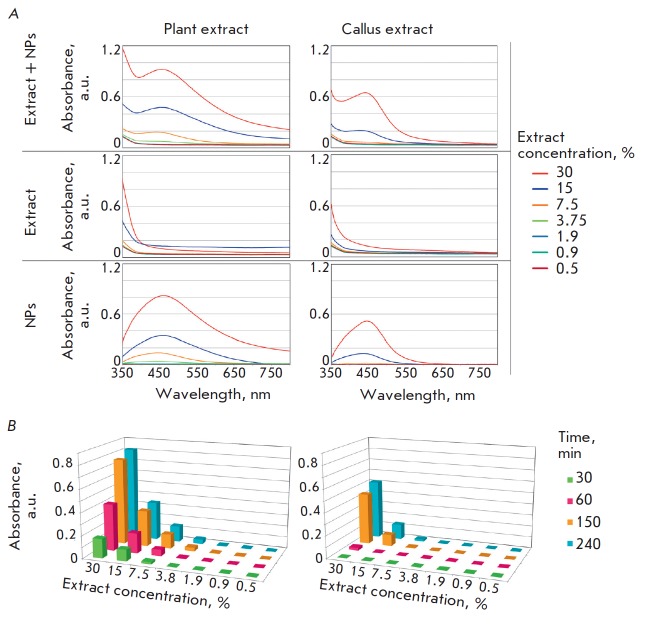
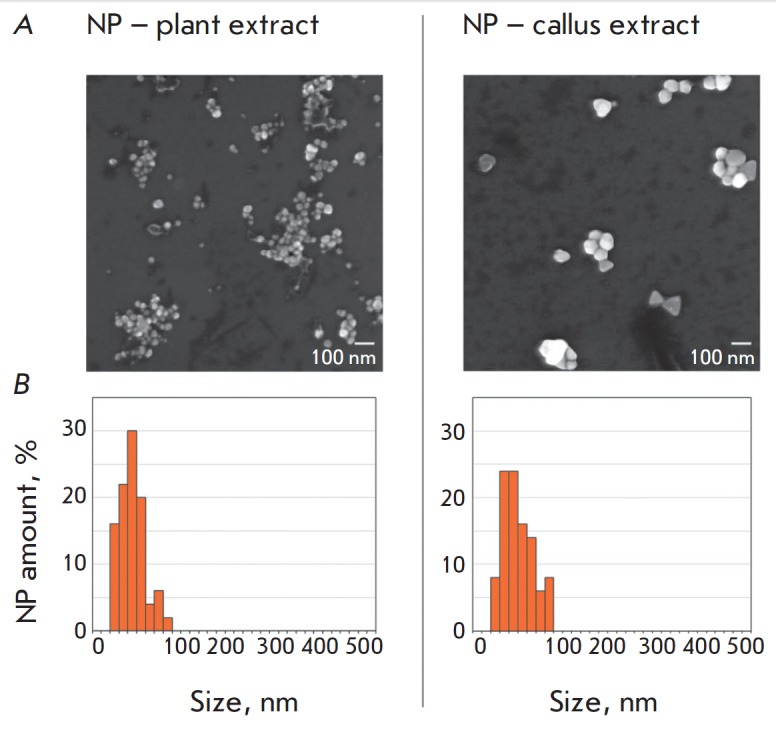
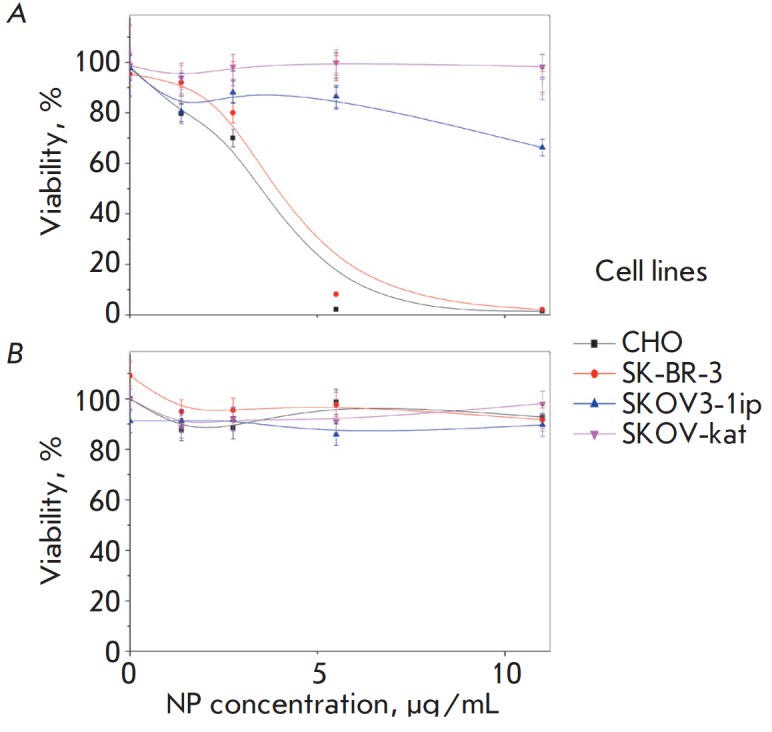
In this study, we used "green" synthesis to prepare silver nanoparticles (NPs) from aqueous plant and callus extracts of the narrow-leaved lavender Mill. 35.4 ± 1.6 nm and 56.4 ± 2.4 nm nanoparticles, colloidally stable in phosphate-buffered saline, were synthesized using the plant extract and the callus extract, respectively. NPs were characterized by spectrophotometry, dynamic light scattering, and scanning electron microscopy. We studied the dynamics of the nanoparticle synthesis and evaluated the cytotoxic properties of the plant extract-based NPs. Modification of NPs with bovine serum albumin demonstrated that blockage of the nanoparticle surface completely suppressed NP cytotoxic activity . The synthesized NPs possess localized surface plasmon resonance properties and are of small sizes, and their surface can be modified with protein molecules, which makes them promising agents for cancer theranostics.
在本研究中,我们采用“绿色”合成法,从狭叶薰衣草的水性植物提取物和愈伤组织提取物中制备银纳米颗粒(NPs)。分别使用植物提取物和愈伤组织提取物合成了在磷酸盐缓冲盐水中具有胶体稳定性的纳米颗粒,其粒径分别为35.4±1.6纳米和56.4±2.4纳米。通过分光光度法、动态光散射和扫描电子显微镜对纳米颗粒进行了表征。我们研究了纳米颗粒合成的动力学,并评估了基于植物提取物的纳米颗粒的细胞毒性特性。用牛血清白蛋白对纳米颗粒进行修饰表明,纳米颗粒表面的封闭完全抑制了纳米颗粒的细胞毒性活性。合成的纳米颗粒具有局域表面等离子体共振特性且尺寸较小,其表面可用蛋白质分子进行修饰,这使其成为癌症治疗诊断的有前景的试剂。