De León Luis F, Sharpe Diana M T, Gotanda Kiyoko M, Raeymaekers Joost A M, Chaves Jaime A, Hendry Andrew P, Podos Jeffrey
Department of Biology University of Massachusetts Boston Boston Massachusetts.
Centro de Biodiversidad y Descubrimiento de Drogas Instituto de Investigaciones Científicas y Servicios de Alta Tecnología (INDICASAT-AIP) Panamá City Panamá.
Evol Appl. 2018 Dec 18;12(7):1329-1343. doi: 10.1111/eva.12721. eCollection 2019 Aug.
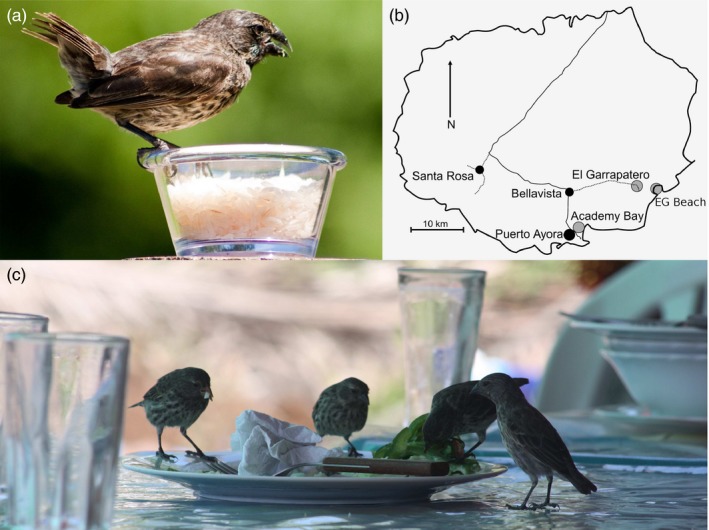
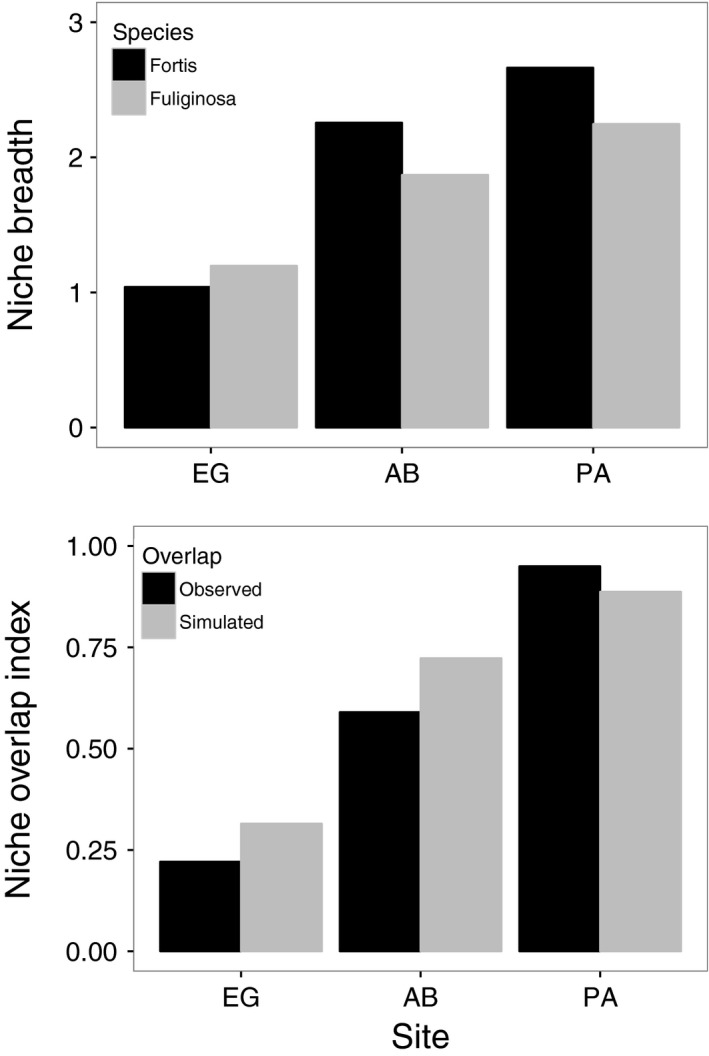
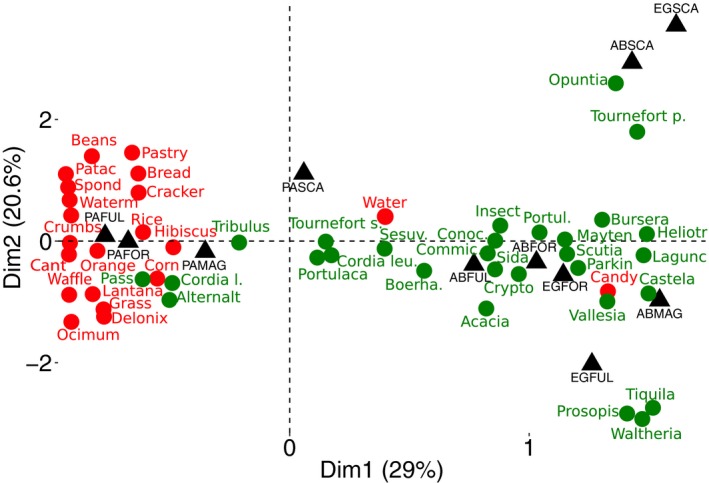
Urbanization is influencing patterns of biological evolution in ways that are only beginning to be explored. One potential effect of urbanization is in modifying ecological resource distributions that underlie niche differences and that thus promote and maintain species diversification. Few studies have assessed such modifications, or their potential evolutionary consequences, in the context of ongoing adaptive radiation. We study this effect in Darwin's finches on the Galápagos Islands, by quantifying feeding preferences and diet niche partitioning across sites with different degrees of urbanization. We found higher finch density in urban sites and that feeding preferences and diets at urban sites skew heavily toward human food items. Furthermore, we show that finches at urban sites appear to be accustomed to the presence of people, compared with birds at sites with few people. In addition, we found that human behavior via the tendency to feed birds at non-urban but tourist sites is likely an important driver of finch preferences for human foods. Site differences in diet and feeding behavior have resulted in larger niche breadth within finch species and wider niche overlap between species at the urban sites. Both factors effectively minimize niche differences that would otherwise facilitate interspecies coexistence. These findings suggest that both human behavior and ongoing urbanization in Galápagos are starting to erode ecological differences that promote and maintain adaptive radiation in Darwin's finches. Smoothing of adaptive landscapes underlying diversification represents a potentially important yet underappreciated consequence of urbanization. Overall, our findings accentuate the fragility of the initial stages of adaptive radiation in Darwin's finches and raise concerns about the fate of the Galápagos ecosystems in the face of increasing urbanization.
城市化正在以刚刚开始被探索的方式影响生物进化模式。城市化的一个潜在影响是改变生态资源分布,而这种分布是生态位差异的基础,进而促进和维持物种多样化。很少有研究在正在进行的适应性辐射背景下评估这种改变或其潜在的进化后果。我们通过量化加拉帕戈斯群岛上不同城市化程度地点的达尔文雀的取食偏好和饮食生态位划分,来研究这种影响。我们发现城市地点的雀类密度更高,并且城市地点的取食偏好和饮食严重偏向人类食物。此外,我们表明与人员稀少地点的鸟类相比,城市地点的雀类似乎已经习惯了人类的存在。另外,我们发现人类在非城市但有游客的地点投喂鸟类的行为倾向,很可能是雀类偏好人类食物的一个重要驱动因素。饮食和取食行为的地点差异导致雀类物种内的生态位宽度更大,以及城市地点物种间的生态位重叠更宽。这两个因素都有效地最小化了原本会促进物种间共存的生态位差异。这些发现表明,加拉帕戈斯群岛上的人类行为和正在进行的城市化都开始侵蚀促进和维持达尔文雀适应性辐射的生态差异。多样化背后的适应性景观的平滑化代表了城市化一个潜在的重要但未被充分认识的后果。总体而言,我们的发现凸显了达尔文雀适应性辐射初始阶段的脆弱性,并引发了对加拉帕戈斯生态系统在城市化加剧情况下命运的担忧。