Gong Shi-Qi, Xu Meng, Xiang Ming-Liang, Shan Ya-Min, Zhang Hao
Department of Otolaryngology, Ruijin Hospital, School of Medicine, Shanghai Jiaotong University, Shanghai, China.
Department of Radiation Oncology, The First Affiliated Hospital, Anhui Medical University, Hefei, China.
Front Oncol. 2019 Jul 31;9:678. doi: 10.3389/fonc.2019.00678. eCollection 2019.
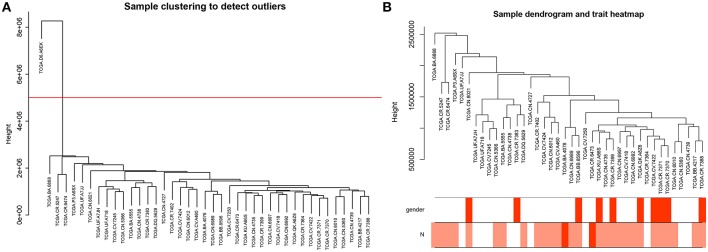
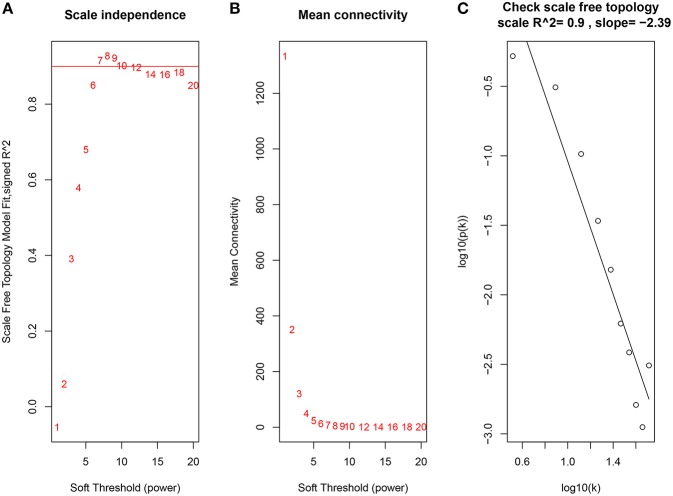
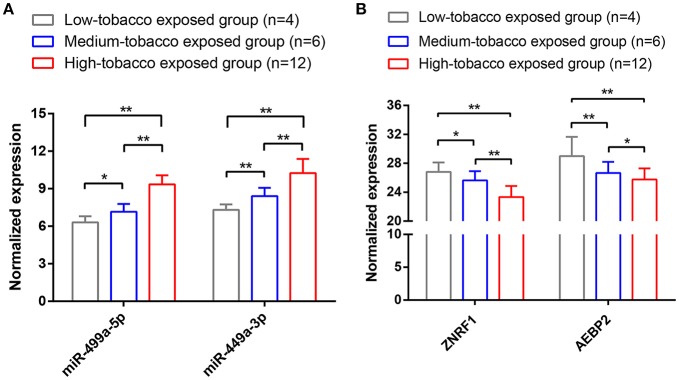
Few studies have directly investigated the differential expression of microRNAs (miRNAs) in head and neck squamous cell carcinoma (HNSCC) with low, medium, and high tobacco exposure. The purpose of this study is to screen the differentially expressed miRNAs and to investigate their clinical significance and potential biological mechanisms in the three groups of HNSCC. The datasets of HNSCC were obtained from The Cancer Genome Atlas (TCGA). The edgeR package was used to determine differentially expressed miRNAs and genes among the three groups of HNSCC. Statistical methods were applied to assess the clinical significance of miRNA and its correlation with genes. The correlation between gene expression and clinical characteristics was analyzed using weighted gene co-expression network analysis (WGCNA). Three online databases were used to predict the target genes of miRNAs. More importantly, qRT-PCR was employed to verify the differential expression of miRNAs and genes in our patients. 32 differentially expressed miRNAs and 1,820 differentially expressed genes were found among the three groups of HNSCC. Patients with high expression of hsa-miR-499a had lower overall survival than the ones with low expression in high-tobacco exposed HNSCC. Cox regression analysis found that high expression of hsa-miR-499a and female were independent risk factors for prognosis in high-tobacco exposed HNSCC. Chi-square test found that hsa-miR-499a was associated with N stage in high-tobacco exposed HNSCC. WGCNA identified four gene modules associated with N stage in high-tobacco exposed HNSCC. Then three online databases were used to predict potential target genes for hsa-miR-499a, which were AEBP2 and ZNRF1. Pearson correlation analysis showed that hsa-miR-499a was negatively correlated with AEBP2 and ZNRF1. qRT-PCR supported bioinformatic results that hsa-miR-499a, AEBP2, and ZNRF1 were differentially expressed among the three groups of HNSCC in our patients. 32 differentially expressed miRNAs and 1,820 differentially expressed genes were successfully identified in HNSCC with low, medium, and high tobacco exposure. The patients with high expression of hsa-miR-499a had poor prognoses compared with patients with low expression in high-tobacco exposed HNSCC. Hsa-miR-499a was associated with N stage in high-tobacco exposed HNSCC. AEBP2 and ZNRF1 were the potential target genes of hsa-miR-499a.
很少有研究直接调查低、中、高烟草暴露的头颈鳞状细胞癌(HNSCC)中微小RNA(miRNA)的差异表达。本研究的目的是筛选差异表达的miRNA,并探讨其在三组HNSCC中的临床意义和潜在生物学机制。HNSCC数据集来自癌症基因组图谱(TCGA)。使用edgeR软件包确定三组HNSCC中差异表达的miRNA和基因。应用统计方法评估miRNA的临床意义及其与基因的相关性。使用加权基因共表达网络分析(WGCNA)分析基因表达与临床特征之间的相关性。使用三个在线数据库预测miRNA的靶基因。更重要的是,采用qRT-PCR验证了患者中miRNA和基因的差异表达。在三组HNSCC中发现了32个差异表达的miRNA和1820个差异表达的基因。在高烟草暴露的HNSCC中,hsa-miR-499a高表达的患者总生存期低于低表达患者。Cox回归分析发现,hsa-miR-499a高表达和女性是高烟草暴露HNSCC预后的独立危险因素。卡方检验发现,hsa-miR-499a与高烟草暴露HNSCC的N分期相关。WGCNA确定了与高烟草暴露HNSCC的N分期相关的四个基因模块。然后使用三个在线数据库预测hsa-miR-499a的潜在靶基因,即AEBP2和ZNRF1。Pearson相关分析表明,hsa-miR-499a与AEBP2和ZNRF1呈负相关。qRT-PCR支持生物信息学结果,即hsa-miR-499a、AEBP2和ZNRF1在我们患者的三组HNSCC中差异表达。在低、中、高烟草暴露的HNSCC中成功鉴定出32个差异表达的miRNA和1820个差异表达的基因。在高烟草暴露的HNSCC中,hsa-miR-499a高表达的患者与低表达患者相比预后较差。hsa-miR-499a与高烟草暴露HNSCC的N分期相关。AEBP2和ZNRF1是hsa-miR-499a的潜在靶基因。