Department of Stomatology, Shandong Provincial Hospital Affiliated to Shandong University, 324 Jingwuweiqi Road, Jinan, Shandong 250021, China; Department of Oromaxillofacial Head and Neck Oncology, Shanghai Ninth People's Hospital, College of Stomatology, Shanghai Jiao Tong University School of Medicine, Shanghai 200011, China.
Shandong Provincial ENT Hospital, Shandong Provincial ENT Hospital Affiliated to Shandong University, Jinan, Shandong 250012, China.
EBioMedicine. 2019 Dec;50:135-143. doi: 10.1016/j.ebiom.2019.11.016. Epub 2019 Nov 26.
Head and neck squamous cell carcinoma (HNSCC) is a disastrous disease with substantial morbidity and mortality. This study aims to explore the effective diagnostic and prognostic biomarkers for HNSCC.
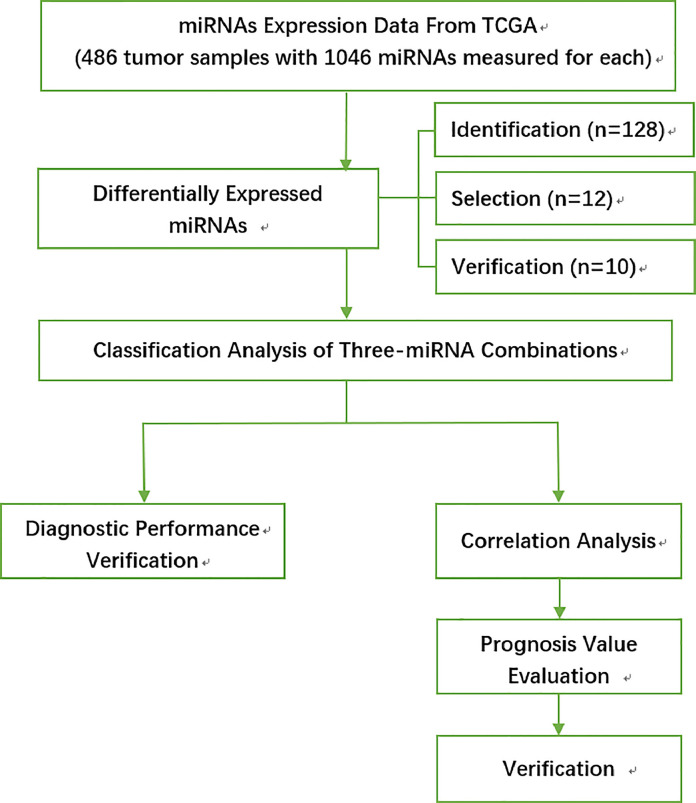
MiRNA expression data and corresponding clinical information of HNSCC from The Cancer Genome Atlas (TCGA) database were analyzed comprehensively to identify the miRNAs with diagnostic and prognostic power. The predictive ability of different classifications was analyzed for the three-miRNA combinations. Diagnostic and prognostic value were then evaluated and verified in clinical patients.
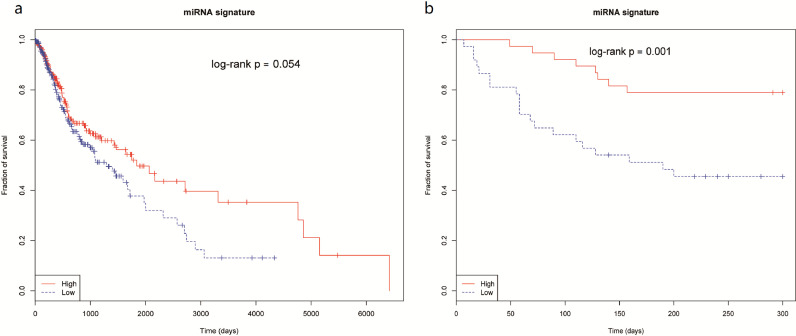
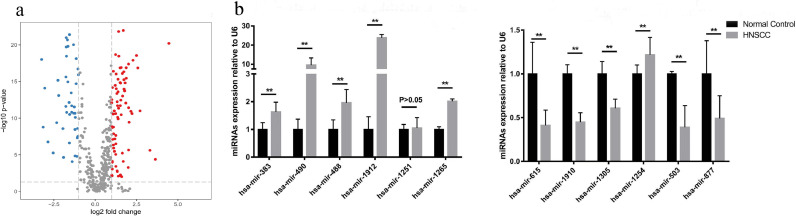
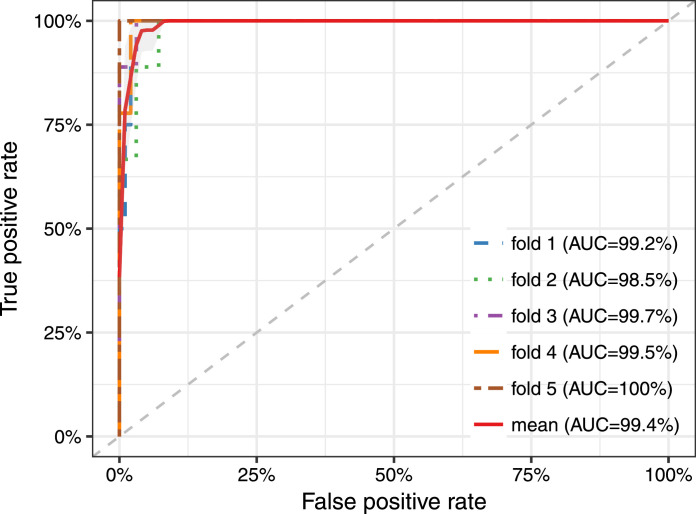
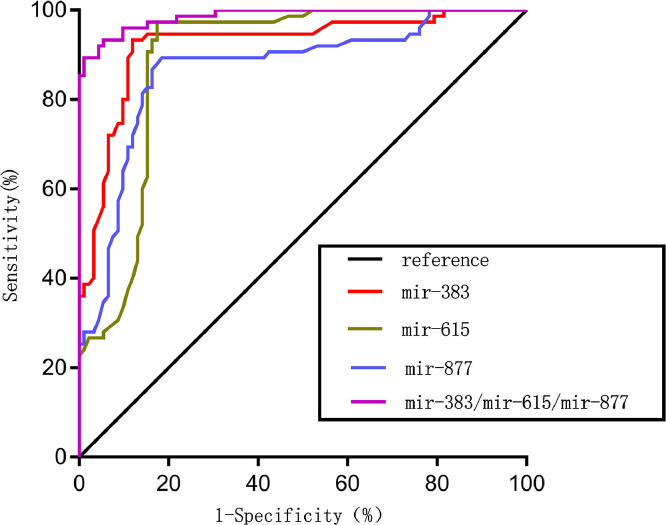
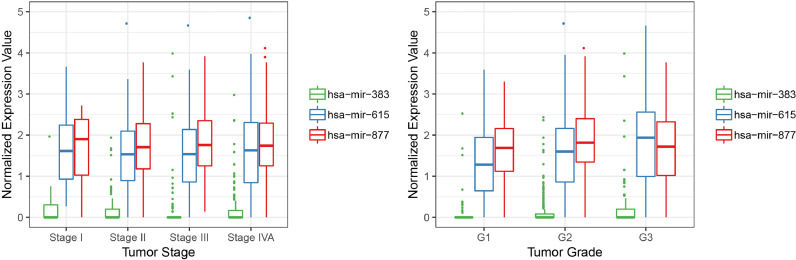
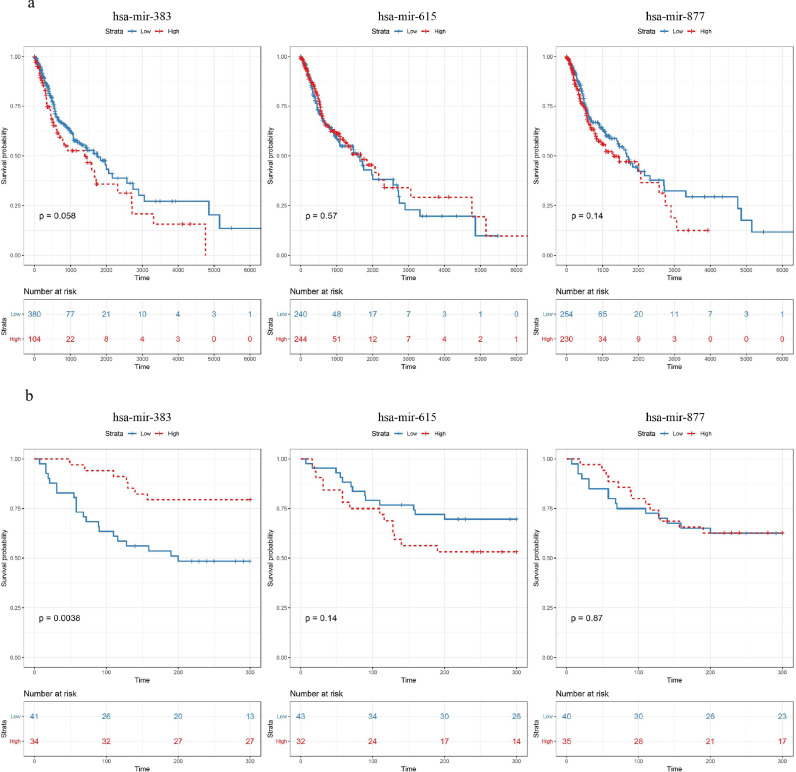
128 differentially expressed miRNAs in HNSCC tissues were identified in the TCGA dataset, and 10 miRNAs were finally selected for further study. Classification analysis developed a three-miRNA signature of hsa-mir-383, hsa-mir-615, and hsa-mir-877 with the best diagnosis power, which was verified in validation patients. Survival analysis indicated that different expression levels of hsa-mir-383, rather than that of hsa-mir-615 or hsa-mir-877 led to significantly different survival rates in both cohorts. Furthermore, the multivariate Cox hazards analysis suggested that the microRNA signature yielded statistical significance to predict clinical outcome independently from other clinical variables in validation patients.
A three-miRNA signature of hsa-mir-383, hsa-mir-615, and hsa-mir-877 may serve as an excellent diagnostic biomarker for HNSCC, and potential prognostic significance for HNSCC patients.
This work was supported by the grants of the National Natural Science Foundation of China (81901021), Key Research and Development Program of Shandong (2019GSF108277), China postdoctoral Scinence Foundation Grant (2019M652380), Fundamental Research Funds of Shandong University (2018CJ047).
头颈部鳞状细胞癌(HNSCC)是一种发病率和死亡率都很高的灾难性疾病。本研究旨在探索 HNSCC 的有效诊断和预后生物标志物。
综合分析癌症基因组图谱(TCGA)数据库中 HNSCC 的 miRNA 表达数据和相应的临床信息,以确定具有诊断和预后能力的 miRNAs。分析了不同分类对三 miRNA 组合的预测能力。然后在临床患者中评估和验证诊断和预后价值。
在 TCGA 数据集中共鉴定出 128 个 HNSCC 组织中差异表达的 miRNA,最终选择了 10 个 miRNA 进行进一步研究。分类分析开发了一个由 hsa-mir-383、hsa-mir-615 和 hsa-mir-877 组成的三 miRNA 特征,在验证患者中得到了验证。生存分析表明,hsa-mir-383 的不同表达水平而不是 hsa-mir-615 或 hsa-mir-877 的表达水平导致两个队列的生存率有显著差异。此外,多变量 Cox 风险分析表明,该 miRNA 特征在验证患者中能够独立于其他临床变量预测临床结局,具有统计学意义。
hsa-mir-383、hsa-mir-615 和 hsa-mir-877 的三 miRNA 特征可作为 HNSCC 的优秀诊断生物标志物,并具有潜在的 HNSCC 患者预后意义。
本工作得到国家自然科学基金(81901021)、山东省重点研发计划(2019GSF108277)、中国博士后科学基金(2019M652380)、山东大学基本科研业务费(2018CJ047)的资助。