He Wenwu, Yan Qunlun, Fu Liangmin, Han Yongtao
Department of Thoracic Surgery, Sichuan Cancer Hospital and Research Institute, Chengdu, Sichuan 610041, P.R. China.
Department of Clinical Medicine, North Sichuan Medical College, Nanchong, Sichuan 637007, P.R. China.
Oncol Lett. 2019 Aug;18(2):1381-1387. doi: 10.3892/ol.2019.10449. Epub 2019 Jun 7.
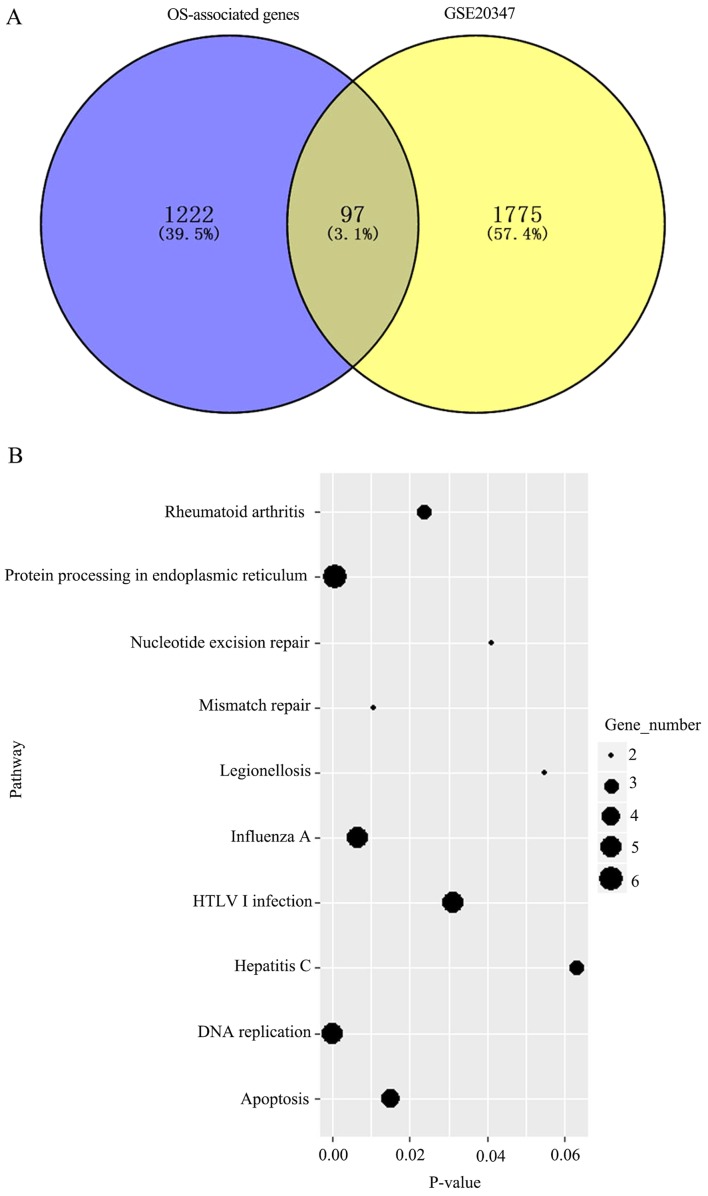
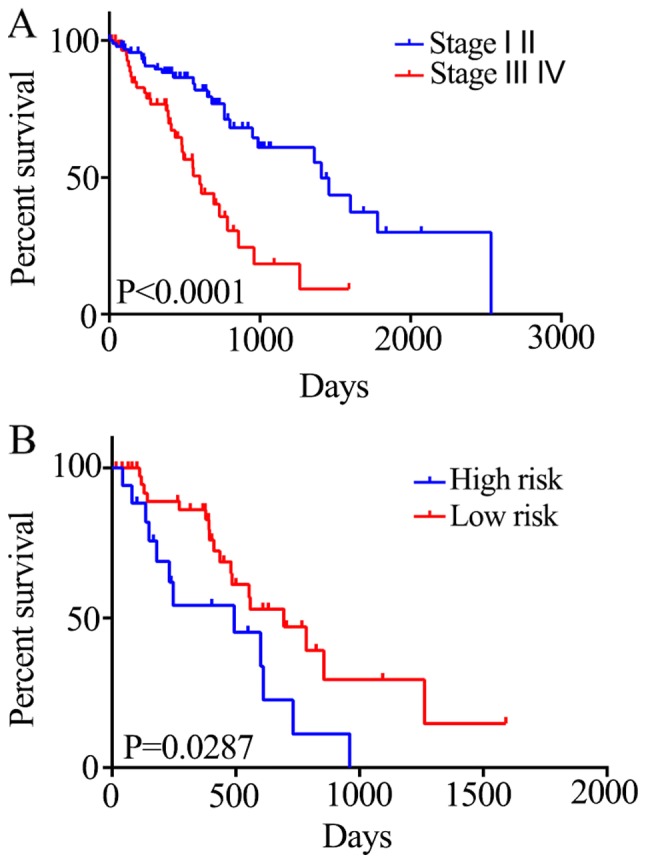
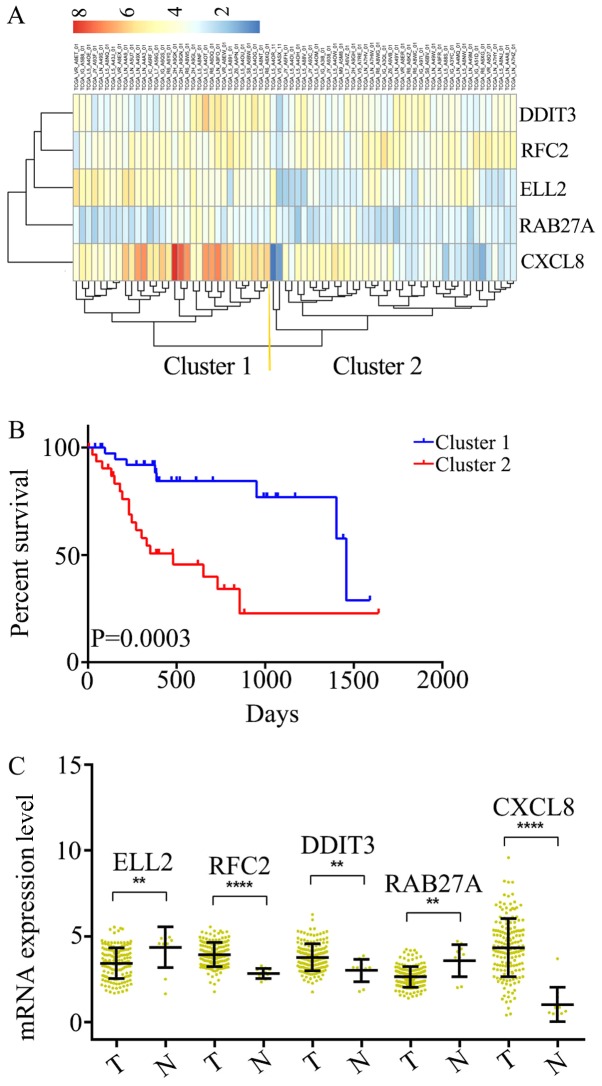
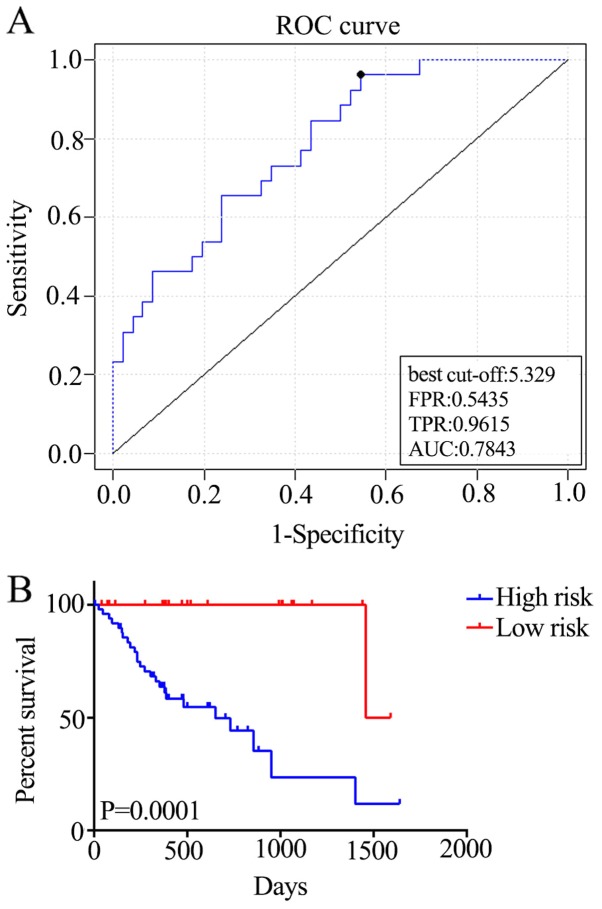
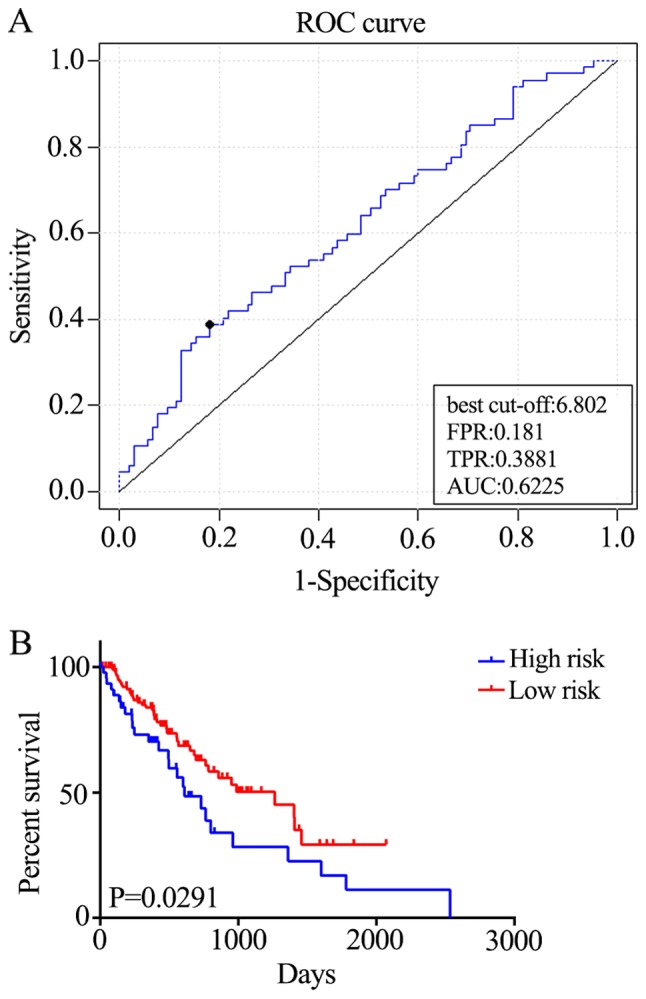
Esophageal squamous cell carcinoma (ESCC) is one of the six most commonly diagnosed tumor types in the Chinese population. Gene expression profiles help to predict the prognosis of patients with ESCC. Disease recurrence as the survival endpoint has been analyzed in the majority of previous studies; therefore, the aim of the present study was to construct a robust gene signature in order to determine the overall survival (OS) of patients with ESCC. The gene expression and clinical data of patients with ESCC were downloaded from The Cancer Genome Atlas (TCGA) database. Of the selected data (172 samples from surviving patients), 72 samples were randomly selected as modeling data, and verification was conducted using the entire dataset. Data from the Gene Expression Omnibus was analyzed simultaneously, and a venn diagram was constructed to determine the intersection between these two sets of results; a total of 97 genes were found to be associated with OS. Kyoto Encyclopedia of Genes and Genomes analysis demonstrated that these genes were primarily associated with specific pathways (Homo sapiens), including DNA replication, protein processing in endoplasmic reticulum and influenza A. A five-gene signature was identified with a robust likelihood-based survival modeling approach. Using regression coefficient modeling, a prognostic model consisting of the C-X-C motif chemokine ligand 8, DNA damage inducible transcript 3, RAB27A, member RAS oncogene family, replication factor C subunit 2 and elongation factor for RNA polymerase II 2 genes was constructed and validated. Based on these results, patients were subdivided into high and low-risk groups. Compared with the high-risk group, the OS time of patients in the low-risk group was significantly increased. Furthermore, it was determined that the five genes were all differentially expressed in ESCC tissues compared with normal tissues, indicating the potential role of these genes in ESCC initiation and progression. In another independent cohort, this five-gene signature was further confirmed and was considered as an independent prognostic biomarker for OS prediction in patients with ESCC. In conclusion, the OS of patients with ESCC may be predicted using this five-gene signature, which may be useful in identifying patients with high-risk ESCC.
食管鳞状细胞癌(ESCC)是中国人群中最常被诊断出的六种肿瘤类型之一。基因表达谱有助于预测ESCC患者的预后。在大多数先前的研究中,已将疾病复发作为生存终点进行了分析;因此,本研究的目的是构建一个强大的基因特征,以确定ESCC患者的总生存期(OS)。ESCC患者的基因表达和临床数据从癌症基因组图谱(TCGA)数据库下载。在所选数据(来自存活患者的172个样本)中,随机选择72个样本作为建模数据,并使用整个数据集进行验证。同时分析了来自基因表达综合数据库的数据,并构建了维恩图以确定这两组结果之间的交集;共发现97个基因与OS相关。京都基因与基因组百科全书分析表明,这些基因主要与特定途径(智人)相关,包括DNA复制、内质网中的蛋白质加工和甲型流感。采用基于似然性的稳健生存建模方法鉴定了一个五基因特征。使用回归系数建模,构建并验证了一个由C-X-C基序趋化因子配体8、DNA损伤诱导转录本3、RAB27A(RAS癌基因家族成员)、复制因子C亚基2和RNA聚合酶II延伸因子2基因组成的预后模型。基于这些结果,将患者分为高风险组和低风险组。与高风险组相比,低风险组患者的OS时间显著延长。此外,确定这五个基因在ESCC组织中与正常组织相比均有差异表达,表明这些基因在ESCC发生和发展中的潜在作用。在另一个独立队列中,进一步证实了这个五基因特征,并将其视为ESCC患者OS预测的独立预后生物标志物。总之,使用这个五基因特征可以预测ESCC患者的OS,这可能有助于识别高风险ESCC患者。