• 文献检索
  • 文档翻译
  • 深度研究
  • 学术资讯
  • Suppr Zotero 插件Zotero 插件
  • 邀请有礼
  • 套餐&价格
  • 历史记录
应用&插件
Suppr Zotero 插件Zotero 插件浏览器插件Mac 客户端Windows 客户端微信小程序
定价
高级版会员购买积分包购买API积分包
服务
文献检索文档翻译深度研究API 文档MCP 服务
关于我们
关于 Suppr公司介绍联系我们用户协议隐私条款
关注我们

Suppr 超能文献

核心技术专利:CN118964589B侵权必究
粤ICP备2023148730 号-1Suppr @ 2026

文献检索

告别复杂PubMed语法,用中文像聊天一样搜索,搜遍4000万医学文献。AI智能推荐,让科研检索更轻松。

立即免费搜索

文件翻译

保留排版,准确专业,支持PDF/Word/PPT等文件格式,支持 12+语言互译。

免费翻译文档

深度研究

AI帮你快速写综述,25分钟生成高质量综述,智能提取关键信息,辅助科研写作。

立即免费体验

增材制造的多壁碳纳米管/热塑性聚氨酯纳米复合材料的压阻行为

Piezoresistive Behaviour of Additively Manufactured Multi-Walled Carbon Nanotube/Thermoplastic Polyurethane Nanocomposites.

作者信息

Kim Myoungsuk, Jung Jaebong, Jung Sungmook, Moon Young Hoon, Kim Dae-Hyeong, Kim Ji Hoon

机构信息

School of Mechanical Engineering, Pusan National University, 2 Busandaehak-ro 63beon-gil, Busan 46241, Korea.

Division of Advanced Materials, Korea Research Institute of Chemical Technology, 141 Gajeongro, Daejeon 305-600, Korea.

出版信息

Materials (Basel). 2019 Aug 16;12(16):2613. doi: 10.3390/ma12162613.

DOI:10.3390/ma12162613
PMID:31426317
原文链接:https://pmc.ncbi.nlm.nih.gov/articles/PMC6719982/
Abstract

To develop highly sensitive flexible pressure sensors, the mechanical and piezoresistive properties of conductive thermoplastic materials produced via additive manufacturing technology were investigated. Multi-walled carbon nanotubes (MWCNTs) dispersed in thermoplastic polyurethane (TPU), which is flexible and pliable, were used to form filaments. Specimens of the MWCNT/TPU composite with various MWCNT concentrations were printed using fused deposition modelling. Uniaxial tensile tests were conducted, while the mechanical and piezoresistive properties of the MWCNT/TPU composites were measured. To predict the piezoresistive behaviour of the composites, a microscale 3D resistance network model was developed. In addition, a continuum piezoresistive model was proposed for large-scale simulations.

摘要

为了开发高灵敏度的柔性压力传感器,研究了通过增材制造技术生产的导电热塑性材料的机械性能和压阻性能。分散在柔性且柔韧的热塑性聚氨酯(TPU)中的多壁碳纳米管(MWCNT)被用于形成细丝。使用熔融沉积建模打印了具有不同MWCNT浓度的MWCNT/TPU复合材料试样。进行了单轴拉伸试验,同时测量了MWCNT/TPU复合材料的机械性能和压阻性能。为了预测复合材料的压阻行为,开发了一个微观尺度的三维电阻网络模型。此外,还提出了一个用于大规模模拟的连续压阻模型。
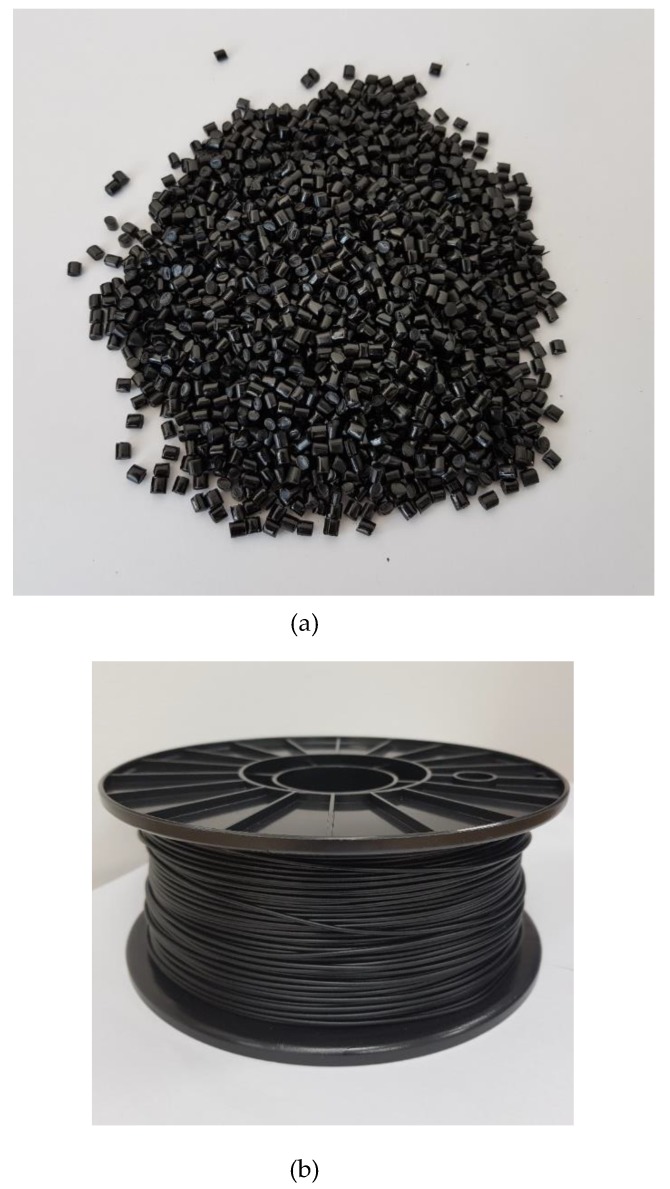
https://cdn.ncbi.nlm.nih.gov/pmc/blobs/ade3/6719982/f7a056ad663f/materials-12-02613-g022.jpg
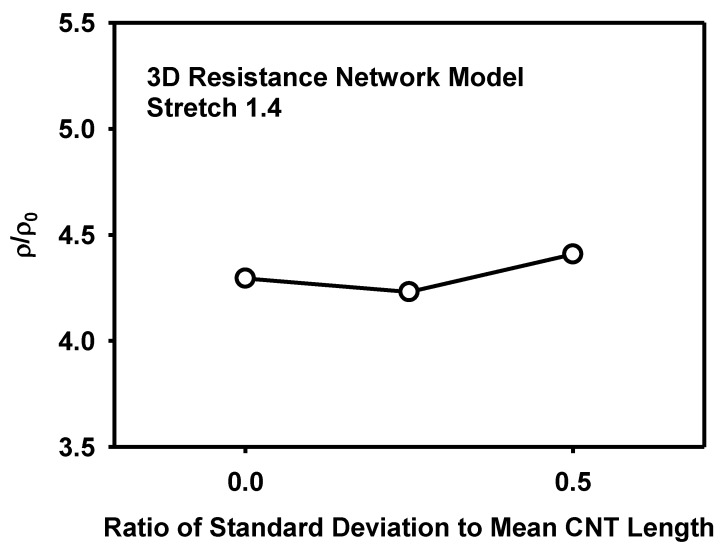
https://cdn.ncbi.nlm.nih.gov/pmc/blobs/ade3/6719982/ca5b8014370c/materials-12-02613-g001.jpg
https://cdn.ncbi.nlm.nih.gov/pmc/blobs/ade3/6719982/12430360e9e1/materials-12-02613-g002.jpg
https://cdn.ncbi.nlm.nih.gov/pmc/blobs/ade3/6719982/f89ac74cfb0e/materials-12-02613-g003.jpg
https://cdn.ncbi.nlm.nih.gov/pmc/blobs/ade3/6719982/7b1f8ff435c3/materials-12-02613-g004.jpg
https://cdn.ncbi.nlm.nih.gov/pmc/blobs/ade3/6719982/e19df158c41f/materials-12-02613-g005.jpg
https://cdn.ncbi.nlm.nih.gov/pmc/blobs/ade3/6719982/82d238b9bc4a/materials-12-02613-g006.jpg
https://cdn.ncbi.nlm.nih.gov/pmc/blobs/ade3/6719982/fb0fad9500a8/materials-12-02613-g007.jpg
https://cdn.ncbi.nlm.nih.gov/pmc/blobs/ade3/6719982/e359a193383c/materials-12-02613-g008.jpg
https://cdn.ncbi.nlm.nih.gov/pmc/blobs/ade3/6719982/e747db4caea7/materials-12-02613-g009a.jpg
https://cdn.ncbi.nlm.nih.gov/pmc/blobs/ade3/6719982/dca052611b54/materials-12-02613-g010.jpg
https://cdn.ncbi.nlm.nih.gov/pmc/blobs/ade3/6719982/9957855205cc/materials-12-02613-g011a.jpg
https://cdn.ncbi.nlm.nih.gov/pmc/blobs/ade3/6719982/477ba6110a22/materials-12-02613-g012.jpg
https://cdn.ncbi.nlm.nih.gov/pmc/blobs/ade3/6719982/fea073af658d/materials-12-02613-g013a.jpg
https://cdn.ncbi.nlm.nih.gov/pmc/blobs/ade3/6719982/558266fc2bcd/materials-12-02613-g014a.jpg
https://cdn.ncbi.nlm.nih.gov/pmc/blobs/ade3/6719982/b25534cdebc4/materials-12-02613-g015a.jpg
https://cdn.ncbi.nlm.nih.gov/pmc/blobs/ade3/6719982/f93bfb0c0b78/materials-12-02613-g016.jpg
https://cdn.ncbi.nlm.nih.gov/pmc/blobs/ade3/6719982/f0f87ef4a2a3/materials-12-02613-g017.jpg
https://cdn.ncbi.nlm.nih.gov/pmc/blobs/ade3/6719982/c275bcf2dce8/materials-12-02613-g018.jpg
https://cdn.ncbi.nlm.nih.gov/pmc/blobs/ade3/6719982/ed514ffb9faa/materials-12-02613-g019.jpg
https://cdn.ncbi.nlm.nih.gov/pmc/blobs/ade3/6719982/1f31f1b2cfea/materials-12-02613-g020a.jpg
https://cdn.ncbi.nlm.nih.gov/pmc/blobs/ade3/6719982/c9604475bdc8/materials-12-02613-g021.jpg
https://cdn.ncbi.nlm.nih.gov/pmc/blobs/ade3/6719982/f7a056ad663f/materials-12-02613-g022.jpg
https://cdn.ncbi.nlm.nih.gov/pmc/blobs/ade3/6719982/ca5b8014370c/materials-12-02613-g001.jpg
https://cdn.ncbi.nlm.nih.gov/pmc/blobs/ade3/6719982/12430360e9e1/materials-12-02613-g002.jpg
https://cdn.ncbi.nlm.nih.gov/pmc/blobs/ade3/6719982/f89ac74cfb0e/materials-12-02613-g003.jpg
https://cdn.ncbi.nlm.nih.gov/pmc/blobs/ade3/6719982/7b1f8ff435c3/materials-12-02613-g004.jpg
https://cdn.ncbi.nlm.nih.gov/pmc/blobs/ade3/6719982/e19df158c41f/materials-12-02613-g005.jpg
https://cdn.ncbi.nlm.nih.gov/pmc/blobs/ade3/6719982/82d238b9bc4a/materials-12-02613-g006.jpg
https://cdn.ncbi.nlm.nih.gov/pmc/blobs/ade3/6719982/fb0fad9500a8/materials-12-02613-g007.jpg
https://cdn.ncbi.nlm.nih.gov/pmc/blobs/ade3/6719982/e359a193383c/materials-12-02613-g008.jpg
https://cdn.ncbi.nlm.nih.gov/pmc/blobs/ade3/6719982/e747db4caea7/materials-12-02613-g009a.jpg
https://cdn.ncbi.nlm.nih.gov/pmc/blobs/ade3/6719982/dca052611b54/materials-12-02613-g010.jpg
https://cdn.ncbi.nlm.nih.gov/pmc/blobs/ade3/6719982/9957855205cc/materials-12-02613-g011a.jpg
https://cdn.ncbi.nlm.nih.gov/pmc/blobs/ade3/6719982/477ba6110a22/materials-12-02613-g012.jpg
https://cdn.ncbi.nlm.nih.gov/pmc/blobs/ade3/6719982/fea073af658d/materials-12-02613-g013a.jpg
https://cdn.ncbi.nlm.nih.gov/pmc/blobs/ade3/6719982/558266fc2bcd/materials-12-02613-g014a.jpg
https://cdn.ncbi.nlm.nih.gov/pmc/blobs/ade3/6719982/b25534cdebc4/materials-12-02613-g015a.jpg
https://cdn.ncbi.nlm.nih.gov/pmc/blobs/ade3/6719982/f93bfb0c0b78/materials-12-02613-g016.jpg
https://cdn.ncbi.nlm.nih.gov/pmc/blobs/ade3/6719982/f0f87ef4a2a3/materials-12-02613-g017.jpg
https://cdn.ncbi.nlm.nih.gov/pmc/blobs/ade3/6719982/c275bcf2dce8/materials-12-02613-g018.jpg
https://cdn.ncbi.nlm.nih.gov/pmc/blobs/ade3/6719982/ed514ffb9faa/materials-12-02613-g019.jpg
https://cdn.ncbi.nlm.nih.gov/pmc/blobs/ade3/6719982/1f31f1b2cfea/materials-12-02613-g020a.jpg
https://cdn.ncbi.nlm.nih.gov/pmc/blobs/ade3/6719982/c9604475bdc8/materials-12-02613-g021.jpg
https://cdn.ncbi.nlm.nih.gov/pmc/blobs/ade3/6719982/f7a056ad663f/materials-12-02613-g022.jpg

相似文献

1
Piezoresistive Behaviour of Additively Manufactured Multi-Walled Carbon Nanotube/Thermoplastic Polyurethane Nanocomposites.增材制造的多壁碳纳米管/热塑性聚氨酯纳米复合材料的压阻行为
Materials (Basel). 2019 Aug 16;12(16):2613. doi: 10.3390/ma12162613.
2
3D Printed Thermoelectric Polyurethane/Multiwalled Carbon Nanotube Nanocomposites: A Novel Approach towards the Fabrication of Flexible and Stretchable Organic Thermoelectrics.3D打印热电聚氨酯/多壁碳纳米管纳米复合材料:一种制备柔性可拉伸有机热电材料的新方法。
Materials (Basel). 2020 Jun 26;13(12):2879. doi: 10.3390/ma13122879.
3
Bidirectional and Stretchable Piezoresistive Sensors Enabled by Multimaterial 3D Printing of Carbon Nanotube/Thermoplastic Polyurethane Nanocomposites.通过碳纳米管/热塑性聚氨酯纳米复合材料的多材料3D打印实现的双向可拉伸压阻传感器
Polymers (Basel). 2018 Dec 21;11(1):11. doi: 10.3390/polym11010011.
4
Fabrication of Piezo-Resistance Composites Containing Thermoplastic Polyurethane/Hybrid Filler Using 3D Printing.采用3D打印技术制备含热塑性聚氨酯/混合填料的压阻复合材料
Sensors (Basel). 2021 Oct 13;21(20):6813. doi: 10.3390/s21206813.
5
3D-Printed Conductive Carbon-Infused Thermoplastic Polyurethane.3D打印的碳注入导电热塑性聚氨酯
Polymers (Basel). 2020 May 27;12(6):1224. doi: 10.3390/polym12061224.
6
Morphological Electrical and Hardness Characterization of Carbon Nanotube-Reinforced Thermoplastic Polyurethane (TPU) Nanocomposite Plates.碳纳米管增强热塑性聚氨酯(TPU)纳米复合板的形态、电学和硬度特性研究。
Molecules. 2023 Apr 20;28(8):3598. doi: 10.3390/molecules28083598.
7
3D-Printable Carbon Nanotubes-Based Composite for Flexible Piezoresistive Sensors.用于柔性压阻传感器的3D可打印碳纳米管基复合材料。
Materials (Basel). 2020 Dec 1;13(23):5482. doi: 10.3390/ma13235482.
8
Co-Influence of Nanofiller Content and 3D Printing Parameters on Mechanical Properties of Thermoplastic Polyurethane (TPU)/Halloysite Nanotube (HNT) Nanocomposites.纳米填料含量和3D打印参数对热塑性聚氨酯(TPU)/埃洛石纳米管(HNT)纳米复合材料力学性能的共同影响
Nanomaterials (Basel). 2023 Jun 29;13(13):1975. doi: 10.3390/nano13131975.
9
Piezoresistive Properties of 3D-Printed Polylactic Acid (PLA) Nanocomposites.3D打印聚乳酸(PLA)纳米复合材料的压阻特性
Polymers (Basel). 2022 Jul 22;14(15):2981. doi: 10.3390/polym14152981.
10
Preparation and laser sintering of a thermoplastic polyurethane carbon nanotube composite-based pressure sensor.基于热塑性聚氨酯-碳纳米管复合材料的压力传感器的制备与激光烧结
RSC Adv. 2020 Jun 22;10(40):23644-23652. doi: 10.1039/d0ra04479b. eCollection 2020 Jun 19.

引用本文的文献

1
Carbon-Based Piezoresistive Polymer Nanocomposites by Extrusion Additive Manufacturing: Process, Material Design, and Current Progress.基于挤出增材制造的碳基压阻聚合物纳米复合材料:工艺、材料设计及当前进展
3D Print Addit Manuf. 2024 Apr 1;11(2):e548-e571. doi: 10.1089/3dp.2022.0153. Epub 2024 Apr 16.
2
Self-Monitoring Performance of 3D-Printed Poly-Ether-Ether-Ketone Carbon Nanotube Composites.3D打印聚醚醚酮碳纳米管复合材料的自监测性能
Polymers (Basel). 2022 Dec 20;15(1):8. doi: 10.3390/polym15010008.
3
Soft CNT-Polymer Composites for High Pressure Sensors.

本文引用的文献

1
Bidirectional and Stretchable Piezoresistive Sensors Enabled by Multimaterial 3D Printing of Carbon Nanotube/Thermoplastic Polyurethane Nanocomposites.通过碳纳米管/热塑性聚氨酯纳米复合材料的多材料3D打印实现的双向可拉伸压阻传感器
Polymers (Basel). 2018 Dec 21;11(1):11. doi: 10.3390/polym11010011.
2
Facile and Low-Cost Route for Sensitive Stretchable Sensors by Controlling Kinetic and Thermodynamic Conductive Network Regulating Strategies.通过控制动力学和热力学导电网络调节策略,实现敏感可拉伸传感器的简易低成本途径。
ACS Appl Mater Interfaces. 2018 Jul 5;10(26):22678-22691. doi: 10.1021/acsami.8b03967. Epub 2018 Jun 25.
3
用于高压传感器的软 CNT-聚合物复合材料。
Sensors (Basel). 2022 Jul 14;22(14):5268. doi: 10.3390/s22145268.
4
An Integrated Nanocomposite Proximity Sensor: Machine Learning-Based Optimization, Simulation, and Experiment.一种集成纳米复合接近传感器:基于机器学习的优化、模拟与实验
Nanomaterials (Basel). 2022 Apr 8;12(8):1269. doi: 10.3390/nano12081269.
5
Thermoplastic polyurethane flexible capacitive proximity sensor reinforced by CNTs for applications in the creative industries.由 CNT 增强的热塑性聚氨酯柔性电容接近传感器,应用于创意产业。
Sci Rep. 2021 Jan 13;11(1):1104. doi: 10.1038/s41598-020-80071-0.
Microstructural origin of resistance-strain hysteresis in carbon nanotube thin film conductors.
碳纳米管薄膜导体中电阻-应变滞后的微观结构起源。
Proc Natl Acad Sci U S A. 2018 Feb 27;115(9):1986-1991. doi: 10.1073/pnas.1717217115. Epub 2018 Feb 12.
4
Fused-filament 3D printing of drug products: Microstructure analysis and drug release characteristics of PVA-based caplets.基于 PVA 的片剂的药物产品熔融挤出 3D 打印:微观结构分析和药物释放特性。
Int J Pharm. 2016 Nov 30;514(1):290-295. doi: 10.1016/j.ijpharm.2016.06.021.
5
3D Printing of Highly Conductive Nanocomposites for the Functional Optimization of Liquid Sensors.3D 打印高导电纳米复合材料实现液体传感器的功能优化。
Small. 2016 Nov;12(44):6076-6082. doi: 10.1002/smll.201601695. Epub 2016 Sep 14.
6
3D Printable Graphene Composite.3D可打印石墨烯复合材料
Sci Rep. 2015 Jul 8;5:11181. doi: 10.1038/srep11181.
7
Fabrication of scalable and structured tissue engineering scaffolds using water dissolvable sacrificial 3D printed moulds.使用可水溶牺牲 3D 打印模具制造可扩展和结构化的组织工程支架。
Mater Sci Eng C Mater Biol Appl. 2015 Oct;55:569-78. doi: 10.1016/j.msec.2015.06.002. Epub 2015 Jun 9.
8
Highly stretchable and sensitive strain sensor based on silver nanowire-elastomer nanocomposite.基于银纳米线-弹性体纳米复合材料的高拉伸性和高灵敏度应变传感器。
ACS Nano. 2014 May 27;8(5):5154-63. doi: 10.1021/nn501204t. Epub 2014 Apr 29.
9
Novel paper-based cholesterol biosensor using graphene/polyvinylpyrrolidone/polyaniline nanocomposite.基于石墨烯/聚乙烯吡咯烷酮/聚苯胺纳米复合材料的新型纸质胆固醇生物传感器。
Biosens Bioelectron. 2014 Feb 15;52:13-9. doi: 10.1016/j.bios.2013.08.018. Epub 2013 Aug 22.
10
Piezoresistive strain sensors made from carbon nanotubes based polymer nanocomposites.基于碳纳米管的聚合物纳米复合材料的压阻应变传感器。
Sensors (Basel). 2011;11(11):10691-723. doi: 10.3390/s111110691. Epub 2011 Nov 11.