De Duve Institute, Université catholique de Louvain (UCLouvain), 1200 Brussels, Belgium.
Immunology-Vaccinology unit, Department of Infectious and Parasitic Diseases, Faculty of Veterinary Medicine- Fundamental and Applied Research for Animals and Health (FARAH), University of Liège, 4000 Liège, Belgium.
Viruses. 2019 Aug 16;11(8):757. doi: 10.3390/v11080757.
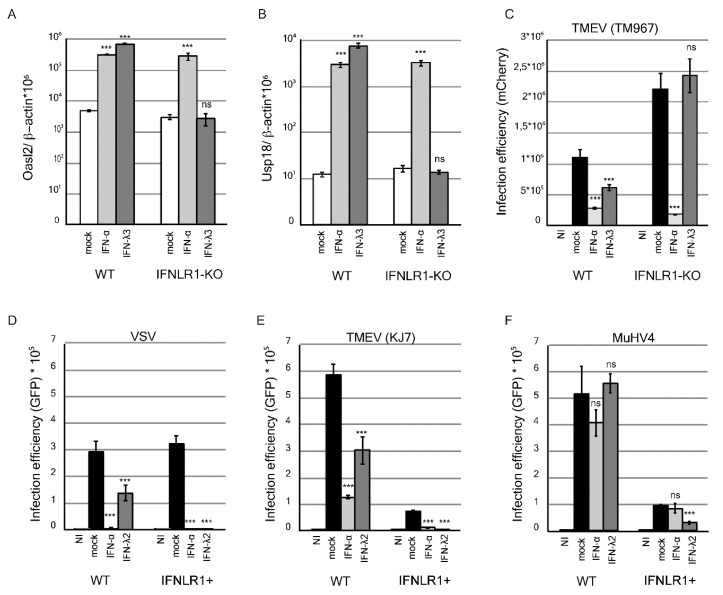
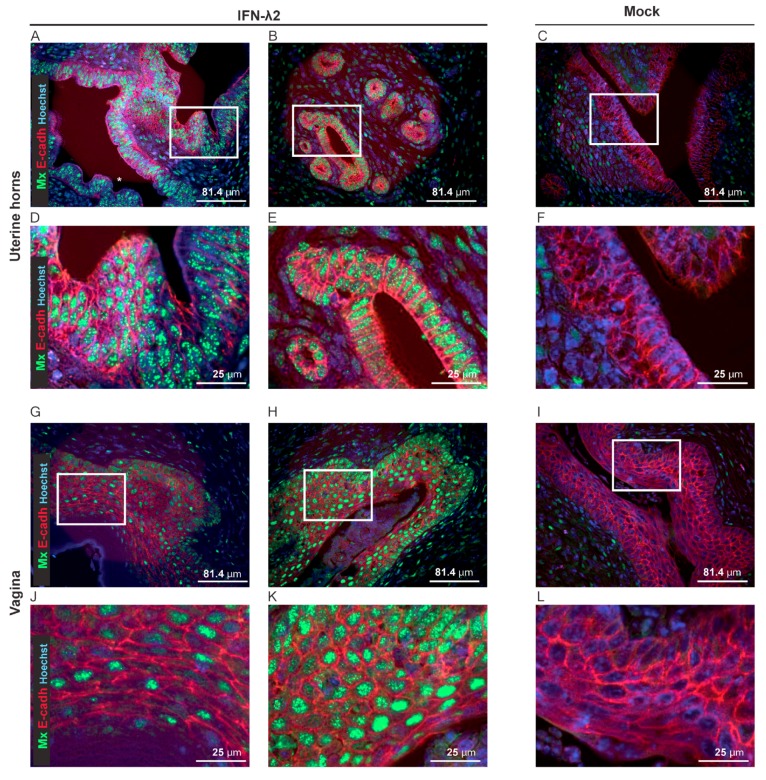
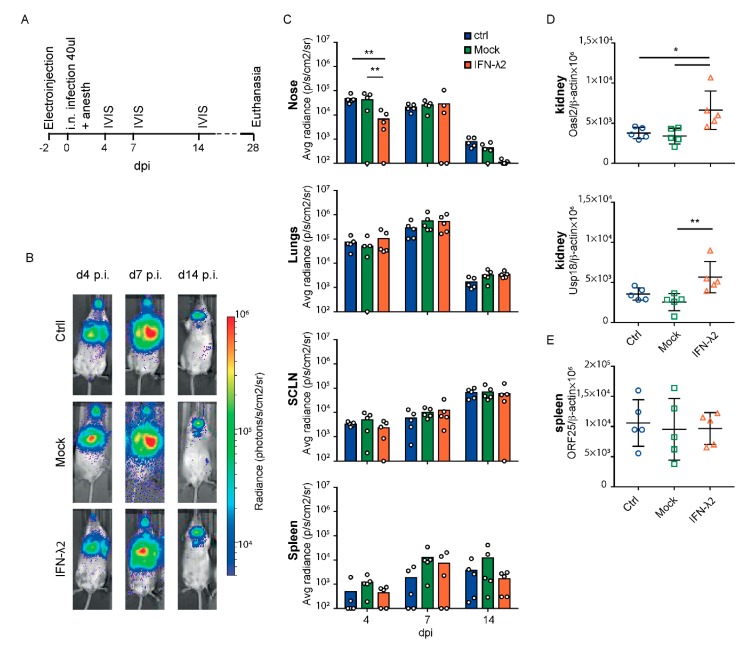
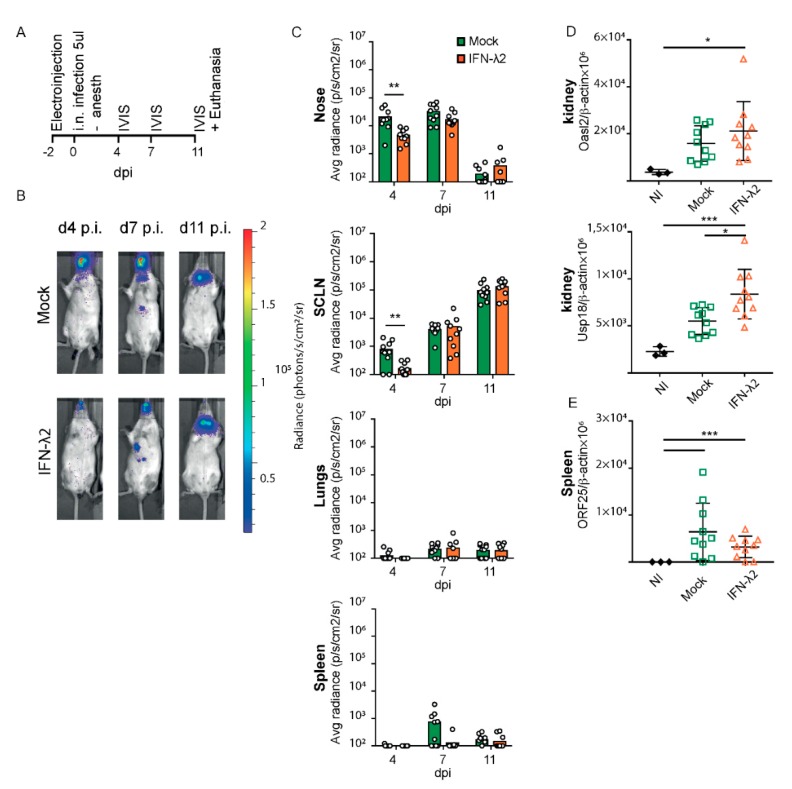
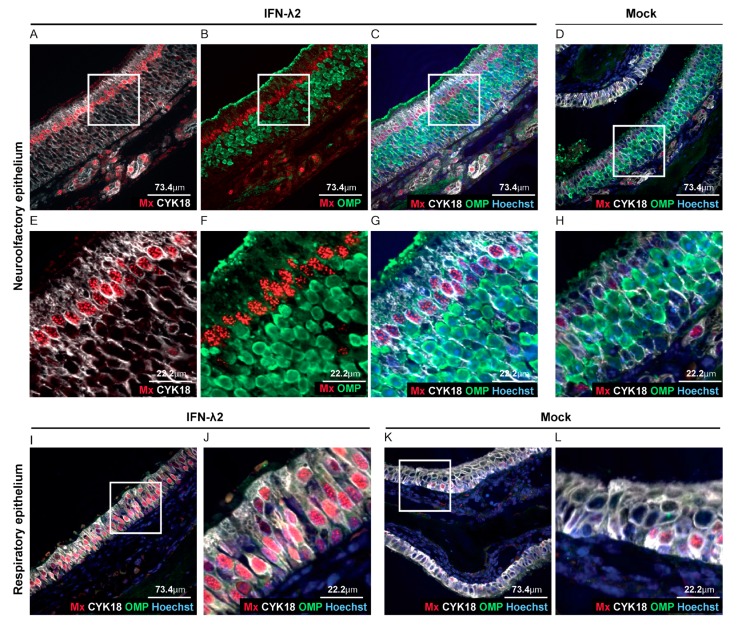
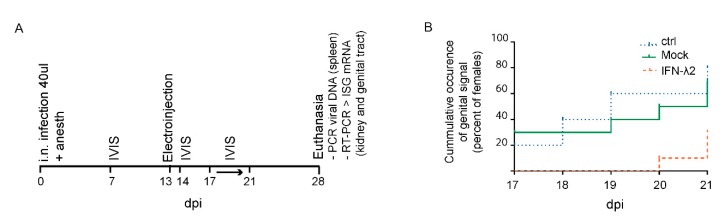
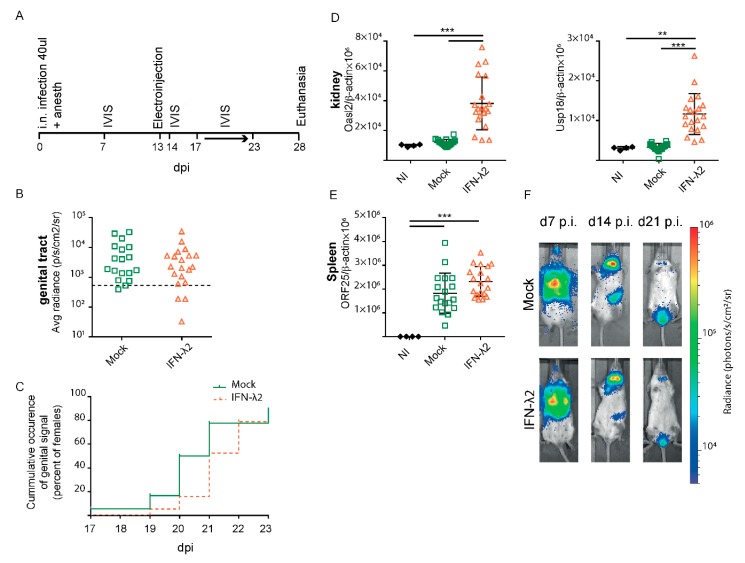
Murid herpesvirus-4 (MuHV-4), a natural gammaherpesvirus of rodents, can infect the mouse through the nasal mucosa, where it targets sustentacular cells and olfactory neurons in the olfactory epithelium before it propagates to myeloid cells and then to B cells in lymphoid tissues. After establishment of latency in B cells, viral reactivation occurs in the genital tract in 80% of female mice, which can lead to spontaneous sexual transmission to co-housed males. Interferon-lambda (IFN-λ) is a key player of the innate immune response at mucosal surfaces and is believed to limit the transmission of numerous viruses by acting on epithelial cells. We used in vivo plasmid-mediated IFN-λ expression to assess whether IFN-λ could prophylactically limit MuHV-4 infection in the olfactory and vaginal mucosae. In vitro, IFN-λ decreased MuHV-4 infection in cells that overexpressed IFN-λ receptor 1 (IFNLR1). In vivo, prophylactic IFN-λ expression decreased infection of the olfactory epithelium but did not prevent virus propagation to downstream organs, such as the spleen where the virus establishes latency. In the olfactory epithelium, sustentacular cells readily responded to IFN-λ. In contrast, olfactory neurons did not respond to IFN-λ, thus, likely allowing viral entry. In the female genital tract, columnar epithelial cells strongly responded to IFN-λ, as did most vaginal epithelial cells, although with some variation from mouse to mouse. IFN-λ expression, however, failed to prevent virus reactivation in the vaginal mucosa. In conclusion, IFN-λ decreased MuHV-4 replication in the upper respiratory epithelium, likely by protecting the sustentacular epithelial cells, but it did not protect olfactory neurons and failed to block virus reactivation in the genital mucosa.
鼠疱疹病毒 4(MuHV-4)是一种天然的γ疱疹病毒,可通过鼻腔黏膜感染小鼠,在传播到骨髓细胞之前,它会靶向嗅上皮中的支持细胞和嗅觉神经元。在 B 细胞中建立潜伏后,80%的雌性小鼠的生殖道会发生病毒再激活,这可能导致与同居雄性的自发性性传播。干扰素-λ(IFN-λ)是黏膜表面固有免疫反应的关键参与者,被认为通过作用于上皮细胞来限制多种病毒的传播。我们使用体内质粒介导的 IFN-λ 表达来评估 IFN-λ 是否可以预防地限制嗅觉和阴道黏膜中的 MuHV-4 感染。在体外,IFN-λ 降低了过表达 IFN-λ 受体 1(IFNLR1)的细胞中的 MuHV-4 感染。在体内,预防性 IFN-λ 表达降低了嗅上皮的感染,但不能阻止病毒传播到下游器官,如病毒建立潜伏的脾脏。在嗅上皮中,支持细胞容易对 IFN-λ 产生反应。相比之下,嗅觉神经元对 IFN-λ 没有反应,因此可能允许病毒进入。在雌性生殖道中,柱状上皮细胞强烈响应 IFN-λ,大多数阴道上皮细胞也是如此,尽管从一只老鼠到另一只老鼠会有一些变化。然而,IFN-λ 表达未能防止阴道黏膜中的病毒再激活。总之,IFN-λ 降低了上呼吸道上皮中的 MuHV-4 复制,可能是通过保护支持细胞来实现的,但它没有保护嗅觉神经元,也未能阻止生殖道中的病毒再激活。