Hwang Ji-Soo, Yu Jin, Kim Hyoung-Mi, Oh Jae-Min, Choi Soo-Jin
Division of Applied Food System, Major of Food Science & Technology, Seoul Women's University, Seoul 01797, Korea.
Department of Chemistry and Medical Chemistry, College of Science and Technology, Yonsei University, Wonju 26493, Gangwondo, Korea.
Nanomaterials (Basel). 2019 Aug 16;9(8):1175. doi: 10.3390/nano9081175.
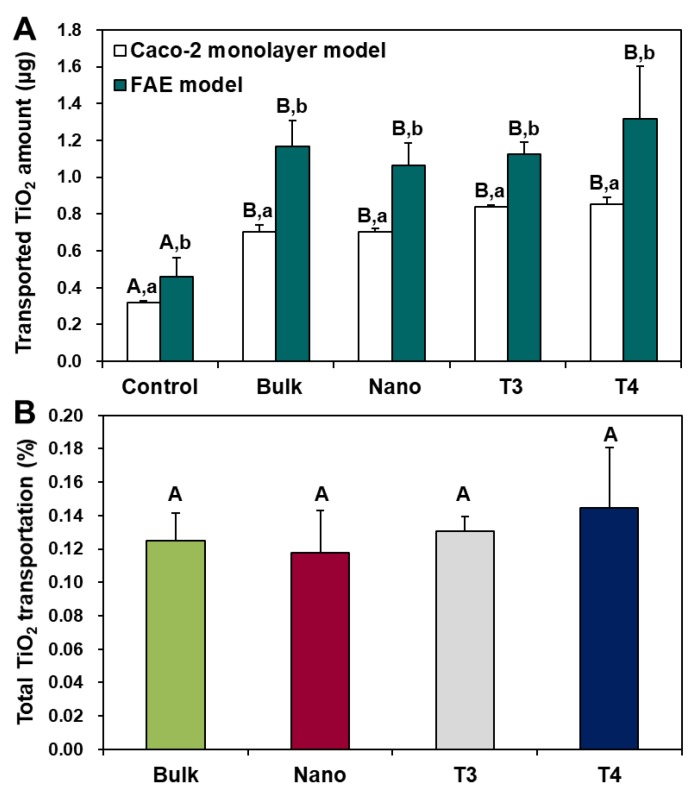
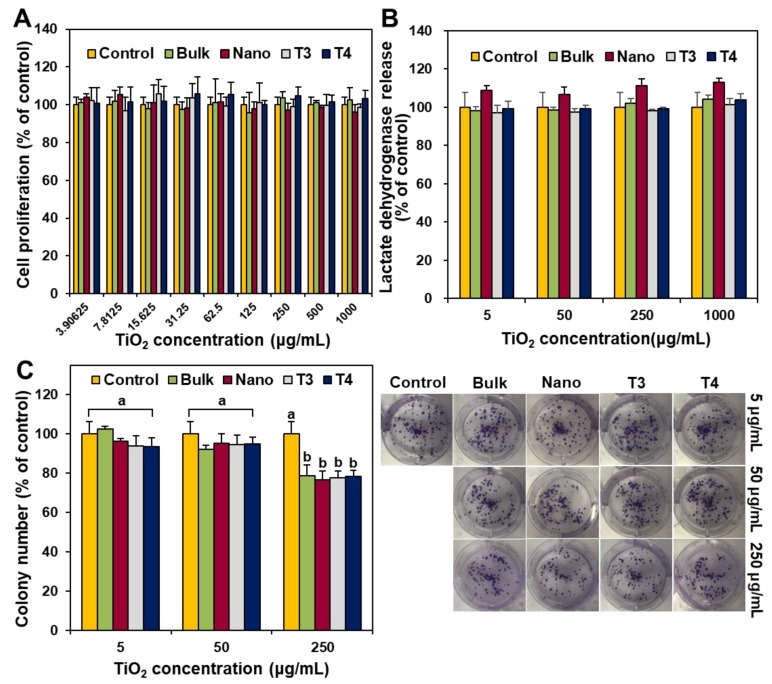
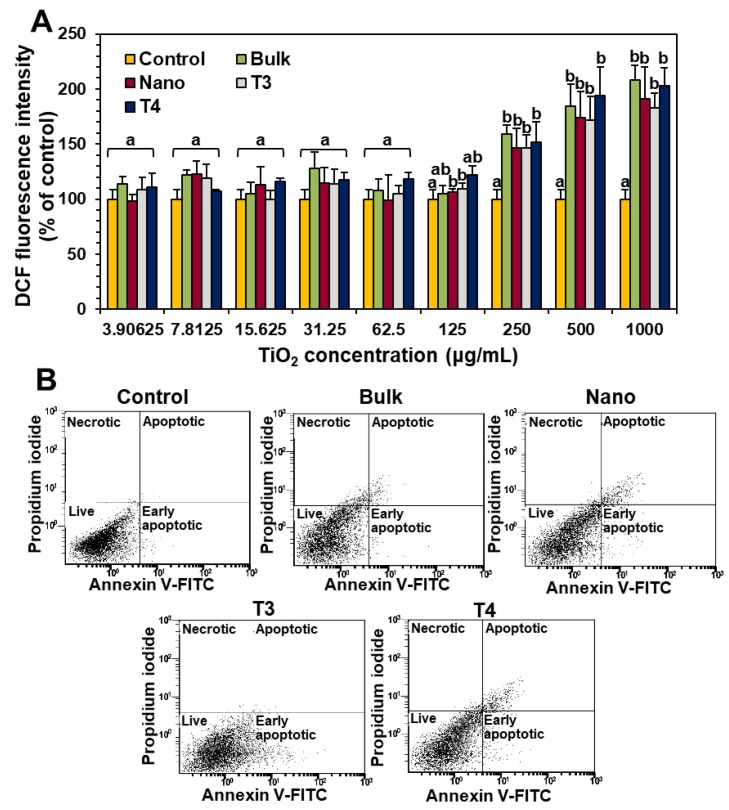
Titanium dioxide (TiO) is one of the most extensively utilized food additives (E171) in the food industry. Along with nanotechnology development, the concern about the presence of nanostructured particles in E171 TiO and commercial food products is growing. In the present study, the physicochemical properties of commercially available E171 TiO particles, including particle size distribution, were investigated, followed by their cytotoxicity and intestinal transport evaluation. The fate determination and quantification of E171 TiO in commercial foods were carried out based on the analytical procedure developed using simulated foods. The results demonstrated that TiO is a material mainly composed of particles larger than 100 nm, but present as an agglomerated or aggregated particle in commercial foods with amounts of less than 1% (wt/wt). Titanium dioxide particles generated reactive oxygen species and inhibited long-term colony formation, but the cytotoxicity was not related to particle size distribution or particle type (food- or general-grade). All TiO particles were mainly transported by microfold (M) cells, but also by intestinal tight junction. These findings will be useful for TiO application in the food industry and predicting its potential toxicity.
二氧化钛(TiO)是食品工业中应用最广泛的食品添加剂之一(E171)。随着纳米技术的发展,人们对E171 TiO和商业食品中纳米结构颗粒的存在越来越关注。在本研究中,对市售E171 TiO颗粒的物理化学性质进行了研究,包括粒度分布,随后对其细胞毒性和肠道转运进行了评估。基于使用模拟食品开发的分析程序,对商业食品中E171 TiO的归宿进行了测定和定量。结果表明,TiO是一种主要由大于100 nm的颗粒组成的材料,但在商业食品中以团聚或聚集颗粒的形式存在,含量小于1%(重量/重量)。二氧化钛颗粒产生活性氧并抑制长期集落形成,但其细胞毒性与粒度分布或颗粒类型(食品级或普通级)无关。所有TiO颗粒主要通过微褶(M)细胞运输,但也通过肠道紧密连接运输。这些发现将有助于TiO在食品工业中的应用,并预测其潜在毒性。