Hoter Abdullah, Rizk Sandra, Naim Hassan Y
Department of Biochemistry and Chemistry of Nutrition, Faculty of Veterinary Medicine, Cairo University, Giza 12211, Egypt.
Department of Physiological Chemistry, University of Veterinary Medicine Hannover, 30559 Hannover, Germany.
Cancers (Basel). 2019 Aug 16;11(8):1194. doi: 10.3390/cancers11081194.
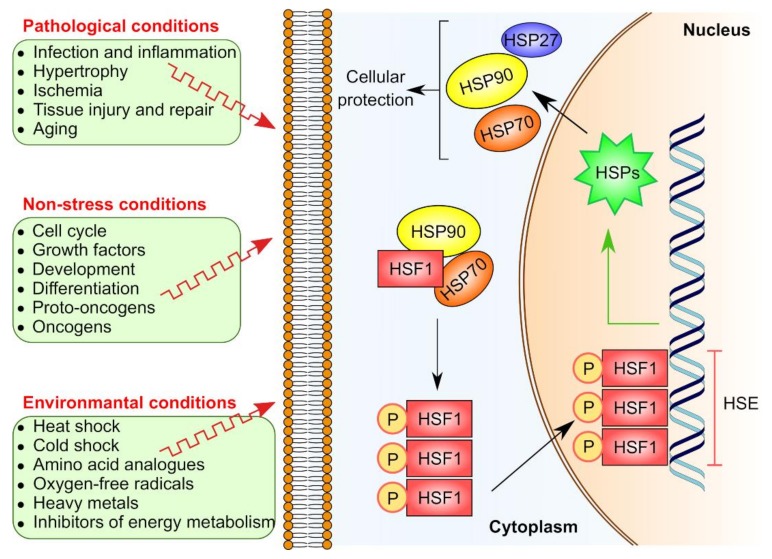
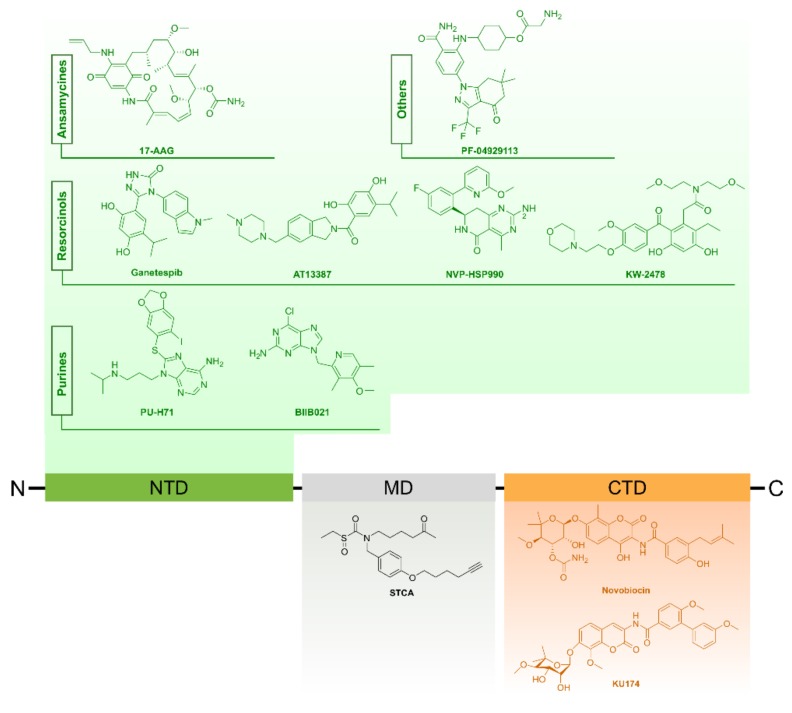
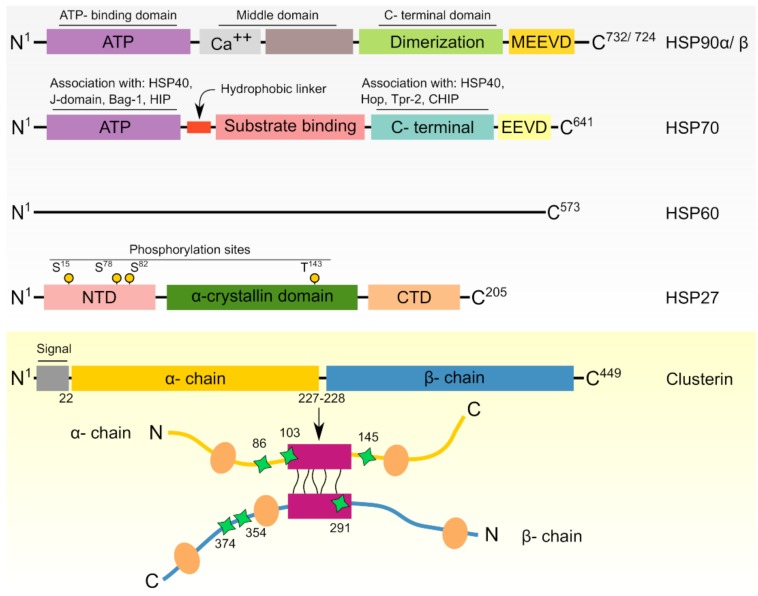
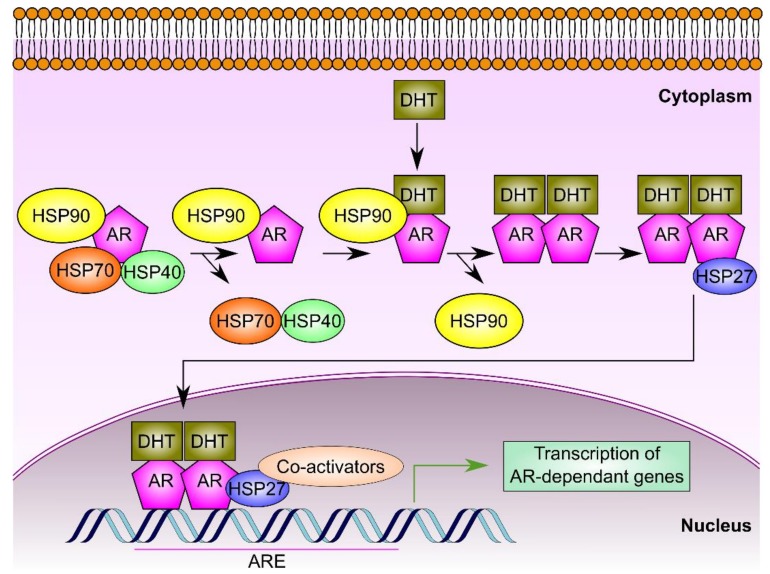
Prostate cancer (PCa) is one of the most common cancer types in men worldwide. Heat shock proteins (HSPs) are molecular chaperones that are widely implicated in the pathogenesis, diagnosis, prognosis, and treatment of many cancers. The role of HSPs in PCa is complex and their expression has been linked to the progression and aggressiveness of the tumor. Prominent chaperones, including HSP90 and HSP70, are involved in the folding and trafficking of critical cancer-related proteins. Other members of HSPs, including HSP27 and HSP60, have been considered as promising biomarkers, similar to prostate-specific membrane antigen (PSMA), for PCa screening in order to evaluate and monitor the progression or recurrence of the disease. Moreover, expression level of chaperones like clusterin has been shown to correlate directly with the prostate tumor grade. Hence, targeting HSPs in PCa has been suggested as a promising strategy for cancer therapy. In the current review, we discuss the functions as well as the role of HSPs in PCa progression and further evaluate the approach of inhibiting HSPs as a cancer treatment strategy.
前列腺癌(PCa)是全球男性中最常见的癌症类型之一。热休克蛋白(HSPs)是分子伴侣,广泛参与多种癌症的发病机制、诊断、预后及治疗。HSPs在PCa中的作用复杂,其表达与肿瘤的进展和侵袭性有关。包括HSP90和HSP70在内的主要伴侣蛋白参与关键癌症相关蛋白的折叠和运输。HSPs的其他成员,如HSP27和HSP60,已被视为有前景的生物标志物,类似于前列腺特异性膜抗原(PSMA),用于PCa筛查,以评估和监测疾病的进展或复发。此外,像簇集蛋白这样的伴侣蛋白的表达水平已被证明与前列腺肿瘤分级直接相关。因此,针对PCa中的HSPs进行靶向治疗已被认为是一种有前景的癌症治疗策略。在本综述中,我们讨论了HSPs在PCa进展中的功能和作用,并进一步评估了抑制HSPs作为癌症治疗策略的方法。