Das Jugal Kishore, Xiong Xiaofang, Ren Xingcong, Yang Jin-Ming, Song Jianxun
Department of Microbial Pathogenesis and Immunology, Texas A&M University Health Science Center, Bryan, TX 77807, USA.
Department of Toxicology and Cancer Biology, University of Kentucky College of Medicine, Lexington, KY 40536, USA.
J Oncol. 2019 Dec 11;2019:3267207. doi: 10.1155/2019/3267207. eCollection 2019.
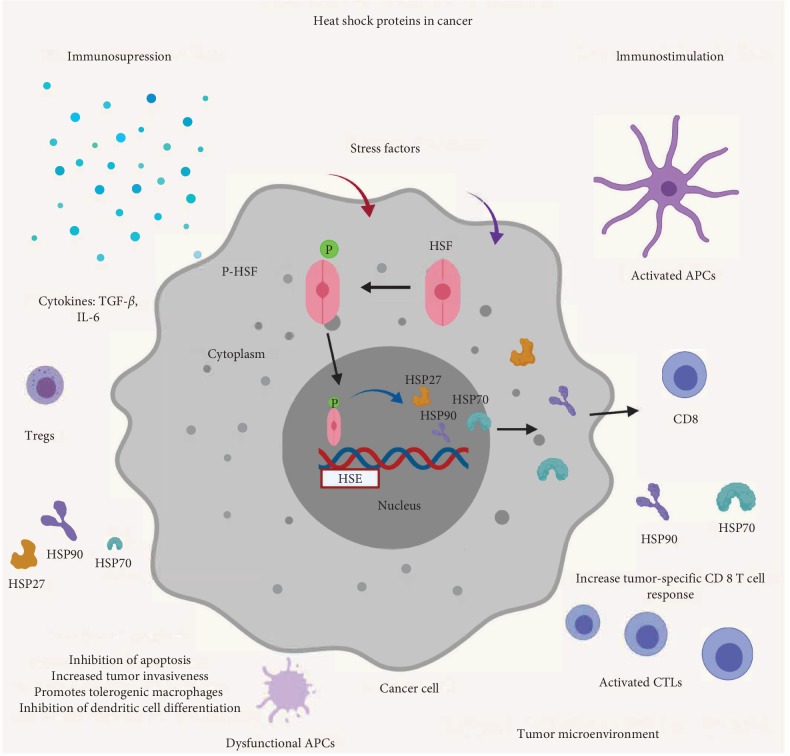
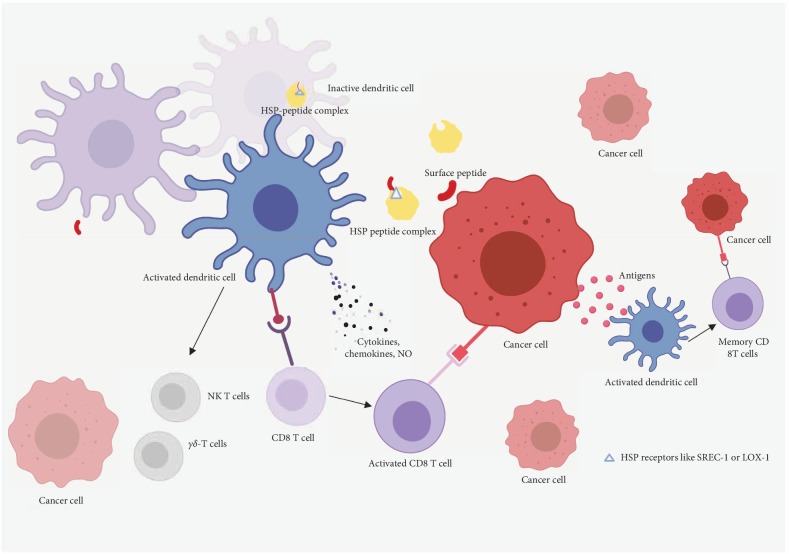
Heat shock proteins (HSPs) are highly conserved molecular chaperones with divergent roles in various cellular processes. The HSPs are classified according to their molecular size as HSP27, HSP40, HSP60, HSP70, and HSP90. The HSPs prevent nonspecific cellular aggregation of proteins by maintaining their native folding energetics. The disruption of this vital cellular process, driven by the aberrant expression of HSPs, is implicated in the progression of several different carcinomas. Many HSPs are also actively involved in promoting the proliferation and differentiation of tumor cells, contributing to their metastatic phenotype. Upregulation of these HSPs is associated with the poor outcome of anticancer therapy in clinical settings. On the other hand, these highly expressed HSPs may be exploited as viable immunotherapeutic targets for different types of cancers. This review discusses recent advances and perspectives on the research of HSP-based cancer immunotherapy.
热休克蛋白(HSPs)是高度保守的分子伴侣,在各种细胞过程中发挥着不同的作用。热休克蛋白根据其分子大小分为HSP27、HSP40、HSP60、HSP70和HSP90。热休克蛋白通过维持蛋白质的天然折叠能量,防止蛋白质发生非特异性细胞聚集。由热休克蛋白异常表达驱动的这一重要细胞过程的破坏,与几种不同癌症的进展有关。许多热休克蛋白还积极参与促进肿瘤细胞的增殖和分化,促成其转移表型。这些热休克蛋白的上调与临床环境中抗癌治疗的不良结果相关。另一方面,这些高表达的热休克蛋白可被用作不同类型癌症可行的免疫治疗靶点。本综述讨论了基于热休克蛋白的癌症免疫治疗研究的最新进展和前景。