Dirvanauskas Darius, Maskeliūnas Rytis, Raudonis Vidas, Damaševičius Robertas, Scherer Rafal
Department of Multimedia Engineering, Kaunas University of Technology, 51368 Kaunas, Lithuania.
Department of Control Systems, Kaunas University of Technology, 51367 Kaunas, Lithuania.
Sensors (Basel). 2019 Aug 16;19(16):3578. doi: 10.3390/s19163578.
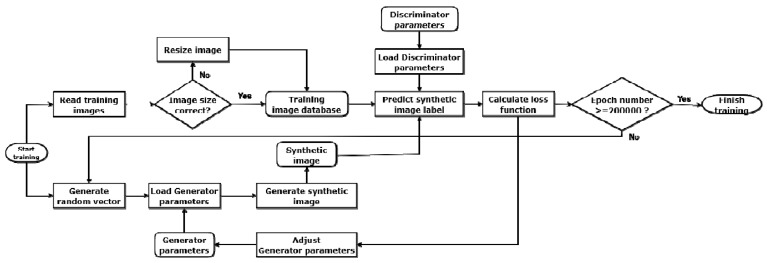
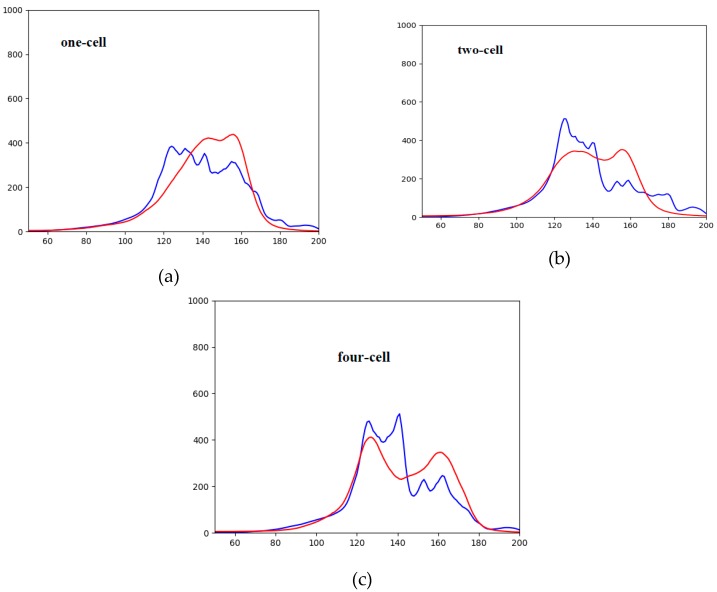
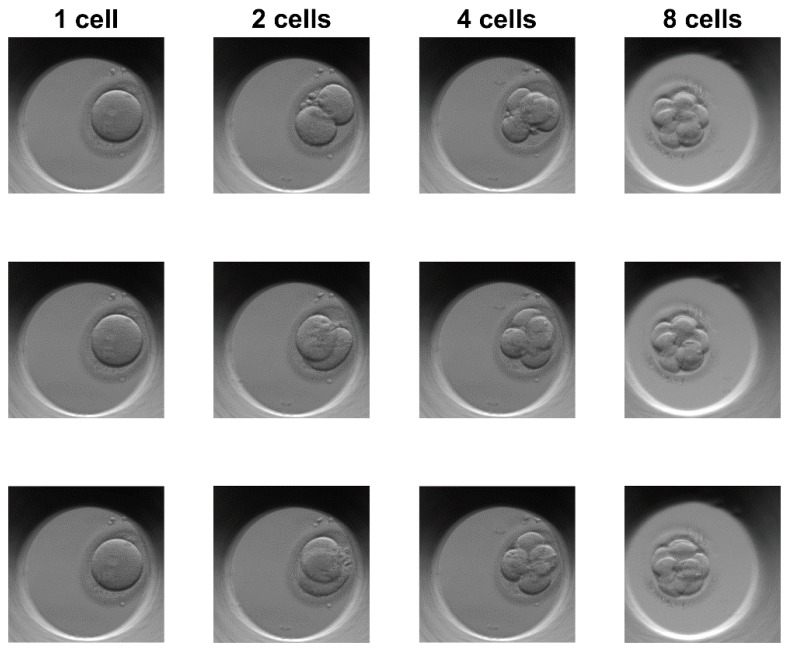
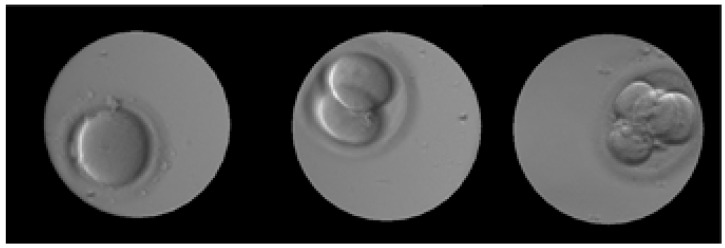
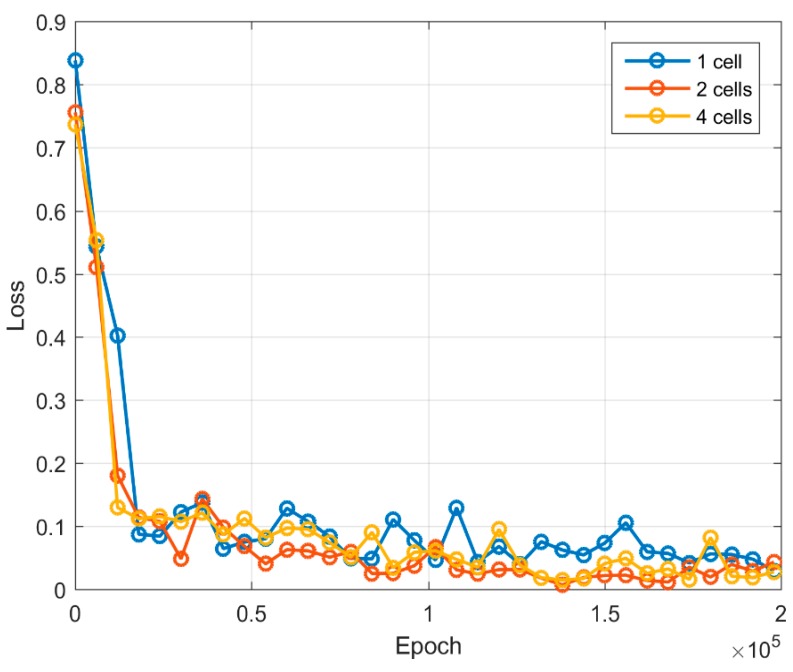
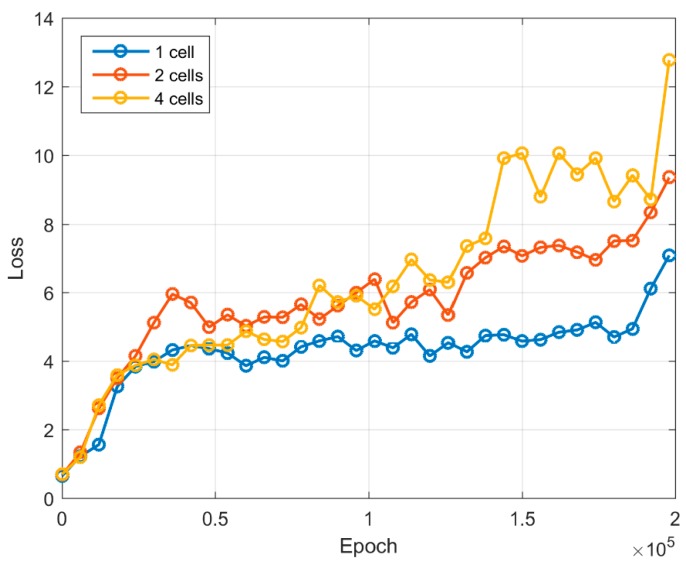
We propose a method for generating the synthetic images of human embryo cells that could later be used for classification, analysis, and training, thus resulting in the creation of new synthetic image datasets for research areas lacking real-world data. Our focus was not only to generate the generic image of a cell such, but to make sure that it has all necessary attributes of a real cell image to provide a fully realistic synthetic version. We use human embryo images obtained during cell development processes for training a deep neural network (DNN). The proposed algorithm used generative adversarial network (GAN) to generate one-, two-, and four-cell stage images. We achieved a misclassification rate of 12.3% for the generated images, while the expert evaluation showed the true recognition rate (TRR) of 80.00% (for four-cell images), 86.8% (for two-cell images), and 96.2% (for one-cell images). Texture-based comparison using the Haralick features showed that there is no statistically (using the Student's t-test) significant ( < 0.01) differences between the real and synthetic embryo images except for the sum of variance (for one-cell and four-cell images), and variance and sum of average (for two-cell images) features. The obtained synthetic images can be later adapted to facilitate the development, training, and evaluation of new algorithms for embryo image processing tasks.
我们提出了一种生成人类胚胎细胞合成图像的方法,这些图像随后可用于分类、分析和训练,从而为缺乏真实世界数据的研究领域创建新的合成图像数据集。我们的重点不仅是生成细胞的一般图像,还要确保它具有真实细胞图像的所有必要属性,以提供一个完全逼真的合成版本。我们使用在细胞发育过程中获得的人类胚胎图像来训练深度神经网络(DNN)。所提出的算法使用生成对抗网络(GAN)来生成一细胞、二细胞和四细胞阶段的图像。对于生成的图像,我们实现了12.3%的错误分类率,而专家评估显示真实识别率(TRR)分别为:四细胞图像80.00%、二细胞图像86.8%、一细胞图像96.2%。使用哈拉里克特征进行的基于纹理的比较表明,除了方差之和(一细胞和四细胞图像)以及方差和平均之和(二细胞图像)特征外,真实胚胎图像和合成胚胎图像之间在统计学上(使用学生t检验)没有显著差异(<0.01)。所获得的合成图像随后可进行调整,以促进胚胎图像处理任务新算法的开发、训练和评估。