U.O. Oncologia Cellulare, Ospedale Policlinico San Martino, 16132 Genova, Italy.
Department of experimental medicine (DIMES), University of Genova, 16132 Genova, Italy.
Int J Mol Sci. 2019 Aug 18;20(16):4028. doi: 10.3390/ijms20164028.
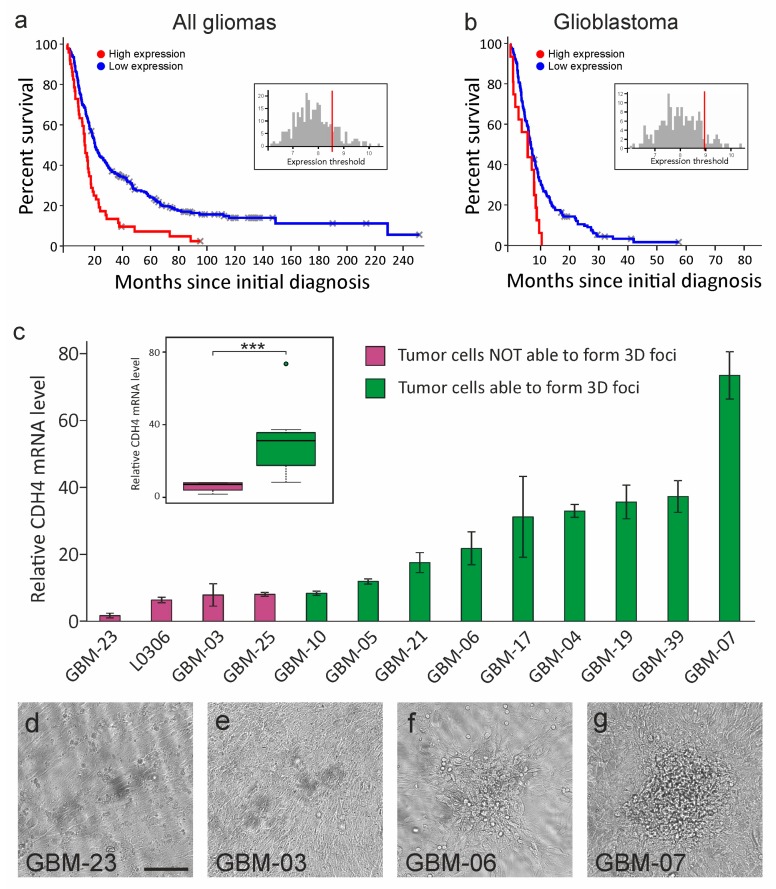
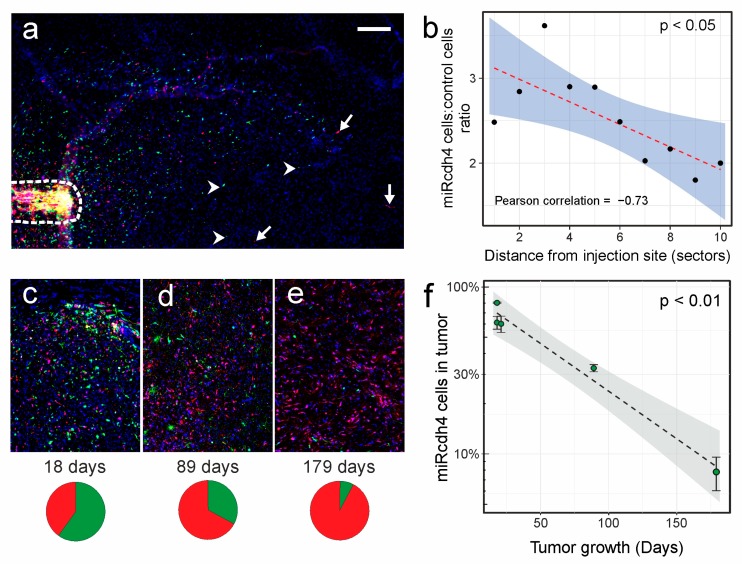
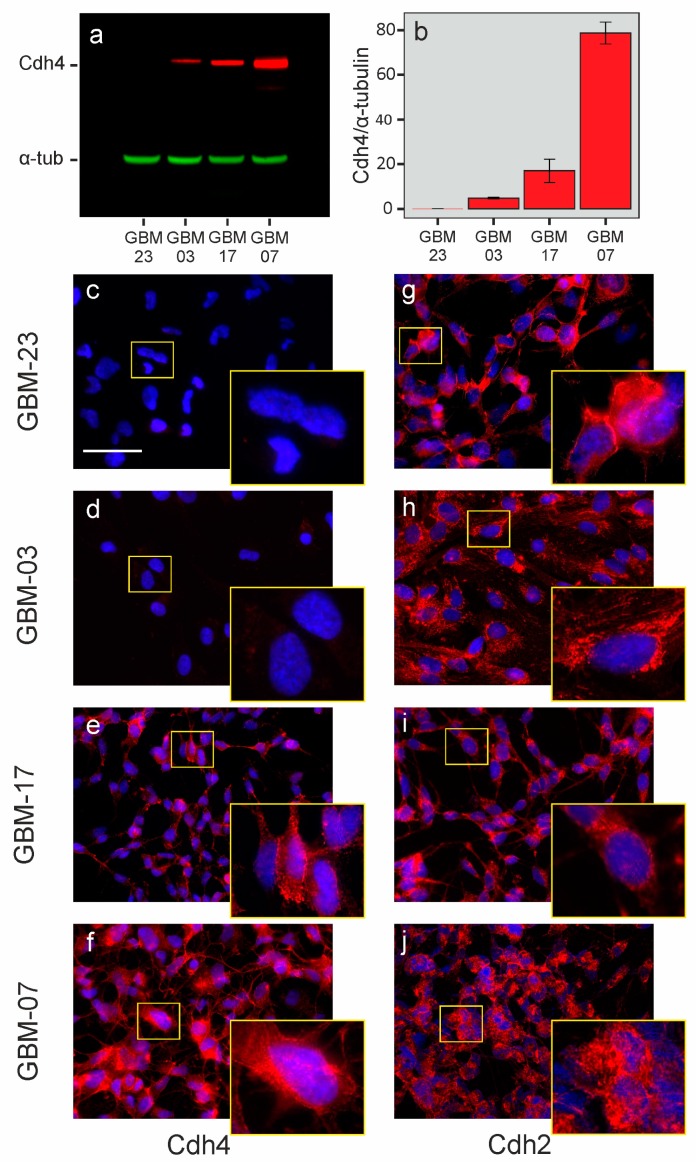
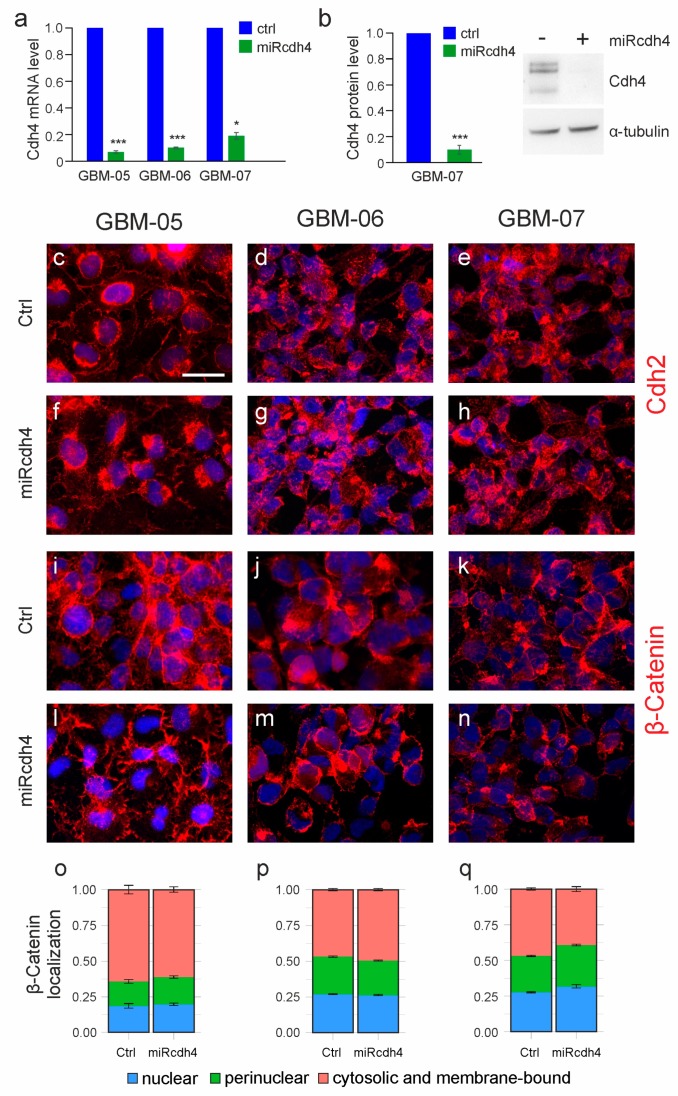
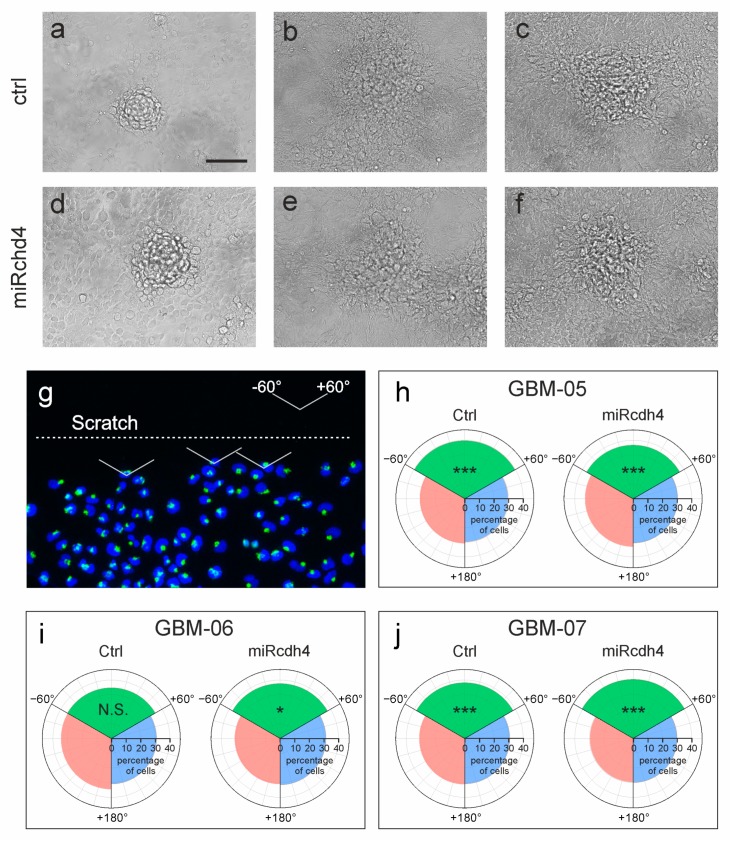
The high invasive phenotype of glioblastoma is one of the main causes of therapy inefficacy and tumor relapse. Cell adhesion molecules of the cadherin family are involved in cell migration and are known as master regulators of epithelial tumor invasiveness, but their role in glioblastoma is less understood. In particular, we recently demonstrated, in the syngeneic murine model, the occurrence of a previously undescribed cadherin switch between Cdh2 and Cdh4 during gliomagenesis, which is necessary for the acquisition of the highly infiltrative and tumorigenic phenotype of these cells. In the present study, we tested the role of Cdh4 in human gliomas. Our results on patient-derived glioma cells demonstrate a positive correlation between Cdh4 expression levels and the loss of cell-cell contact inhibition of proliferation controls that allows cells to proliferate over confluence. Moreover, the silencing of Cdh4 by artificial microRNAs induced a decrease in the infiltrative ability of human glioma cells both in vitro and in vivo. More strikingly, Cdh4 silencing induced an impairment of the tumorigenic potential of these cells after orthotopic transplantation in immunodeficient mice. Overall, we conclude that in human glioblastoma, Cdh4 can also actively contribute in regulating cell invasiveness and malignancy.
胶质母细胞瘤的高侵袭表型是治疗无效和肿瘤复发的主要原因之一。钙黏蛋白家族的细胞黏附分子参与细胞迁移,被认为是上皮肿瘤侵袭性的主要调节因子,但它们在胶质母细胞瘤中的作用还不太清楚。特别是,我们最近在同种异体小鼠模型中证明,在神经胶质瘤发生过程中,Cdh2 和 Cdh4 之间发生了一种以前未描述的钙黏蛋白转换,这对于这些细胞获得高浸润性和致瘤性表型是必需的。在本研究中,我们测试了 Cdh4 在人胶质母细胞瘤中的作用。我们对患者来源的神经胶质瘤细胞的研究结果表明,Cdh4 表达水平与细胞-细胞接触抑制增殖控制之间存在正相关,这使得细胞能够在汇合后继续增殖。此外,人工 microRNAs 沉默 Cdh4 可降低人神经胶质瘤细胞在体外和体内的浸润能力。更引人注目的是,Cdh4 沉默可在免疫缺陷小鼠原位移植后损害这些细胞的致瘤潜能。总之,我们得出结论,在人类胶质母细胞瘤中,Cdh4 也可以积极调节细胞的侵袭性和恶性程度。