Department of Pediatric Newborn Medicine, Brigham and Women's Hospital, Harvard Medical School, Boston, Massachusetts, United States of America.
Department of Pediatrics, Washington University, Saint Louis, Missouri, United States of America.
PLoS One. 2019 Aug 21;14(8):e0219596. doi: 10.1371/journal.pone.0219596. eCollection 2019.
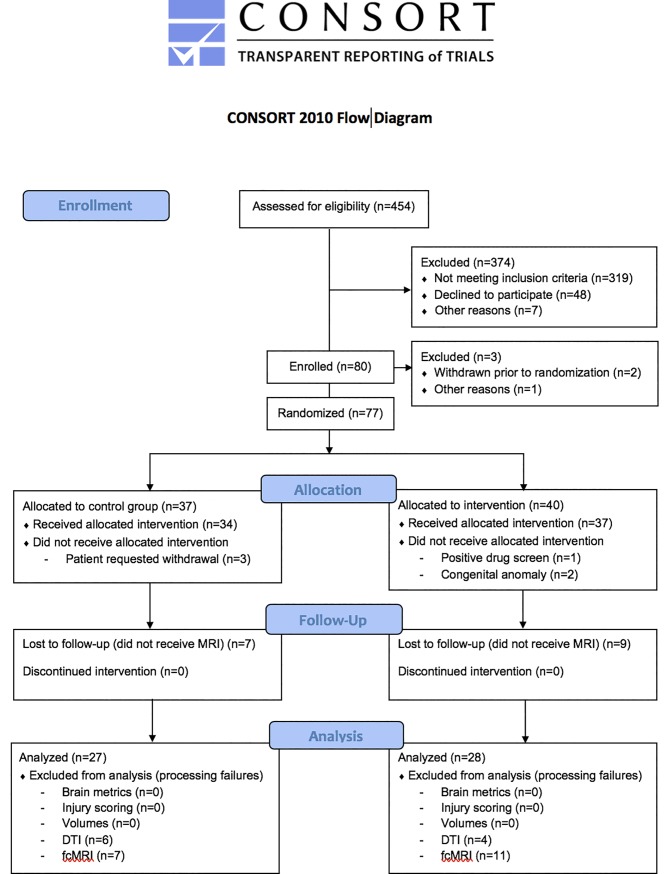
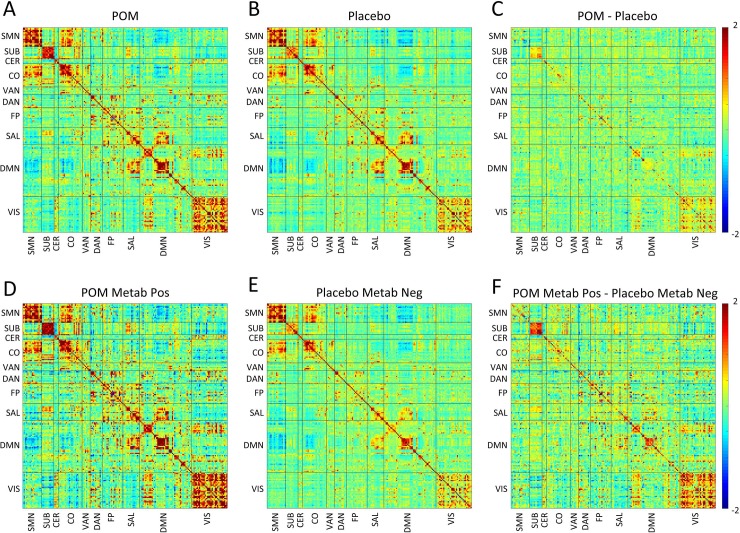
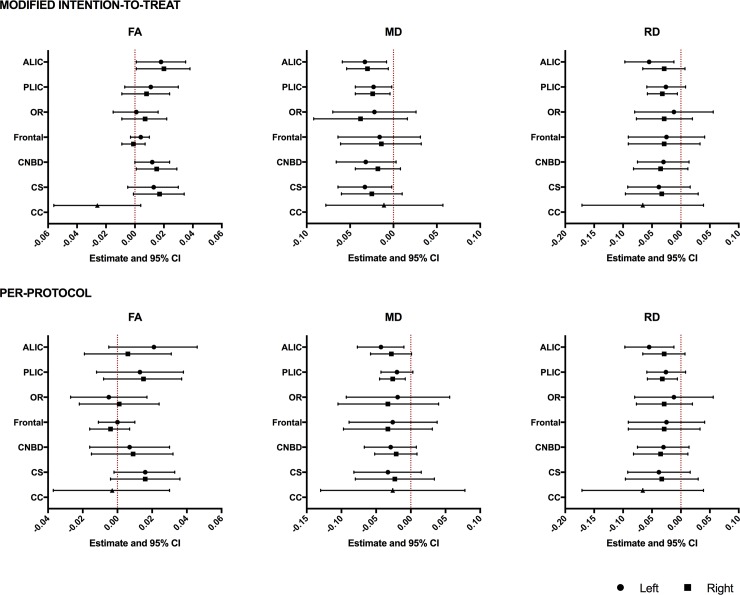
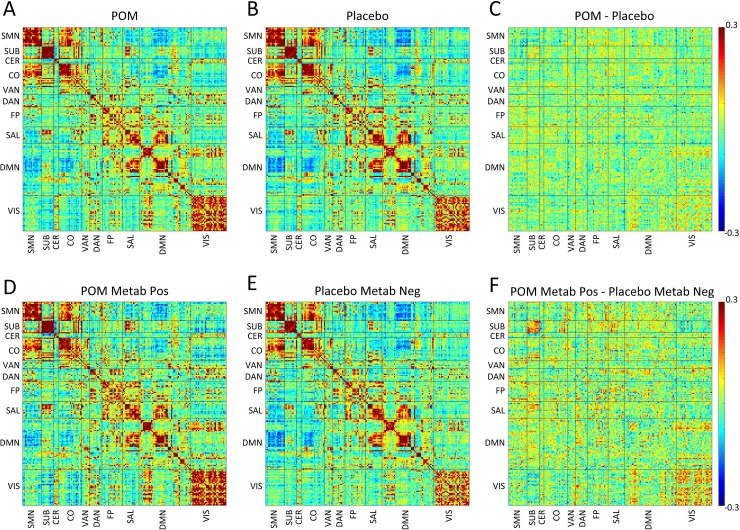
Polyphenol-rich pomegranate juice has been shown to have benefit as a neuroprotectant in animal models of neonatal hypoxic-ischemia. No published studies have investigated maternal polyphenol administration as a potential neuroprotectant in at-risk newborns, such as those with intrauterine growth restriction (IUGR). This was a randomized, placebo-controlled, double-blind pilot study to investigate the impact of maternal pomegranate juice intake in pregnancies with IUGR, on newborn brain structure and function at term-equivalent age (TEA). Mothers with IUGR at 24-34 weeks' gestation were recruited from Barnes-Jewish Hospital obstetrical clinic. Consented mothers were randomized to treatment (8 oz. pomegranate juice) or placebo (8 oz. polyphenol-free juice) and continued to take juice daily from enrollment until delivery (mean 20.1 and 27.1 days, respectively). Infants underwent brain MRI at TEA (36-41 weeks' gestation). Brain measures were compared between groups including: brain injury score, brain metrics, brain volumes, diffusion tensor imaging and resting state functional connectivity. Statistical analyses were undertaken as modified intention-to-treat (including randomized participants who received their allocated intervention and whose infants received brain MRI) and per-protocol (including participants who strictly adhered to the protocol, based on metabolite status). Seventy-seven mothers were randomized to treatment (n = 40) or placebo (n = 37). Of these, 28 and 27 infants, respectively, underwent term-equivalent MRI. There were no group differences in brain injury, metrics or volumes. However, treatment subjects displayed reduced diffusivity within the anterior and posterior limbs of the internal capsule compared with placebo. Resting state functional connectivity demonstrated increased correlation and covariance within several networks in treatment subjects, with alterations most apparent in the visual network in per-protocol analyses. Direct effects on health were not found. In conclusion, maternal pomegranate juice intake in pregnancies with known IUGR was associated with altered white matter organization and functional connectivity in the infant brain, suggesting differences in brain structure and function following in utero pomegranate juice exposure, warranting continued investigation. Clinical trial registration. NCT00788866, registered November 11, 2008, initial participant enrollment August 21, 2012.
富含多酚的石榴汁已被证明具有神经保护作用,可作为新生儿缺氧缺血性损伤的动物模型中的神经保护剂。没有发表的研究调查过母体多酚的给予作为一种潜在的神经保护剂在有风险的新生儿,如宫内生长受限(IUGR)。这是一项随机、安慰剂对照、双盲的初步研究,旨在研究在宫内生长受限的妊娠中,母亲饮用石榴汁对足月时(TEA)新生儿大脑结构和功能的影响。从巴恩斯犹太医院产科诊所招募了 24-34 周妊娠的 IUGR 母亲。同意的母亲被随机分配到治疗组(8 盎司石榴汁)或安慰剂组(8 盎司不含多酚的果汁),并从入组开始每天继续服用果汁直至分娩(平均 20.1 和 27.1 天)。婴儿在 TEA 时进行脑 MRI(36-41 周妊娠)。在两组之间比较脑测量值,包括:脑损伤评分、脑测量值、脑容量、弥散张量成像和静息状态功能连接。统计分析采用修改后的意向治疗(包括接受分配干预的随机参与者和接受脑 MRI 的婴儿)和方案(包括根据代谢物状态严格遵守方案的参与者)进行。77 名母亲被随机分配到治疗组(n = 40)或安慰剂组(n = 37)。其中,分别有 28 名和 27 名婴儿接受了 TEA 时的 MRI。两组之间的脑损伤、测量值或体积均无差异。然而,与安慰剂相比,治疗组的内囊前肢和后肢的弥散度降低。静息状态功能连接显示治疗组内几个网络的相关性和协方差增加,在方案分析中,视觉网络的改变最为明显。没有发现对健康有直接影响。总之,在已知宫内生长受限的妊娠中,母亲饮用石榴汁与婴儿大脑白质组织和功能连接的改变有关,提示宫内暴露于石榴汁后大脑结构和功能的差异,需要进一步研究。临床试验注册。NCT00788866,2008 年 11 月 11 日注册,初始参与者招募 2012 年 8 月 21 日。