College of Biotechnology and Pharmaceutical Engineering, Nanjing Tech University, Nanjing 210009, China.
Oil Production Research Institute, Shengli Oil Field Ltd. Co. SinoPEC, Dongying 257000, China.
Molecules. 2019 Aug 21;24(17):3021. doi: 10.3390/molecules24173021.
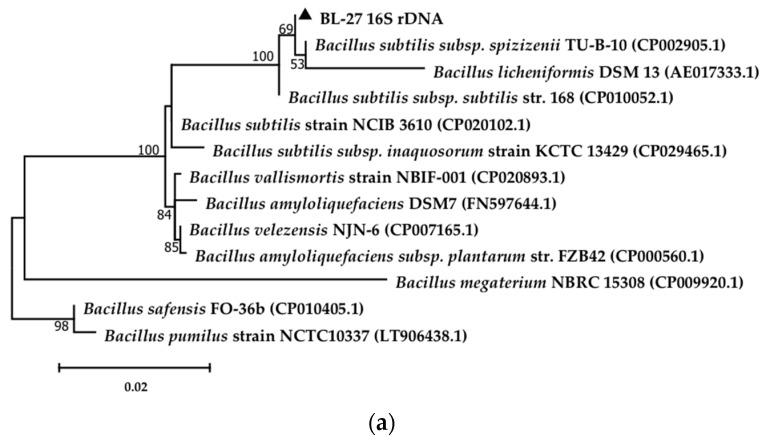
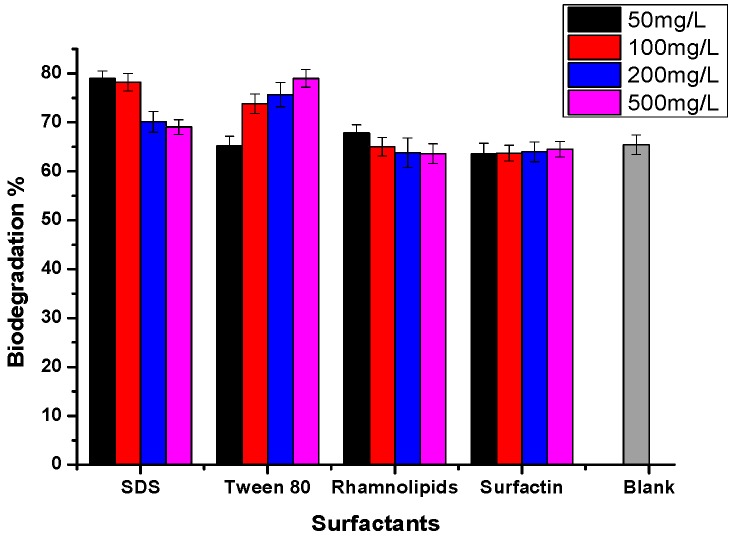
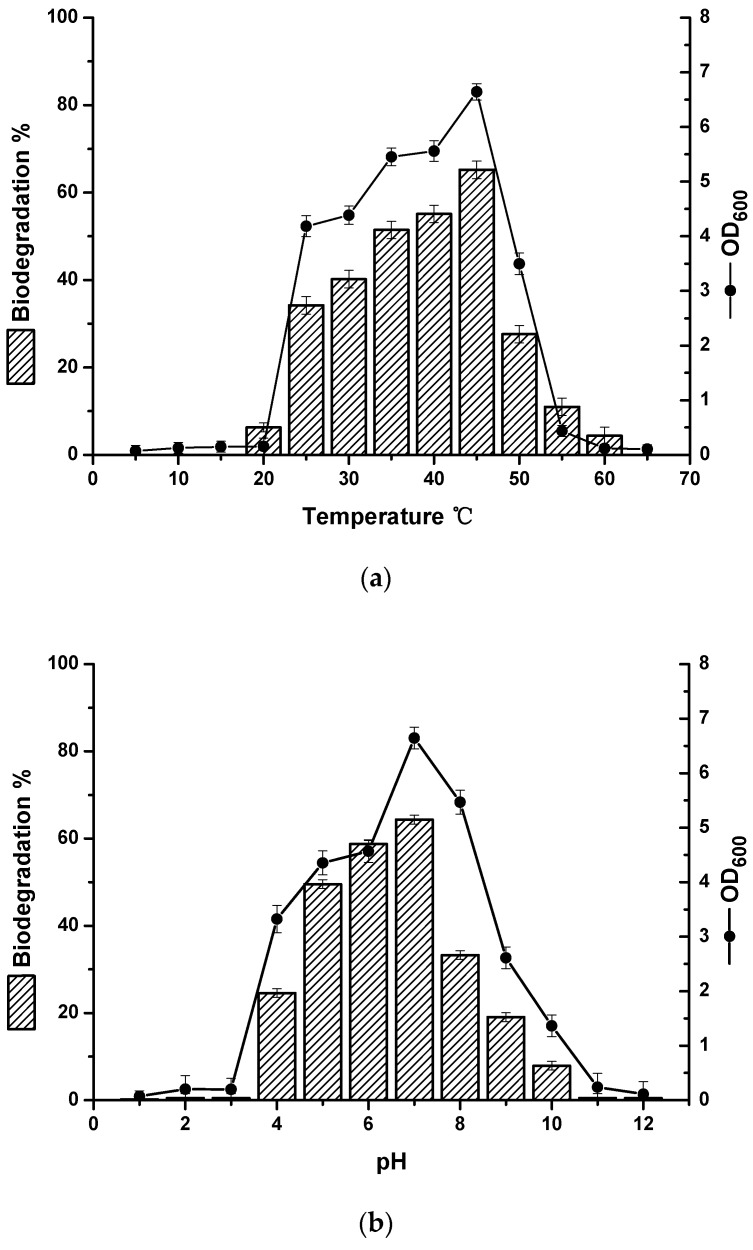
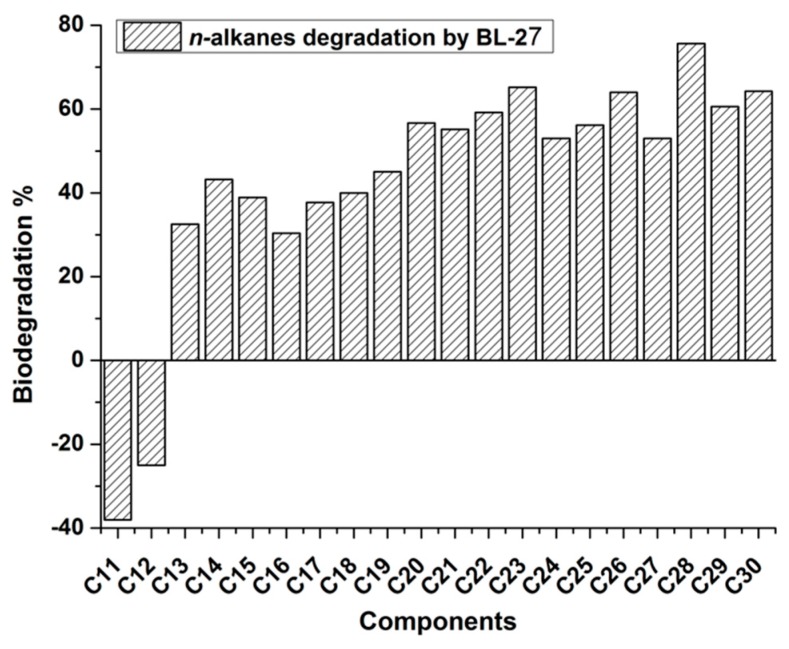
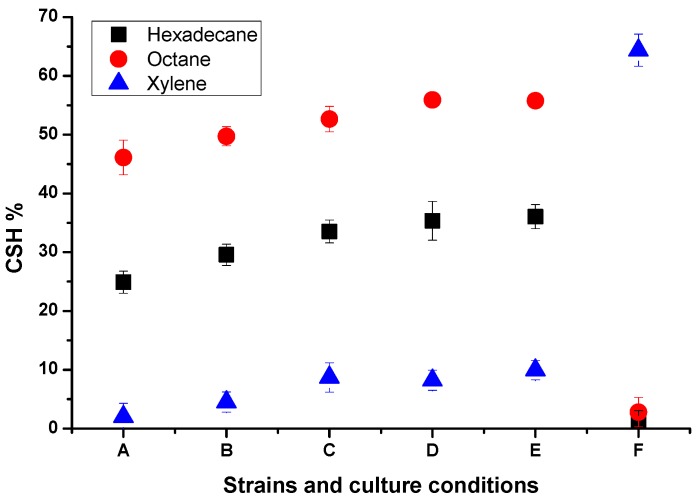
The biodegradation of petroleum hydrocarbons has many potential applications and has attracted much attention recently. The hydrocarbon-degrading bacterium BL-27 was isolated from petroleum-polluted soil and was compounded with surfactants to improve biodegradation. Its 16S rDNA and gene sequences indicated that it was a strain of . Strain BL-27 had extensive adaptability and degradability within a broad range of temperatures (25-50 °C), pH (4.0-10.0) and salinity (0-50 g/L NaCl). Under optimal conditions (45 °C, pH 7.0, 1% NaCl), the strain was able to degrade 65% of crude oil (0.3%, /) within 5 days using GC-MS analysis. Notably, strain BL-27 had weak cell surface hydrophobicity. The adherence rate of BL-27 to -hexadecane was 29.6% with sucrose as carbon source and slightly increased to 33.5% with diesel oil (0.3%, /) as the sole carbon source, indicating that the cell surface of BL-27 is relatively hydrophilic. The strain was tolerant to SDS, Tween 80, surfactin, and rhamnolipids at a concentration of 500 mg/L. The cell surface hydrophobicity reduced more with the addition of surfactants, while the chemical dispersants, SDS (50-100 mg/L) and Tween 80 (200-500 mg/L), significantly increased the strain's ability to biodegrade, reaching 75-80%. These results indicated that BL-27 has the potential to be used for the bioremediation of hydrocarbon pollutants and could have promising applications in the petrochemical industry.
石油烃的生物降解具有许多潜在的应用,最近引起了广泛关注。从石油污染土壤中分离到的烃降解菌 BL-27 与表面活性剂复合,以提高生物降解率。其 16S rDNA 和 基因序列表明它是 的一个菌株。BL-27 菌株在较宽的温度(25-50°C)、pH 值(4.0-10.0)和盐度(0-50 g/L NaCl)范围内具有广泛的适应性和降解能力。在最佳条件(45°C、pH 7.0、1%NaCl)下,该菌株在 5 天内能够降解 65%的原油(0.3%,/),采用 GC-MS 分析。值得注意的是,BL-27 菌株的细胞表面疏水性较弱。以蔗糖为碳源时,BL-27 对 -十六烷的附着率为 29.6%,而以柴油(0.3%,/)为唯一碳源时,附着率略有增加到 33.5%,表明 BL-27 的细胞表面相对亲水。该菌株能耐受浓度为 500mg/L 的 SDS、Tween 80、表面活性剂和鼠李糖脂。随着表面活性剂的添加,细胞表面疏水性降低更多,而化学分散剂 SDS(50-100mg/L)和 Tween 80(200-500mg/L)则显著提高了菌株的生物降解能力,达到 75-80%。这些结果表明,BL-27 具有用于生物修复烃类污染物的潜力,在石化工业中有很好的应用前景。