Department of Vector Biology and Control, Rajendra Memorial Research Institute of Medical Sciences (ICMR), Agamkuan, Patna, 800 007, Bihar, India.
Parasit Vectors. 2019 Aug 22;12(1):409. doi: 10.1186/s13071-019-3670-x.
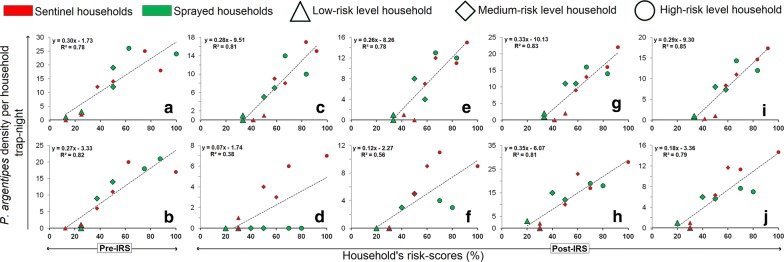
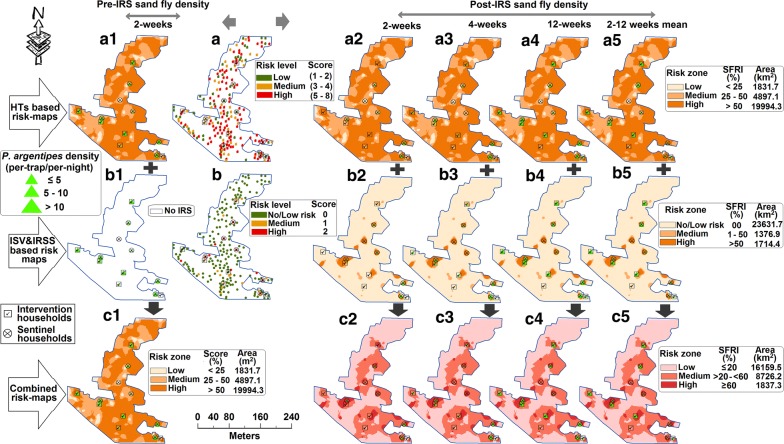
Indoor residual spraying (IRS) is the mainstay for vector control intervention of visceral leishmaniasis (VL) in India. Little is known on the control effects of IRS on different household types. Here, we assessed if IRS with insecticides has an equal residual and interventional effect on all household types in a village. We also developed a combined spatial-risk map and a sand fly, Phlebotomus argentipes density analytical model based on household characteristics, insecticide susceptibility and IRS-status to explore the spatio-temporal distributions of the vector at a micro-scale level.
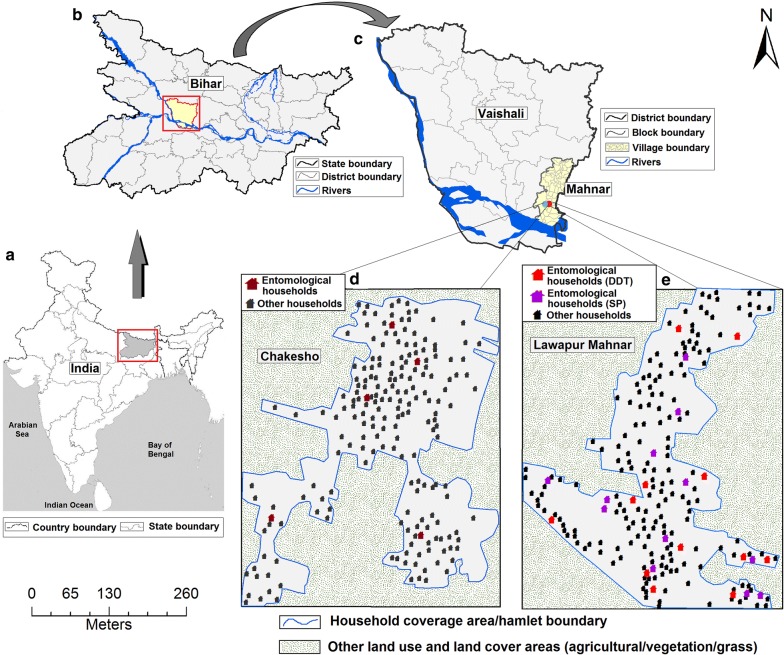
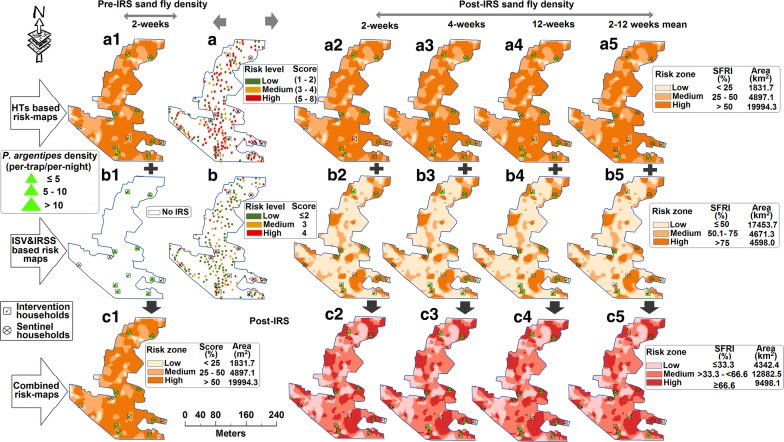
This study was carried out in two villages of Mahnar block in Vaishali district, Bihar. IRS using two insecticides [dichlorodiphenyltrichloroethane (DDT 50%) and synthetic pyrethroid (SP 5%)] was evaluated for VL-vector (P. argentipes) control. Temporal residual efficacy of the insecticides on different wall-surface types was evaluated using the cone-bioassay technique according to WHO guidelines. Insecticide susceptibility of local P. argentipes was explored using the tube-bioassay method. Pre- and post-IRS sand fly densities were monitored in human dwellings and animal shelters using Centers for Disease Control light-traps installed between 18:00-6:00 h. A best-fit model for sand fly density analysis was developed using multiple logistic regression analysis. Geographical information system based spatial analysis techniques were employed to map the household type distribution of insecticide susceptibility of the vector, and IRS-status of the households to interpret the spatio-temporal distributions of P. argentipes.
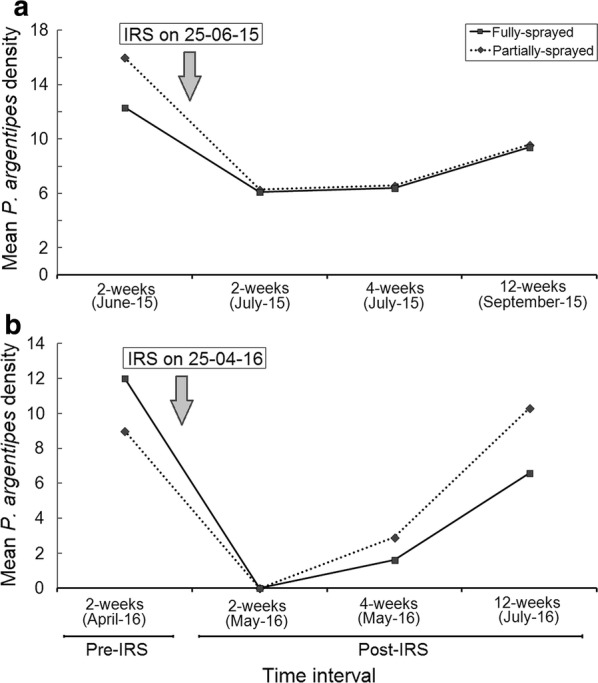
Phlebotomus argentipes was highly susceptible to SP (100%) but showed high resistance to DDT with a 49.1% mortality rate. SP-IRS has been reported as having better community acceptance than DDT-IRS in all household types. Residual efficacies were varied between wall-surfaces; both insecticides failed to achieve the duration of IRS effectiveness recommended by the WHO. Reduction in P. argentipes counts due to SP-IRS was higher than DDT-IRS between household groups (i.e. sprayed and sentinel), in all intervals post-IRS. Combined spatial risk-maps revealed a better control effect of SP-IRS on sand flies than DDT-IRS in all household types risk-zones. The multilevel logistic regression analysis explored five risk-factors that were strongly associated with the density of P. argentipes.
The results contribute to furthering current understanding of IRS-practices for control of visceral leishmaniasis in endemic Bihar, which may help in future actions for improvements.
室内滞留喷洒(IRS)是印度内脏利什曼病(VL)病媒控制干预的主要手段。对于 IRS 对不同家庭类型的控制效果知之甚少。在这里,我们评估了杀虫剂 IRS 是否对一个村庄中的所有家庭类型都具有同等的残留和干预效果。我们还根据家庭特征、杀虫剂敏感性和 IRS 状况开发了一个综合空间风险图和一个沙蝇(Phlebotomus argentipes)密度分析模型,以探索在微观层面上媒介的时空分布。
本研究在比哈尔邦 Vaishali 区 Mahnar 区的两个村庄进行。使用两种杀虫剂[滴滴涕(DDT 50%)和合成拟除虫菊酯(SP 5%)]评估 IRS 对 VL 病媒(P. argentipes)的控制效果。根据世界卫生组织(WHO)的指导方针,使用锥形生物测定技术评估不同壁面类型上杀虫剂的时间残留效果。使用管生物测定法探索当地 P. argentipes 的杀虫剂敏感性。使用安装在 18:00-6:00 小时之间的疾病控制中心诱蚊灯,在人类住宅和动物庇护所中监测 IRS 前后沙蝇的密度。使用多项逻辑回归分析为沙蝇密度分析开发了最佳拟合模型。使用基于地理信息系统的空间分析技术绘制媒介杀虫剂敏感性和家庭 IRS 状况的家庭类型分布图,以解释 P. argentipes 的时空分布。
P. argentipes 对 SP(100%)高度敏感,但对 DDT 表现出高抗性,死亡率为 49.1%。与 DDT-IRS 相比,SP-IRS 在所有家庭类型中都具有更好的社区接受度。壁面之间的残留效果不同;两种杀虫剂都未能达到世界卫生组织推荐的 IRS 有效持续时间。SP-IRS 导致 P. argentipes 数量减少的幅度高于 DDT-IRS,在 IRS 后所有间隔内,在家庭组(即喷洒和哨兵)之间。综合空间风险图显示,与 DDT-IRS 相比,SP-IRS 对所有家庭类型风险区域的沙蝇具有更好的控制效果。多层次逻辑回归分析探索了与 P. argentipes 密度密切相关的五个风险因素。
这些结果有助于进一步了解比哈尔邦流行地区 IRS 控制内脏利什曼病的实践,这可能有助于未来的改进措施。