International Centre for Diarrhoea Disease Research, Bangladesh (icddr,b), Dhaka, Bangladesh.
National Institute of Preventive and Social Medicine (NIPSOM), Mohakhali, Dhaka, Bangladesh.
PLoS Negl Trop Dis. 2018 Oct 1;12(10):e0006846. doi: 10.1371/journal.pntd.0006846. eCollection 2018 Oct.
Visceral leishmaniasis (VL) in the Indian subcontinent is a fatal disease if left untreated. Between 1994 to 2013, the Ministry of Health of Bangladesh reported 1,09,266 cases of VL and 329 VL related deaths in 37 endemic districts. Indoor residual spraying (IRS) using dichlorodiphenyltrichloroethane (DDT) was used by the national programme in the 1960s to control malaria. Despite findings of research trials demonstrating that the synthetic pyrethroid deltamethrin 5 WP was very effective at reducing vector densities, no national VL vector control operations took place in Bangladesh between 1999 to early 2012. In 2012, IRS using deltamethrin 5 WP was re-introduced by the national programme, which consisted of pre-monsoon spraying in eight highly endemic sub-districts (upazilas). The present study aims to evaluate the effectiveness of IRS on VL vectors, as well as the process and performance of the spraying activities by national programme staff.
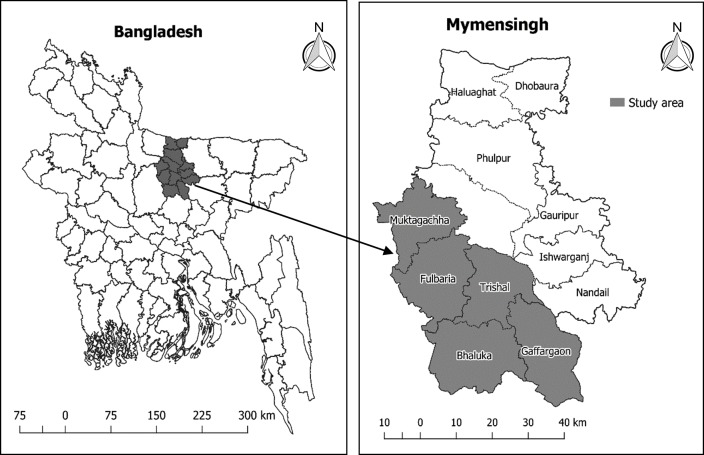
Five highly endemic upazilas of Mymensingh district were purposively selected (Fulbaria, Trishal, Mukthagacha, Gaforgaon and Bhaluka) to conduct the present study using the WHO/TDR monitoring and evaluation tool kit. IRS operations, conducted by 136 squads/teams, and 544 spraymen, were observed using check lists and questionnaires included in the WHO/TDR monitoring and evaluation tool kit. A household (HH) acceptability survey of IRS was conducted in all study areas using a structured questionnaire in 600 HHs. To measure the efficacy of IRS, pre-IRS (two weeks prior) and post-IRS (at one and five months after), vector density was measured using CDC light traps for two consecutive nights. Bioassays, using the WHO cone-method, were carried out in 80 HHs (40 sprayed and 40 unsprayed) to measure the effectiveness of the insecticide on sprayed surfaces.
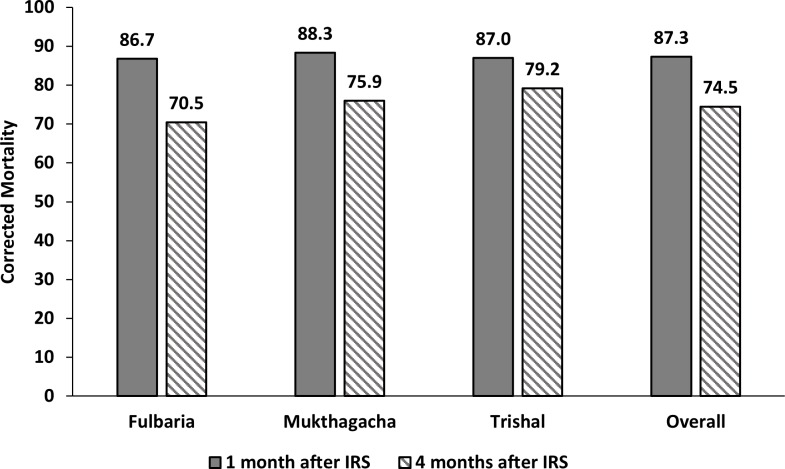
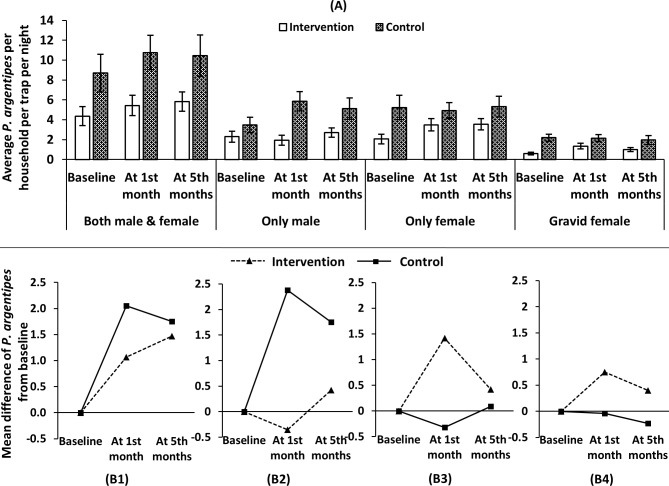
Of the 544 spraymen interviewed pre-IRS, 60%, 3% and 37% had received training for one, two and three days respectively. During spraying activities, 64% of the spraying squads had a supervisor in 4 upazilas but only one upazila (Mukthagacha) achieved 100% supervision of squads. Overall, 72.8% of the spraying squads in the study upazilas had informed HHs members to prepare their houses prior to spraying. The required personal protective equipment was not provided by the national programme during our observations and the spraying techniques used by all sprayers were sub-standard compared to the standard procedure mentioned in the M&E toolkit. In the HH interviews, 94.8% of the 600 respondents said that all their living rooms and cattle sheds had been sprayed. Regarding the effectiveness measurements (i.e. reduction of vector densities), a total of 4132 sand flies were trapped in three intervals, of which 3310 (80.1%) were P. argentipes; 46.5% (1540) males and 53.5% (1770) females. At one month post-IRS, P. argentipes densities were reduced by 22.5% but the 5 months post-IRS reduction was only 6.4% for both male and female. The bioassay tests showed a mean corrected mortality of P. argentipes sand flies at one month post-IRS of 87.3% which dropped to 74.5% at 4 months post-IRS in three upazilas, which is below the WHO threshold level (80%).
The national programme should conduct monitoring and evaluation activities to ensure high quality of IRS operations as a pre-condition for achieving a fast and sustained reduction in vector densities. This will continue to be important during the maintenance phase of VL elimination on the Indian subcontinent. Further research is needed to determine other suitable vector control option(s) when the case numbers are very low.
如果不加治疗,印度次大陆的内脏利什曼病(VL)是一种致命疾病。1994 年至 2013 年期间,孟加拉国卫生部报告了 109266 例 VL 病例和 37 个流行地区的 329 例 VL 相关死亡病例。20 世纪 60 年代,国家规划使用滴滴涕(DDT)进行室内滞留喷洒(IRS)来控制疟疾。尽管研究试验发现合成拟除虫菊酯氯菊酯 5 WP 非常有效地降低了病媒密度,但在 1999 年至 2012 年初期间,孟加拉国没有进行任何国家 VL 病媒控制行动。2012 年,国家规划重新引入了氯菊酯 5 WP 的 IRS,该计划包括在八个高度流行的分区(upazilas)进行季风前喷洒。本研究旨在评估 IRS 对 VL 病媒的有效性,以及国家规划工作人员进行喷洒活动的过程和绩效。
选择了迈门辛区的五个高度流行的分区(Fulbaria、Trishal、Mukthagacha、Gaforgaon 和 Bhaluka)进行本研究,使用世界卫生组织/TDR 监测和评估工具包。观察了由 136 个小组/团队进行的 IRS 作业,以及由 544 名喷雾器进行的作业,使用包括在世界卫生组织/TDR 监测和评估工具包中的检查表和问卷进行了观察。在所有研究区域,使用结构化问卷对 600 个家庭(HH)进行了 IRS 接受度调查。为了测量 IRS 的效果,在预 IRS(两周前)和后 IRS(一个月和五个月后)期间,使用 CDC 光阱连续两晚测量了病媒密度。在 80 个 HH(40 个喷洒和 40 个未喷洒)中进行了 WHO 锥形法的生物测定,以测量杀虫剂对喷洒表面的效果。
在接受 IRS 前采访的 544 名喷雾器中,60%、3%和 37%分别接受了为期一天、两天和三天的培训。在喷洒活动期间,4 个分区中有 64%的喷洒小组有一名监督员,但只有一个分区(Mukthagacha)实现了对小组的 100%监督。总体而言,研究分区中 72.8%的喷洒小组通知 HH 成员在喷洒前准备好他们的房屋。国家规划在我们的观察中没有提供所需的个人防护设备,而且所有喷雾器使用的喷洒技术都低于 M&E 工具包中提到的标准程序。在 HH 访谈中,600 名受访者中有 94.8%表示,他们所有的客厅和牛棚都已喷洒。关于效果测量(即病媒密度的降低),在三个间隔内共捕获了 4132 只沙蝇,其中 3310 只为 P. argentipes;雄性 46.5%(1540),雌性 53.5%(1770)。IRS 后一个月,P. argentipes 的密度降低了 22.5%,但 IRS 后五个月,雄性和雌性的密度仅降低了 6.4%。生物测定试验表明,IRS 后一个月 P. argentipes 沙蝇的平均校正死亡率为 87.3%,而在三个分区中,IRS 后四个月的死亡率下降至 74.5%,低于世界卫生组织的阈值(80%)。
国家规划应开展监测和评估活动,确保 IRS 作业的高质量,作为快速和持续降低病媒密度的前提条件。这在印度次大陆 VL 消除的维护阶段将继续非常重要。当病例数量非常少时,需要进一步研究确定其他合适的病媒控制选项。