Candelo Estephania, Caicedo Gabriela, Rosso Fernando, Ballesteros Adriana, Orrego Jaime, Escobar Luis, Lapunzina Pablo, Nevado Julían, Pachajoa Harry
Center for Research on Congenital Anomalies and Rare Diseases (CIACER), Department of Basic Medical Sciences, Universidad Icesi, Cali, Colombia.
MSc Biomaterials and Tissues Engineering and Genetics of Human Diseases, University College London, London, UK.
Appl Clin Genet. 2019 Jul 30;12:141-150. doi: 10.2147/TACG.S190661. eCollection 2019.
Zika virus (ZIKV) is a little-known emerging mosquito-borne flavivirus. The perinatal ZIKV infection was associated with birth defects during the Brazilian outbreak. There was an increased risk of intrauterine transmission of the virus and a marked increase in the number of newborns with microcephaly. We report on two such cases.
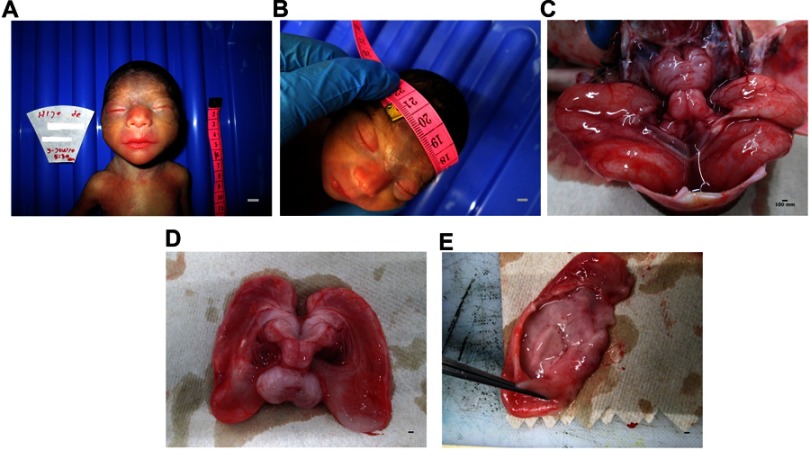
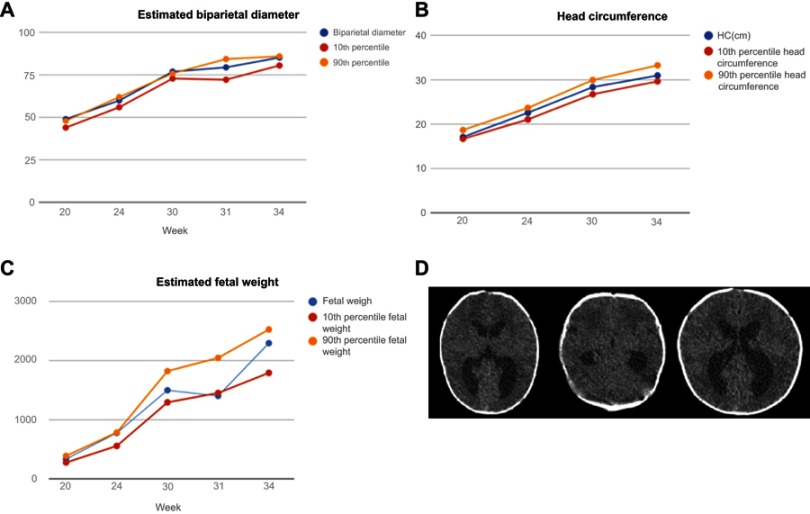
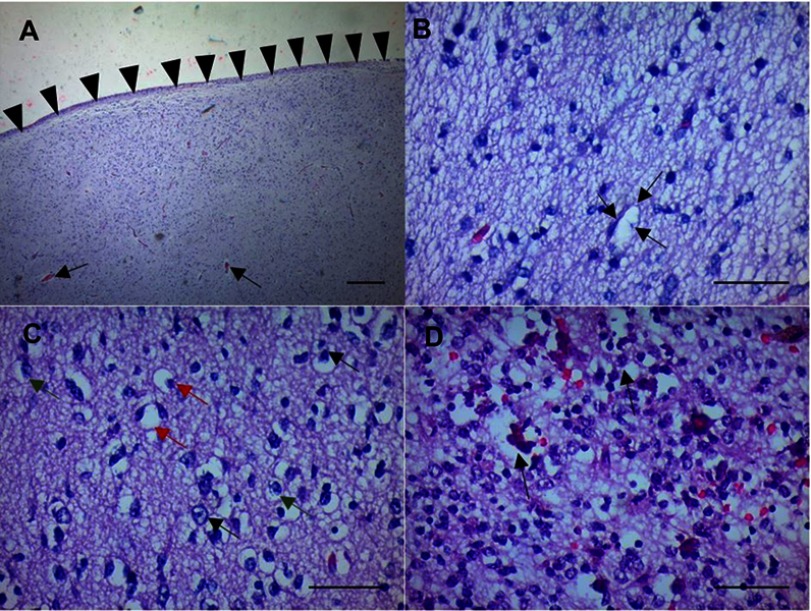
The first case was a 25-year-old pregnant woman from Colombia who became acutely ill with general symptoms during the tenth week of gestation, followed by severe generalized itching and maculopapular rash for approximately five days. This case was reported during the epidemic stage of the ZIKV infection in Colombia. At 23.3 gestational weeks, ultrasonography showed abnormal intracranial anatomy with cerebral ventriculomegaly, microcephaly, and parenchymal calcification. Given the grave prognosis, the patient elected to terminate the pregnancy at 25 gestational weeks. The second case was a 24-year-old pregnant woman who became acutely ill during the 17th week of gestation, which corresponded with the ZIKV epidemic in Colombia. At 30.5 gestational weeks, ultrasonography showed isolated fetal cerebral ventriculomegaly. We detected ZIKV in the amniotic fluid; however, the virus was not detected in the urine or serum of the mother or fetus. Tests for dengue virus, chikungunya virus, Toxoplasma gondii, rubella virus, cytomegalovirus, herpes simplex virus, HIV, hepatitis B and C, and parvovirus B19 were all negative. Different samples obtained from the placenta, amniotic liquid, and cerebrospinal fluid were positive for viral isolation of ZIKV RNA using TaqMan RT-PCR. Additionally, the parents and fetuses were tested for genetic diseases using whole exome sequencing and array CGH to rule out possible genetic syndromes that produce these congenital abnormalities.
These were the first cases in Colombia to show early vertical transmission of ZIKV and the first cases associated with congenital cerebral abnormalities in which molecular, infectious, and genomic tests were performed.
寨卡病毒(ZIKV)是一种鲜为人知的、通过蚊子传播的黄病毒。在巴西疫情期间,围产期寨卡病毒感染与出生缺陷有关。病毒的宫内传播风险增加,小头畸形新生儿数量显著增多。我们报告两例此类病例。
首例病例为一名来自哥伦比亚的25岁孕妇,在妊娠第10周时出现急性病,伴有全身症状,随后出现严重的全身性瘙痒和斑丘疹,持续约五天。该病例在哥伦比亚寨卡病毒感染的流行阶段被报告。在妊娠23.3周时,超声检查显示颅内解剖结构异常,伴有脑室扩大、小头畸形和实质钙化。鉴于预后严重,患者选择在妊娠25周时终止妊娠。第二例病例为一名24岁孕妇,在妊娠第17周时出现急性病,这与哥伦比亚的寨卡病毒疫情相符。在妊娠30.5周时,超声检查显示孤立性胎儿脑室扩大。我们在羊水内检测到寨卡病毒;然而,在母亲或胎儿的尿液或血清中未检测到该病毒。登革病毒、基孔肯雅病毒、弓形虫、风疹病毒、巨细胞病毒、单纯疱疹病毒、人类免疫缺陷病毒、乙型和丙型肝炎病毒以及细小病毒B19的检测均为阴性。使用TaqMan RT-PCR从胎盘、羊水和脑脊液中获取的不同样本进行寨卡病毒RNA的病毒分离检测均呈阳性。此外,使用全外显子测序和阵列比较基因组杂交技术对父母和胎儿进行遗传疾病检测,以排除可能导致这些先天性异常的遗传综合征。
这些是哥伦比亚首例显示寨卡病毒早期垂直传播的病例,也是首例与先天性脑部异常相关且进行了分子、感染性和基因组检测的病例。