Nishida Keiichiro, Koshikawa Yosuke, Morishima Yosuke, Yoshimura Masafumi, Katsura Koji, Ueda Satsuki, Ikeda Shunichiro, Ishii Ryouhei, Pascual-Marqui Roberto, Kinoshita Toshihiko
Department of Neuropsychiatry, Kansai Medical University, Osaka, Japan.
Division of Systems Neuroscience of Psychopathology, Translational Research Center, University Hospital of Psychiatry, University of Bern, Bern, Switzerland.
Front Hum Neurosci. 2019 Aug 8;13:266. doi: 10.3389/fnhum.2019.00266. eCollection 2019.
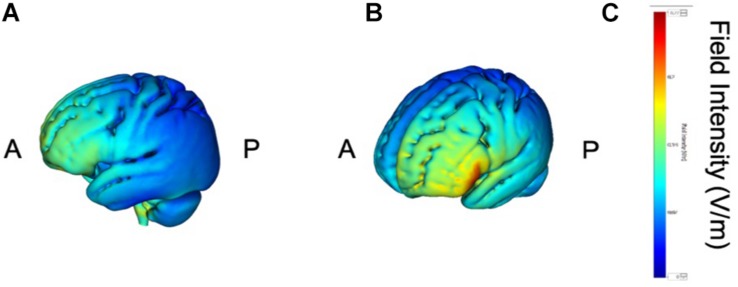
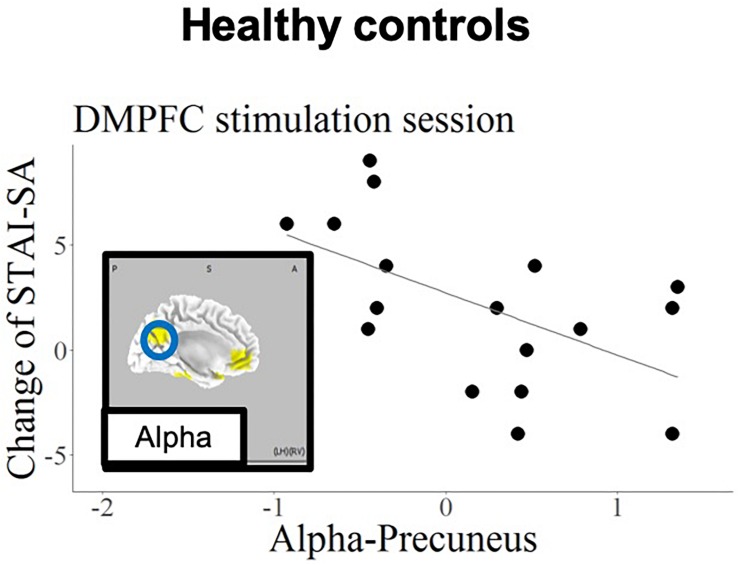
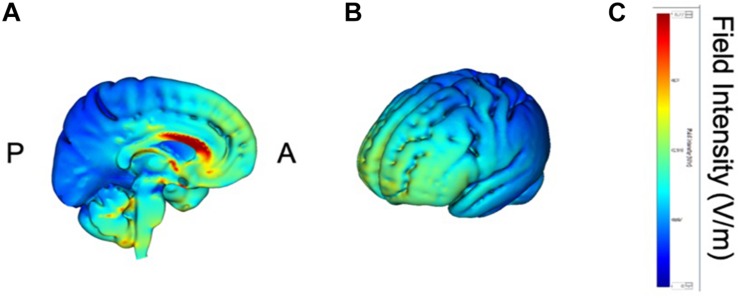
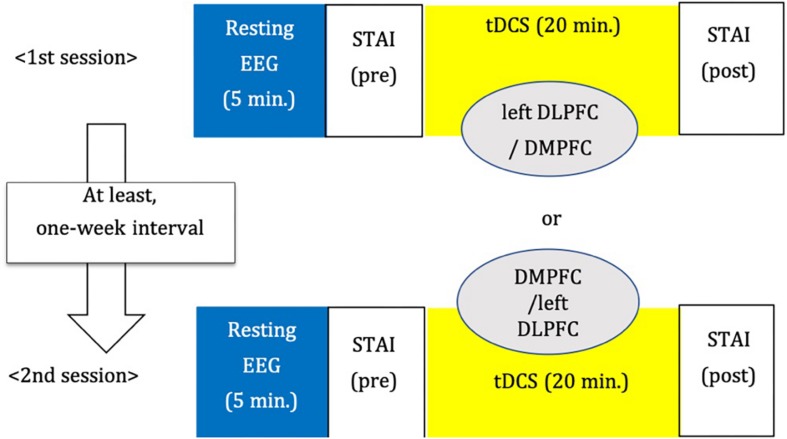
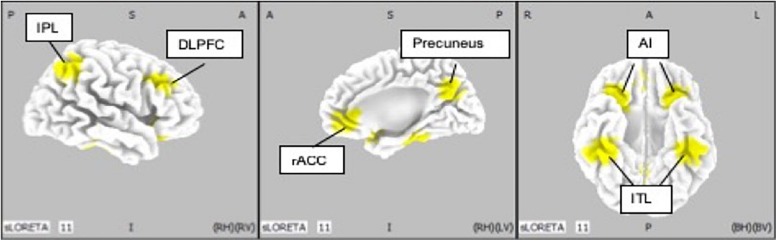
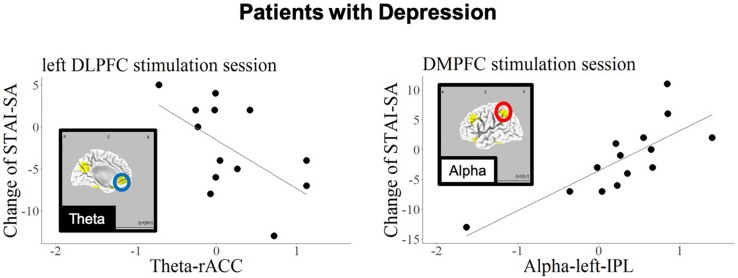
Transcranial direct current stimulation is a promising neuromodulation method for treating depression. However, compared with pharmacological treatment, previous studies have reported that a relatively limited proportion of patients respond to tDCS treatment. In addition, the neurophysiological mechanisms underlying tDCS treatment remain unclear, making it difficult to identify response predictors for tDCS treatment based on neurophysiological function. Because treatment effects are achieved by repetitive application of tDCS, studying the immediate effects of tDCS in depressive patients could extend understanding of its treatment mechanisms. However, immediate changes in a single session of tDCS are not well documented. Thus, in the current study, we focused on the immediate impact of tDCS and its association with pre-stimulus brain activity. To address this question, we applied anodal tDCS to the left dorsolateral prefrontal cortex (DLPFC) or dorsomedial prefrontal cortex (DMPFC) in 14 patients with major depressive disorder (MDD) and 19 healthy controls (HCs), at an intensity of 1.0 mA for 20 min in a single session. To evaluate anxiety, the state trait anxiety inventory was completed before and after tDCS. We recorded resting electroencephalography before tDCS, and calculated electrical neuronal activity in the theta and alpha frequency bands using standardized low-resolution electromagnetic tomography. We found that, during application of left DLPFC tDCS to patients with MDD, the anxiety reduction effect of tDCS was related to higher baseline theta-band activity in the rostral anterior cingulate cortex (rACC) and no medication with benzodiazepine used as hypnotic. For DMPFC stimulation in MDD, the anxiety reduction effect was associated with lower baseline alpha-band activity in the left inferior parietal lobule. In contrast, in HCs, the anxiety reduction effect was associated with higher baseline alpha activity in the precuneus during DMPFC stimulation. The current results suggest that the association between pre-tDCS brain activity and the anxiety reduction effect of tDCS depends on psychopathology (depressed or non-depressed) as well as the site of stimulation (DMPFC or left DLPFC) and insomnia. Furthermore, the results suggest that tDCS response might be associated with baseline resting state electrophysiological neural activity.
经颅直流电刺激是一种很有前景的治疗抑郁症的神经调节方法。然而,与药物治疗相比,先前的研究报告称,对经颅直流电刺激治疗有反应的患者比例相对有限。此外,经颅直流电刺激治疗的神经生理机制仍不清楚,这使得难以根据神经生理功能确定经颅直流电刺激治疗的反应预测指标。由于治疗效果是通过重复应用经颅直流电刺激来实现的,研究经颅直流电刺激对抑郁症患者的即时效应可能会扩展对其治疗机制的理解。然而,单次经颅直流电刺激的即时变化记录并不充分。因此,在本研究中,我们关注经颅直流电刺激的即时影响及其与刺激前大脑活动的关联。为了解决这个问题,我们对14例重度抑郁症(MDD)患者和19例健康对照(HCs)的左侧背外侧前额叶皮质(DLPFC)或背内侧前额叶皮质(DMPFC)施加阳极经颅直流电刺激,强度为1.0 mA,单次刺激20分钟。为了评估焦虑,在经颅直流电刺激前后完成状态特质焦虑量表。我们在经颅直流电刺激前记录静息脑电图,并使用标准化低分辨率电磁断层扫描计算θ和α频段的电神经元活动。我们发现,在对MDD患者施加左侧DLPFC经颅直流电刺激期间,经颅直流电刺激的焦虑减轻效果与喙前扣带回皮质(rACC)较高的基线θ频段活动以及未使用苯二氮䓬类药物作为催眠药有关。对于MDD患者的DMPFC刺激,焦虑减轻效果与左侧顶下小叶较低的基线α频段活动有关。相比之下,在HCs中,DMPFC刺激期间的焦虑减轻效果与楔前叶较高的基线α活动有关。当前结果表明,经颅直流电刺激前大脑活动与经颅直流电刺激的焦虑减轻效果之间的关联取决于精神病理学状态(抑郁或非抑郁)以及刺激部位(DMPFC或左侧DLPFC)和失眠情况。此外,结果表明经颅直流电刺激反应可能与基线静息态电生理神经活动有关。