Statucka Marta, Cohn Melanie
Krembil Brain Institute, Toronto Western Hospital UHN, Toronto, ON, Canada.
Department of Psychology, University of Toronto, Toronto, ON, Canada.
Front Hum Neurosci. 2019 Aug 8;13:269. doi: 10.3389/fnhum.2019.00269. eCollection 2019.
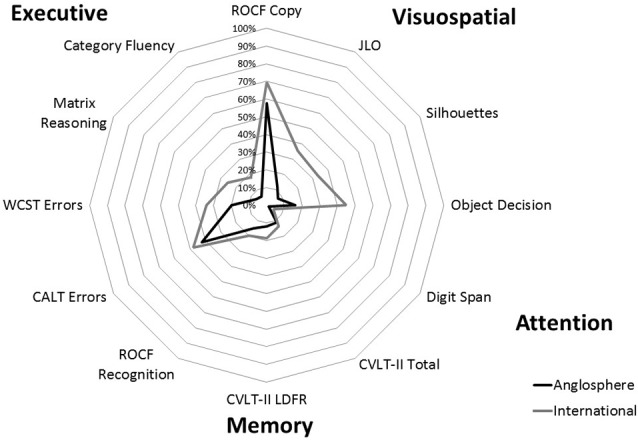
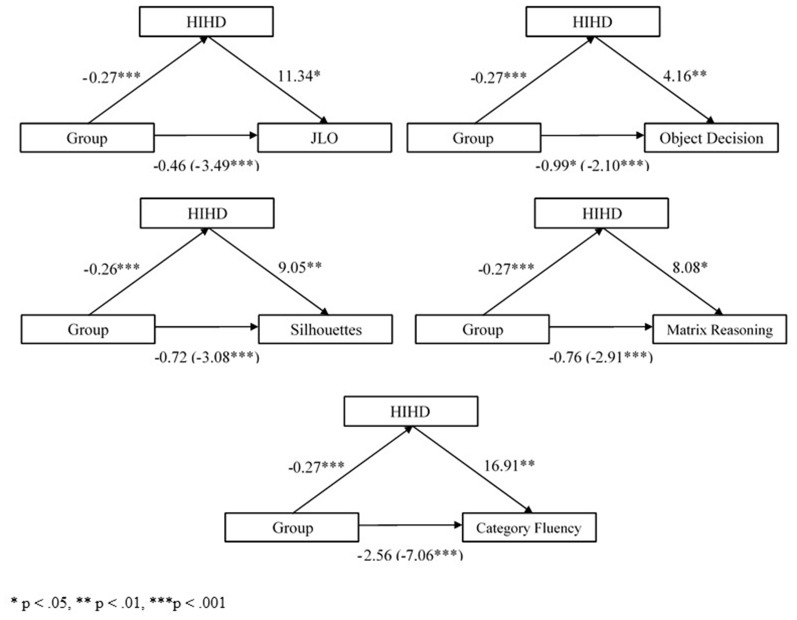
Cognitive decline is common in Parkinson's disease (PD), and precise cognitive assessment is important for diagnosis, prognosis, and treatment. To date, there are no studies in PD investigating cultural bias on neuropsychological tests. Clinical practice in multicultural societies such as, Toronto Canada where nearly half of the population is comprised of first generation immigrants, presents important challenges as most neuropsychological tools were developed in Anglosphere cultures (e.g., USA, UK) and normed in more homogeneous groups. We examine total scores and rates of deficits on tests of visuoperceptual/visuospatial, attention, memory, and executive functions in Canadians with PD born in Anglosphere countries ( = 248) vs. in Canadians with PD born in other regions (International group; = 167). The International group shows lower scores and greater rates of deficits on all visuoperceptual and some executive function tasks, but not on attention or memory measures. These biases are not explained by demographic and clinical variables as groups were comparable. Age at immigration, years in Canada, and English proficiency also do not account for the observed biases. In contrast, group differences are strongly mediated by the Historical Index of Human Development of the participants' country of birth, which reflects economic, health, and educational potential of a country at the time of birth. In sum, our findings demonstrate lasting biases on neuropsychological tests despite significant exposure to, and participation in, Canadian culture. These biases are most striking on visuoperceptual measures and non-verbal executive tasks which many clinicians still considered to be "culture-fair" despite the growing evidence from the field of cross-cultural neuropsychology to the contrary. Our findings also illustrate that socio-development context captures important aspects of culture that relate to cognition, and have important implications for clinical practice.
认知功能衰退在帕金森病(PD)中很常见,精确的认知评估对诊断、预后及治疗都很重要。迄今为止,尚无针对帕金森病患者神经心理测试中文化偏差的研究。在多元文化社会中开展临床实践,比如在加拿大多伦多,近一半人口是第一代移民,这带来了重大挑战,因为大多数神经心理测试工具是在英语文化圈国家(如美国、英国)开发的,且常模是在更同质化的群体中建立的。我们比较了出生于英语文化圈国家的加拿大帕金森病患者(n = 248)与出生于其他地区的加拿大帕金森病患者(国际组;n = 167)在视觉感知/视觉空间、注意力、记忆及执行功能测试中的总分及缺陷率。国际组在所有视觉感知任务及部分执行功能任务上得分更低、缺陷率更高,但在注意力或记忆测试中并非如此。这些偏差无法用人口统计学和临床变量来解释,因为两组具有可比性。移民年龄、在加拿大居住的年限以及英语熟练程度也无法解释所观察到的偏差。相反,群体差异很大程度上由参与者出生国的人类发展历史指数所介导,该指数反映了一个国家在出生时的经济、健康和教育潜力。总之,我们的研究结果表明,尽管大量接触并融入了加拿大文化,但神经心理测试中仍存在持续的偏差。这些偏差在视觉感知测试和非语言执行任务中最为明显,尽管跨文化神经心理学领域越来越多的证据表明并非如此,但许多临床医生仍认为这些测试是“文化公平”的。我们的研究结果还表明,社会发展背景捕捉到了与认知相关的文化重要方面,对临床实践具有重要意义。