Department of Molecular Genetics, Weizmann Institute of Science, Rehovot, Israel.
Abteilung für Molekulare Genetik, Institut für Mikrobiologie und Genetik, Göttinger Zentrum für Molekulare Biowissenschaften (GZMB), Georg-August Universität Göttingen, Göttingen, Germany.
PLoS Biol. 2019 Aug 23;17(8):e3000423. doi: 10.1371/journal.pbio.3000423. eCollection 2019 Aug.
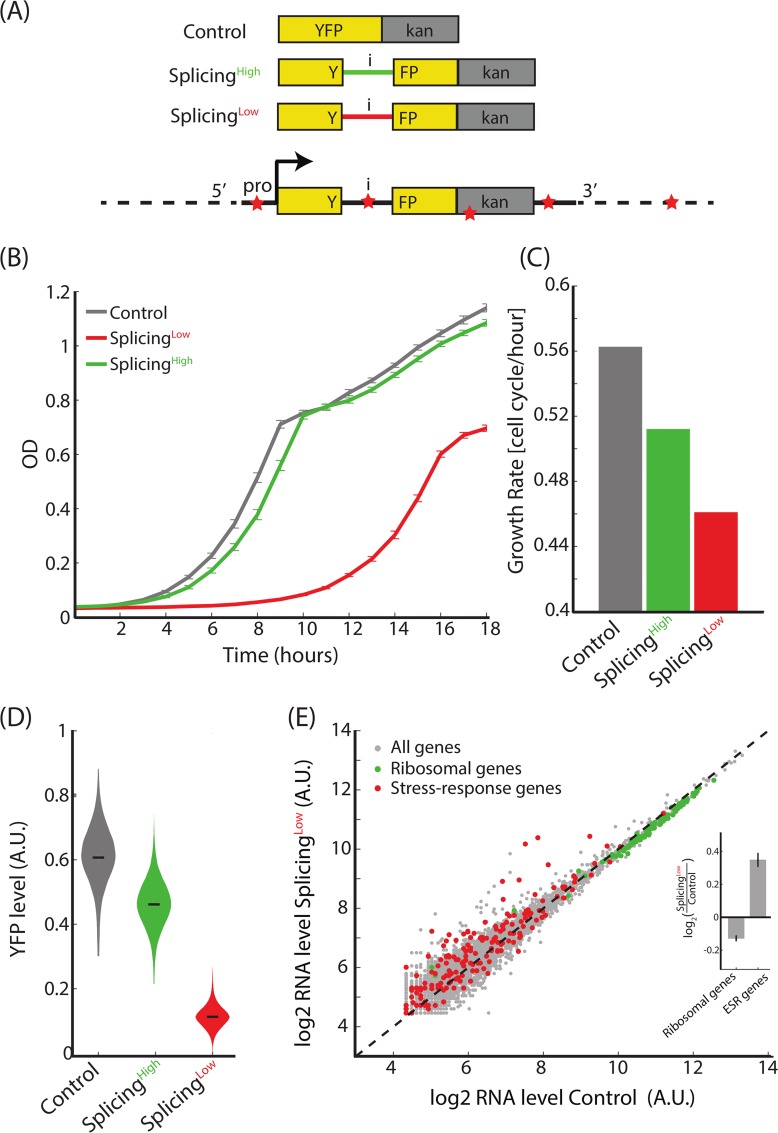
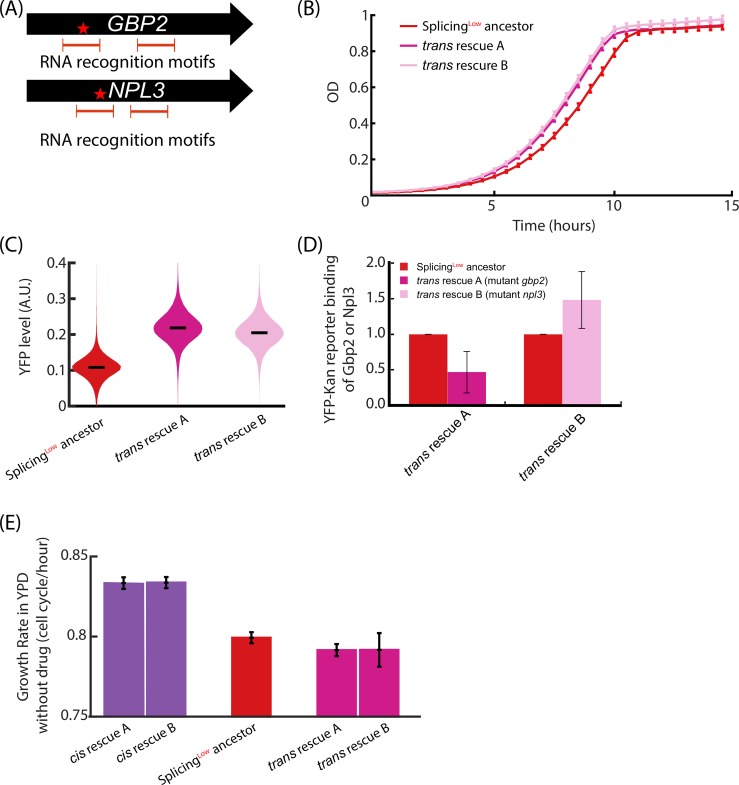
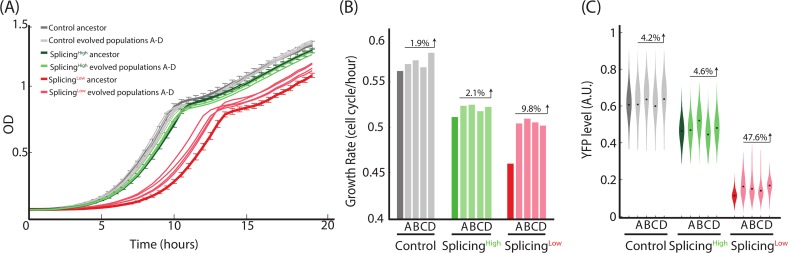
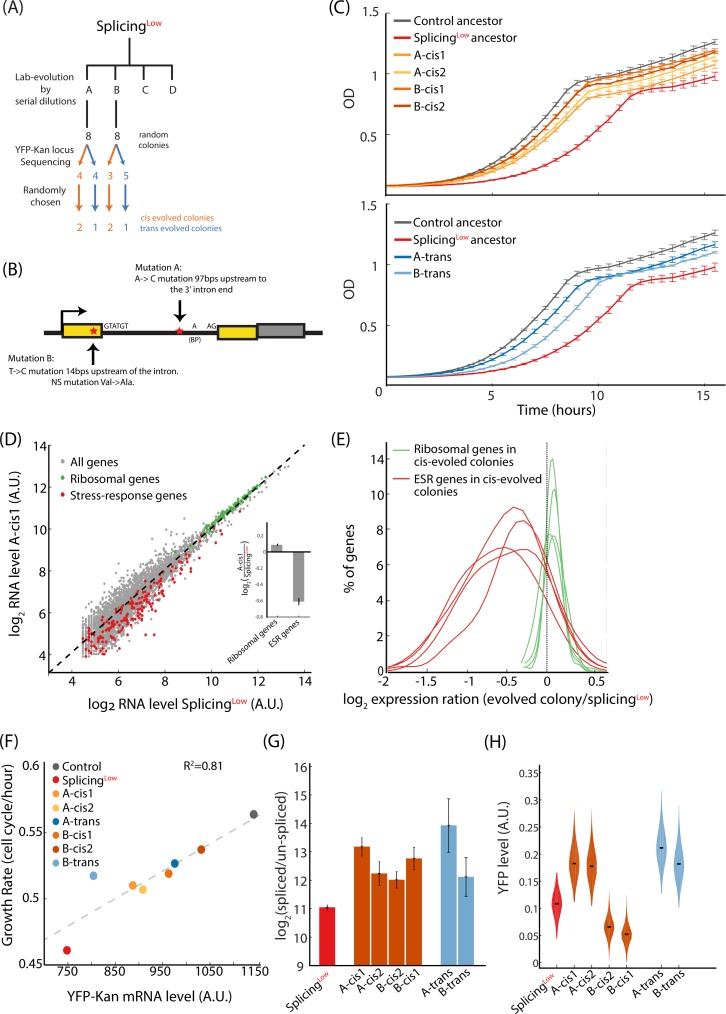
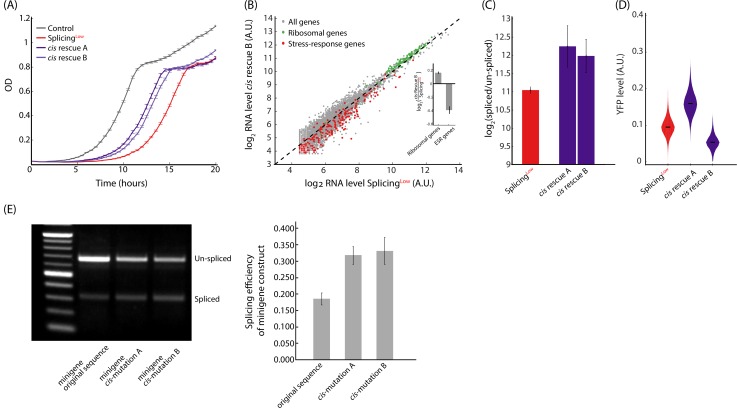
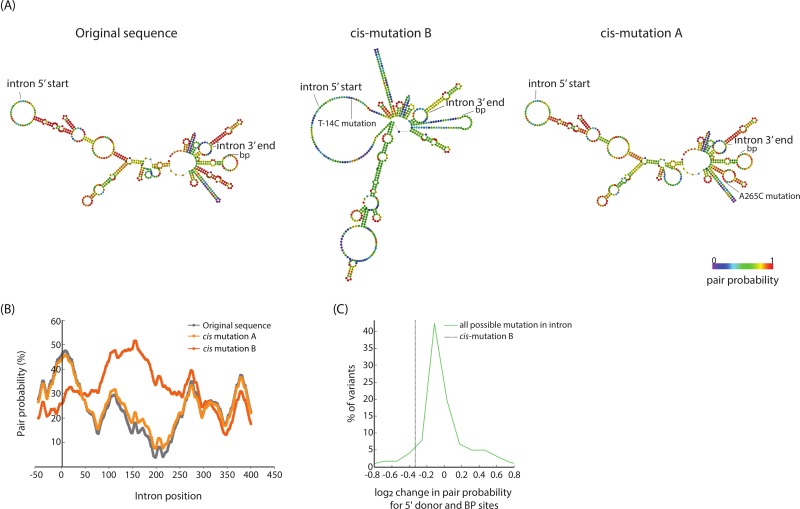
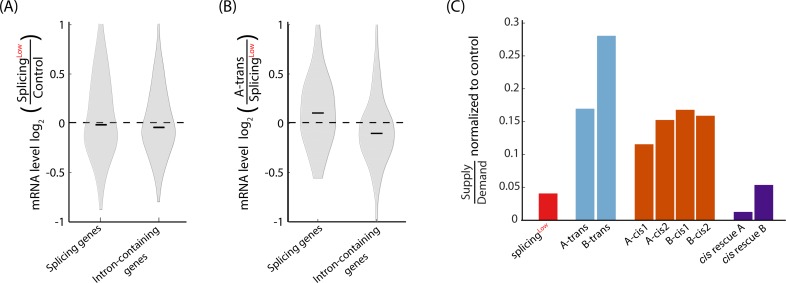
Splicing expands, reshapes, and regulates the transcriptome of eukaryotic organisms. Despite its importance, key questions remain unanswered, including the following: Can splicing evolve when organisms adapt to new challenges? How does evolution optimize inefficiency of introns' splicing and of the splicing machinery? To explore these questions, we evolved yeast cells that were engineered to contain an inefficiently spliced intron inside a gene whose protein product was under selection for an increased expression level. We identified a combination of mutations in Cis (within the gene of interest) and in Trans (in mRNA-maturation machinery). Surprisingly, the mutations in Cis resided outside of known intronic functional sites and improved the intron's splicing efficiency potentially by easing tight mRNA structures. One of these mutations hampered a protein's domain that was not under selection, demonstrating the evolutionary flexibility of multi-domain proteins as one domain functionality was improved at the expense of the other domain. The Trans adaptations resided in two proteins, Npl3 and Gbp2, that bind pre-mRNAs and are central to their maturation. Interestingly, these mutations either increased or decreased the affinity of these proteins to mRNA, presumably allowing faster spliceosome recruitment or increased time before degradation of the pre-mRNAs, respectively. Altogether, our work reveals various mechanistic pathways toward optimizations of intron splicing to ultimately adapt gene expression patterns to novel demands.
剪接扩展、重塑和调节真核生物的转录组。尽管其重要性不言而喻,但仍有一些关键问题尚未得到解答,包括以下问题:当生物体适应新的挑战时,剪接能否进化?进化如何优化内含子剪接和剪接机制的效率低下?为了探索这些问题,我们进化了酵母细胞,这些细胞被设计成在一个基因内含有一个剪接效率低下的内含子,而这个基因的蛋白质产物受到选择,以增加表达水平。我们在顺式(在感兴趣的基因内)和反式(在 mRNA 成熟机制中)鉴定了一组突变。令人惊讶的是,顺式中的突变位于已知内含子功能位点之外,并通过减轻紧密的 mRNA 结构提高了内含子的剪接效率。这些突变之一阻碍了一个不在选择下的蛋白质的结构域,证明了多结构域蛋白质的进化灵活性,因为一个结构域的功能得到了改善,而另一个结构域的功能则受到了损害。反式适应位于两个结合 pre-mRNA 并对其成熟至关重要的蛋白质 Npl3 和 Gbp2 中。有趣的是,这些突变要么增加要么降低了这些蛋白质与 mRNA 的亲和力,可能分别允许更快地募集剪接体或增加 pre-mRNA 降解之前的时间。总之,我们的工作揭示了各种优化内含子剪接的机制途径,最终使基因表达模式适应新的需求。