Sustainable Agriculture Sciences, Rothamsted Research, North Wyke, Okehampton, Devon, EX20 2SB, UK.
Sustainable Agriculture Sciences, Rothamsted Research, North Wyke, Okehampton, Devon, EX20 2SB, UK.
J Environ Manage. 2019 Nov 1;249:109365. doi: 10.1016/j.jenvman.2019.109365. Epub 2019 Aug 20.
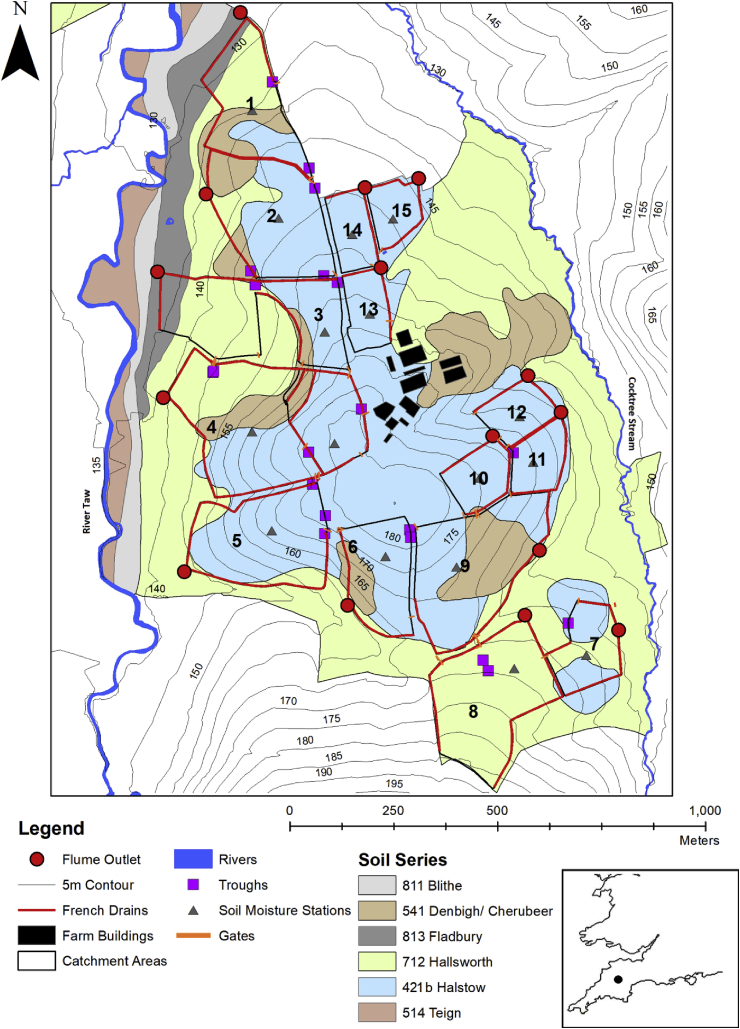
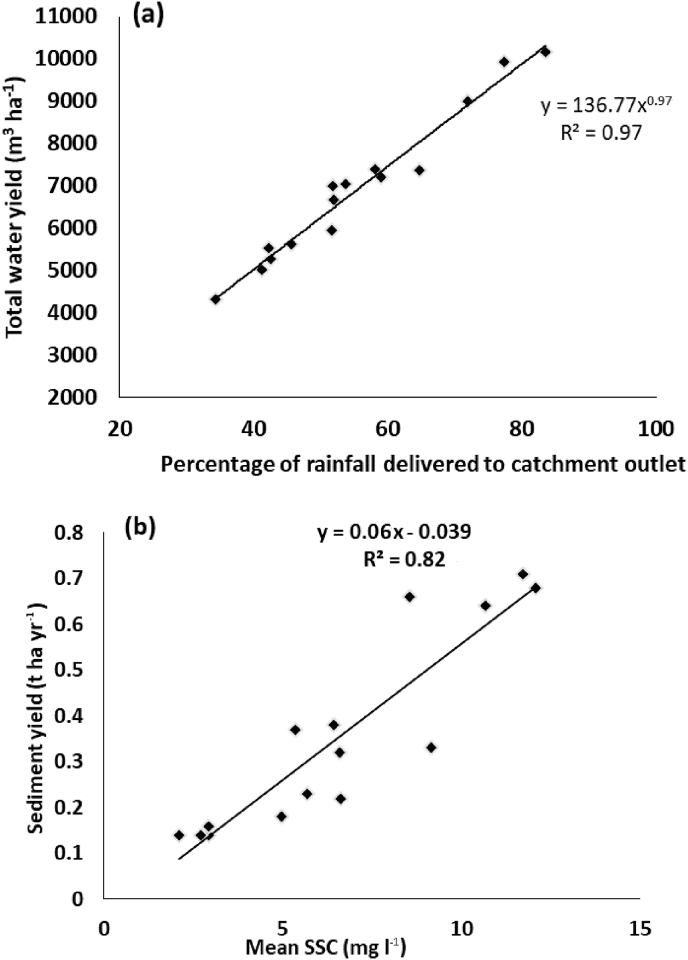
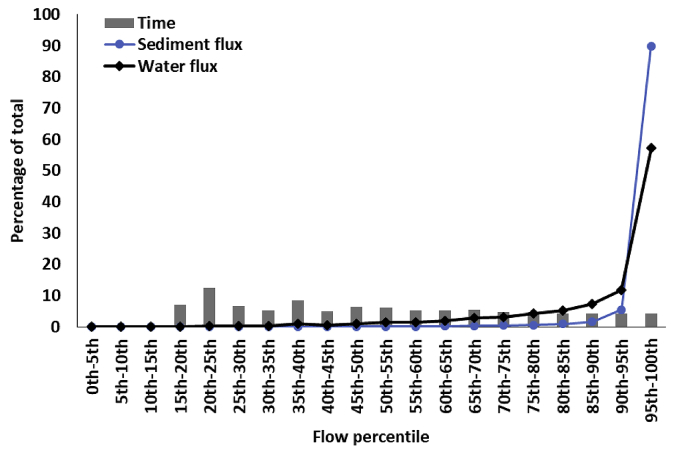
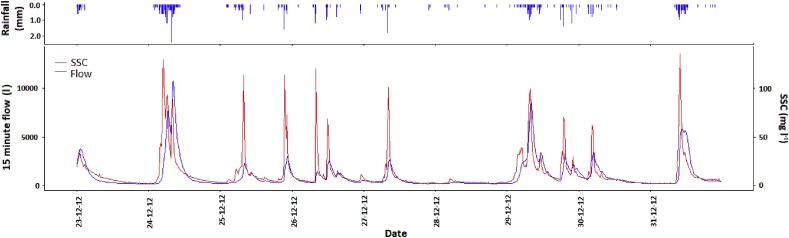
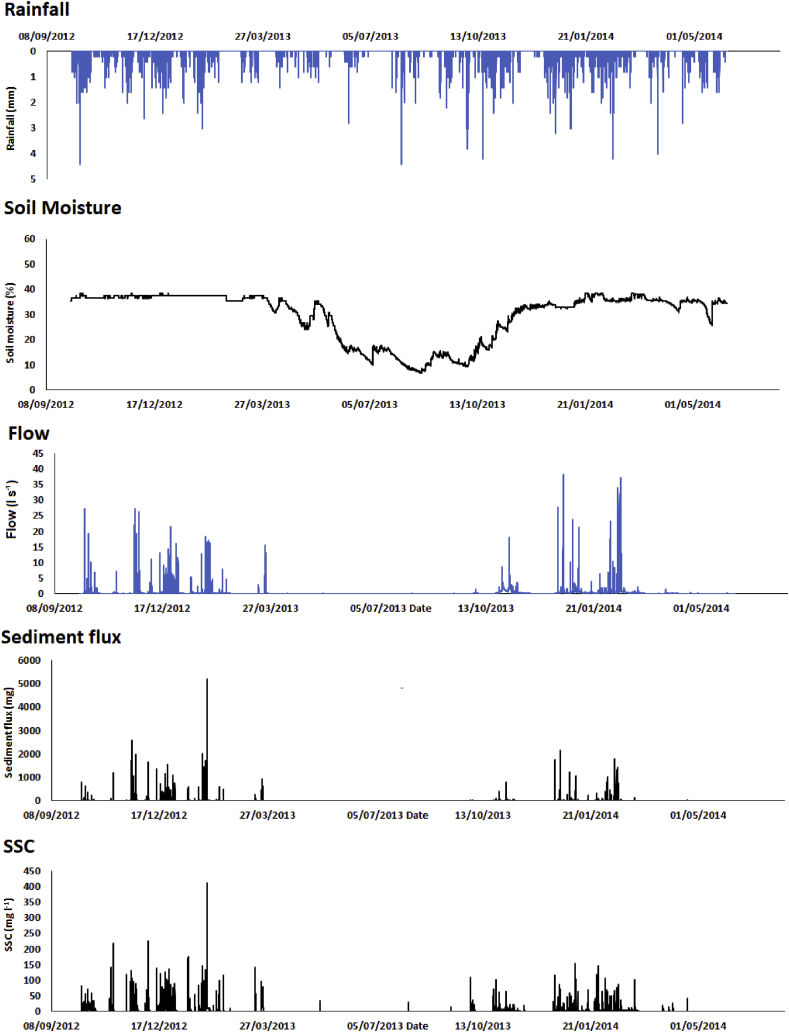
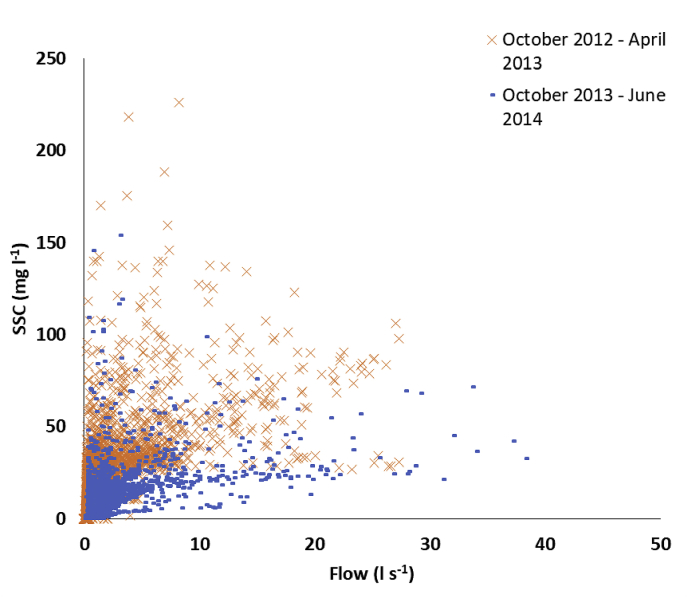
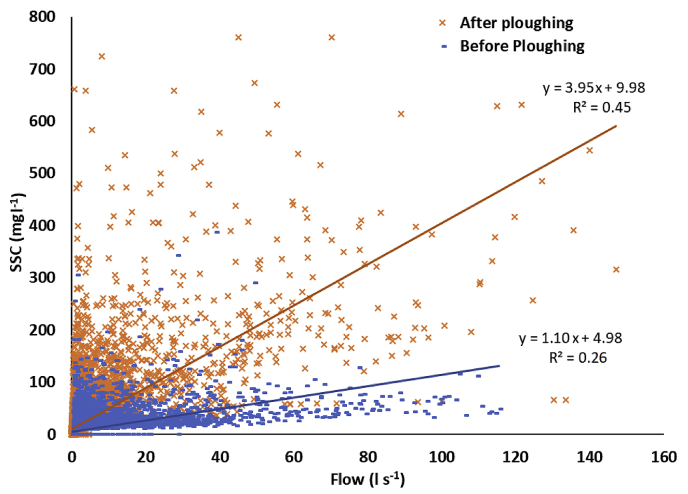
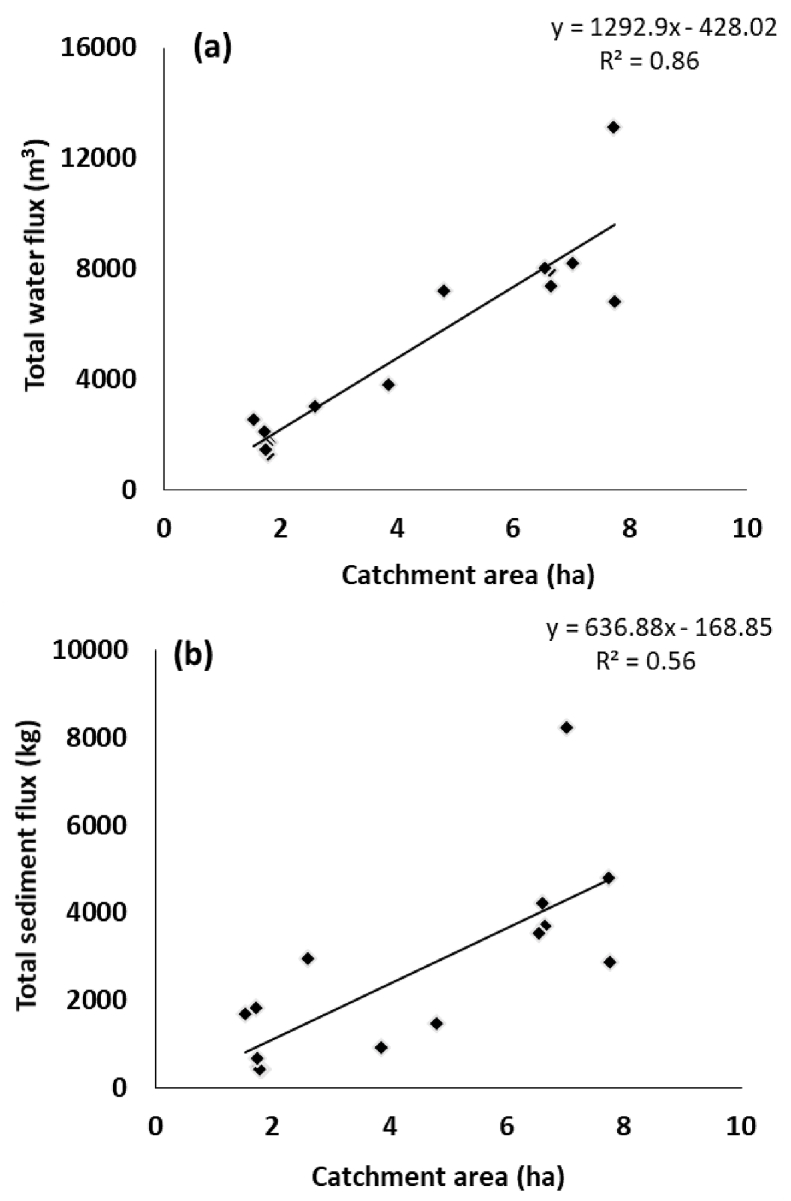
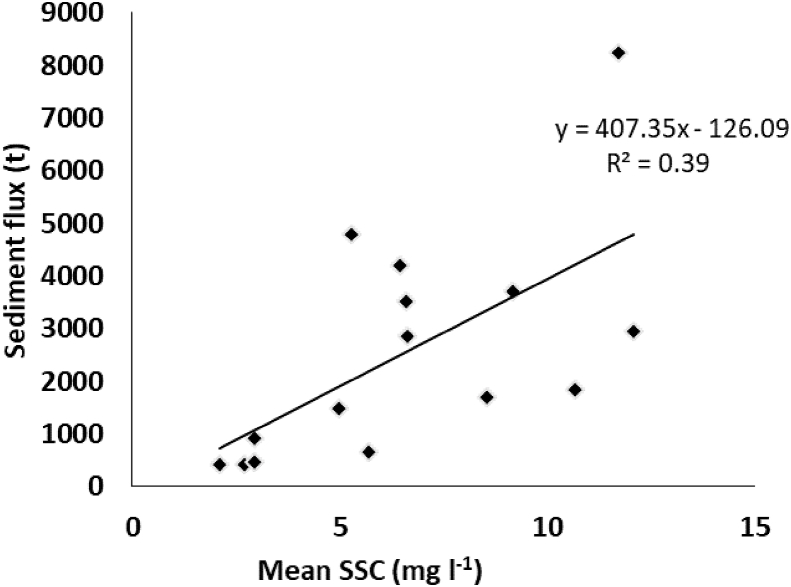
Compared with arable land, there is a paucity of field-based measurements of erosion rates and controls for lowland temperate grassland supporting ruminant agriculture. Despite this evidence gap, reducing diffuse fine sediment pollution from intensively farmed grassland has been recognised as essential for improving compliance with water quality targets. Improved information on erosion rates and controls within intensively managed lowland grazing livestock systems are prerequisites for informing best management practices for soil and water resource conservation. Accordingly, this study assembled such information using the North Wyke farm platform in south west England where flow, suspended sediment concentration, rainfall and soil moisture are monitored quasi-continuously in 15 hydrologically-isolated (1.54-11.12 ha) catchments. This region of the UK is representative of temperate lowland ruminant grazing landscapes with semi permeable soil drainage. Catchment area was the major control on both water and sediment flux. When normalised to catchment area, sediment yields were controlled by the erodibility of the catchment's soils. Ploughing for re-seeding of grass swards was the major factor that affected this. Whilst total rainfall had a small effect on sediment yields, slope and the damage of soils by livestock had no significant effects. This finding may be due to the overriding effects of ploughing and re-seeding of some fields during the study period. Detachment by impacting raindrops mobilised sediment particles across the entire field with diffuse saturation-excess overland flow responsible for their transport. The majority of erosion occurred during the rising limbs of storm events when there is an abundance of easily detached soil particles. Given that erosion and sediment transport are driven mechanistically by processes affecting the entire field areas, a reduction in sediment yield through the implementation of highly spatially-targeted in-field management such as that for feeder ring use, troughs, poached tracks or gateways would likely be very challenging. Instead, stocking density and grazing regime management, as well as carefully planned ploughing and re-seeding will be more beneficial for erosion control.
与耕地相比,针对支持反刍动物农业的低地温带草地,人们对侵蚀速率及其控制因素的实地测量数据非常有限。尽管存在这一证据缺口,但减少集约化草地造成的弥散细颗粒泥沙污染已被认为是改善水质目标达标情况的关键。在集约化管理的低地放牧牲畜系统中,有关侵蚀速率及其控制因素的更好信息是制定土壤和水资源保护最佳管理实践的前提条件。因此,本研究利用英格兰西南部的 North Wyke 农场平台收集了此类信息,该平台在 15 个水文隔离(1.54-11.12 公顷)集水区中连续监测流量、悬浮泥沙浓度、降雨和土壤湿度。英国这一地区是具有半渗透土壤排水系统的温带低地反刍动物放牧景观的代表。集水区面积是控制水和泥沙通量的主要因素。归一化到集水区面积后,泥沙产量受到集水区土壤可蚀性的控制。为了重新播种草地而翻耕是影响这一点的主要因素。尽管总降雨量对泥沙产量有一定影响,但坡度和牲畜对土壤的破坏没有显著影响。这一发现可能是由于在研究期间,一些田地的翻耕和重新播种对结果产生了压倒性影响。由撞击雨滴引起的分离作用使泥沙颗粒在整个田地中移动,过饱和漫流则负责它们的运输。大部分侵蚀发生在风暴事件的上升支期间,此时有大量容易分离的土壤颗粒。鉴于侵蚀和泥沙输移是由影响整个田地区域的过程驱动的,因此通过实施高度空间靶向的田间管理(例如使用饲槽环、沟渠、耙痕或通道)来减少泥沙产量可能非常具有挑战性。相反,通过更合理的放牧密度和放牧制度管理,以及精心规划的翻耕和重新播种,将更有利于控制侵蚀。